


Soft Signage Fabrics and Printable Textile Media
Need a soft signage fabric for a real print job? Start with four facts: your print method, application, required width and key performance need.
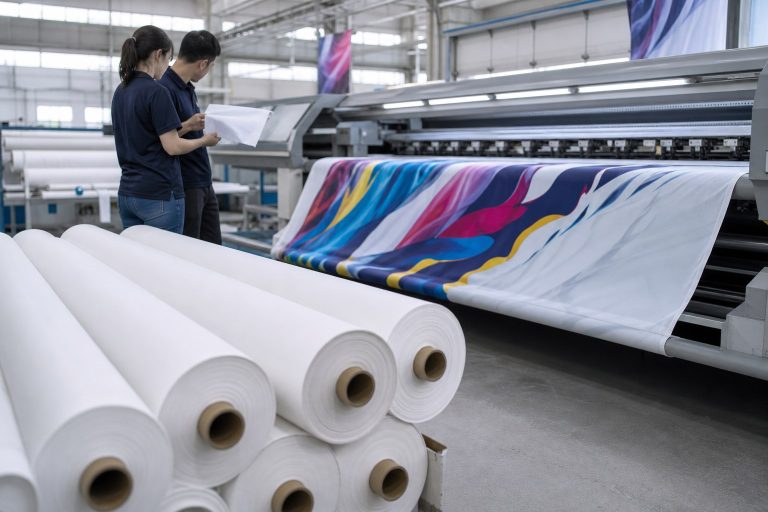
UNISIGN supplies printable textile media for large-format graphics, including lightboxes, SEG frames, blockout displays, backdrops, flags, tension displays and tents. This page helps printers, distributors and display system makers compare the range and build a short list.
Choose by print method | Choose by application | Choose by performance | Compare products | Request samples
Soft Signage Fabric: Quick Selection Guide
| If You Need | Start With | Check First |
|---|---|---|
| SEG frame graphic | Display or stretch fabric | SEG fabric selection guide: shrinkage, stretch, recovery and finished fit |
| LED lightbox graphic | Backlit fabric | Light diffusion, color density and white point |
| Graphic with no show-through | Blockout fabric rolls | Opacity, front/back color and one- or two-side print |
| Event or photo backdrop | Display or backdrop fabric | Flatness, glare, fold recovery and finishing |
| Flag | Flag fabric | Weight, ink penetration, tear strength and wind load |
| Tension display | Stretch display fabric | Stretch direction, recovery and seam strength |
| Printed tent | Tent fabric | Water resistance, strength, print method and outdoor use |
Important: One printable polyester fabric is not right for every job. Confirm the exact product, printer, ink, heat process, finishing method and test requirement before a bulk order.
What Is Soft Signage Fabric?
Soft signage fabric is a flexible textile used for printed signs, displays and branded spaces. It is often made from polyester and printed by dye sublimation. Some coated textiles can also work with UV or latex/resin inks.
The terms below are related, but they do not always mean the same thing.
| Term | Simple Meaning |
|---|---|
| Soft signage fabric | Fabric used for flexible printed signs and displays |
| Printable textile media | A broad term for textile made or prepared for digital printing |
| Digital printing fabric | Fabric used with a digital printer |
| Fabric printing media | Fabric rolls supplied as media for print production |
| Dye sublimation fabric | Usually polyester fabric made for direct or transfer sublimation |
| Printable polyester fabric | Polyester textile that has a confirmed print process |
| Large format printing fabric | Wide fabric rolls used on large-format textile printers |
| Wide format printing fabric | Another buyer term for fabric rolls used on wide printers |
| Advertising textile | Textile used for signs, retail graphics, events and displays |
For a buyer, the name is only the start. The useful questions are:
- How will it be printed?
- Where will it be used?
- Which performance is required?
- What width, roll length and GSM are needed?
- Which test report or certificate must cover the exact product?
Choose Printable Textile Media by Print Method
Print compatibility is product-specific. Do not assume every fabric on this page works with every ink system.
| Print Method | How It Works | Good Starting Uses | What to Confirm |
|---|---|---|---|
| Direct dye sublimation | Dye ink is printed on prepared polyester, then fixed with heat. | Flags, banners and large graphics | Direct-print treatment, ink penetration, fixation, color and shrinkage |
| Transfer sublimation | The image is printed on paper, then moved to polyester with heat. | SEG, lightbox, display and backdrop graphics | Transfer paper, calender settings, surface, color and heat shrinkage |
| UV printing | UV ink is printed and cured on a compatible textile surface. | Selected coated display and banner textiles | Coating, ink adhesion, flexibility, fold marks and printer profile |
| Latex or resin printing | Water-based ink is printed and cured on compatible coated media. | Selected display, backlit and décor textiles | Coating, curing temperature, color profile, adhesion and scratch resistance |
Printing on paper first? Compare transfer sublimation fabric rolls by application, construction and heat-process checks.
For a side-by-side decision, see direct vs transfer dye sublimation fabric and match the process to the application.
Fabric construction also changes stretch, edge finishing and frame fit. Use the woven vs knitted sublimation fabric guide to compare the two starting structures before selecting a model.
Can One Fabric Work With All Four Print Methods?
Not always. A coated fabric may support more than one ink type. A fabric made for transfer sublimation may not be the right choice for direct sublimation, UV or latex. Check the latest product technical data sheet (TDS), then run a sample on your own equipment.
Send These 6 Print Details to the Supplier
- Printer brand and model
- Ink type
- Direct or transfer process
- Heat-setting or calender conditions
- Required color or lightbox result
- Finishing method
Choose Fabric by Application
The final display controls the fabric choice. Start with the application, then compare the properties below.
| Application | Main Fabric Need | Useful Test | UNISIGN Range to Check |
|---|---|---|---|
| SEG frame | Controlled stretch, low shrinkage and a smooth face | Print, heat, sew silicone edge and install in the real frame | Display fabric |
| Lightbox | Even light diffusion and strong color when lit | View solid colors, gradients and black inside the final lightbox | Lightbox fabric |
| Blockout display | Low light transmission and stable backing | Measure show-through under the real lighting condition | Backdrop and blockout fabric |
| Backdrop | Flat hang, low glare and easy handling | Print a large solid area, fold, pack and hang again | Display or backdrop fabric |
| Flag | Low weight, ink penetration and suitable strength | Check reverse image, edge finishing and expected wind exposure | Flag fabric |
| Tension display | Stretch plus recovery | Fit a finished graphic on the real straight or curved frame | DSP09, DSP08-T or other confirmed display fabric |
| Tent | Water resistance, strength and outdoor suitability | Print, finish and test the complete panel—not only a small fabric piece | T600 tent fabric |


Choose Fabric by Performance
A word such as “premium” is not a specification. Ask for a number, a test method or a document that applies to the exact product.
| Performance Need | Why It Matters | What to Ask For |
|---|---|---|
| Stretch | Helps a graphic fit SEG and tension frames | Stretch direction, elongation, recovery and finished-frame test |
| Light diffusion | Controls bright spots and dark areas in a lightbox | Light transmission data plus a printed lightbox sample |
| Blockout | Stops light or an old graphic from showing through | Opacity or light transmission result and backing color |
| Flame retardant | May be required for exhibitions and public spaces | Exact standard, exact product covered, report number and current status. Compare flame-retardant display fabric options. |
| Recycled polyester | May be required by a brand or project policy | Recycled content, current certification scope and order documents. Read our recycled polyester sublimation fabric guide for the print and document checks. |
| Water resistance | Matters for tents and selected outdoor graphics | Test method, result, coating and finished-product limits |
| Low shrinkage | Helps maintain size after heat setting | Shrinkage under the recommended time and temperature |
| Batch consistency | Helps repeat jobs match | Lot control for GSM, width, whiteness, stretch and print result |
Project rule: Flame-retardant, recycled-content and water-resistance statements must be checked for the exact fabric model and order. One report does not automatically cover every product.
UNISIGN Printable Textile Product Range
Yes, a product list belongs on this page. Buyers need to move from a general need to a real model without starting a second search. The tables below show the current public UNISIGN range as a starting point.
Data note: Product data can change. Ask for the latest TDS, available width, roll length, MOQ and production sample before approval or bulk purchase.
Backlit and Lightbox Fabrics
| Model | Product | Published GSM | Starting Application |
|---|---|---|---|
| SDB190 | Aurora Plus Backlit Fabric | 190 gsm | Backlit lightbox |
| SDB180 | Selene Backlit Fabric | 180 gsm | Backlit lightbox |
| SDB280 | Starlight Backlit Fabric | 280 gsm | Backlit lightbox |
| SDB270 | Meteor Backlit Fabric | 270 gsm | Backlit lightbox |
| SDB250 | Triple White Backlit Fabric | 250 gsm | Backlit lightbox |
| SDB150 | Apollo Backlit Fabric | 150 gsm | Backlit lightbox |
| STB110 | Apple Backlit Fabric | 110 gsm | Lightweight backlit graphic |
Display and Stretch Fabrics
| Model | Product | Published GSM | Starting Application |
|---|---|---|---|
| DSP09 | Stretch Display Fabric “Mars” | 230 gsm | Frames and tension displays |
| DSP08-T | Power Stretch Fabric “Venus” | 250 gsm | Stretch and shaped displays |
| DSP06 | Traditional Display Fabric “Saturn” | 230 gsm | General display graphics |
| DSP05A | Table Cloth Fabric | 175 gsm | Table covers — see tablecloth fabric guide |
Backdrop and Blockout Fabrics
| Model | Product | Published GSM | Starting Application |
|---|---|---|---|
| DSP-BLK-01 | Black Back Backdrop Fabric “Nox” | 260 gsm | Opaque backdrop and display |
| DSP-BLK-D | Double-Side Printable Blockout “Ares” | 250 gsm | Two-side display |
| DSP-BLK-DTR | Super White Double-Side Blockout “Ares Plus” | 270 gsm | Two-side display |
| DSP-BLK-W | White Back Blockout Backdrop Fabric “Hermes” | 310 gsm | White-back blockout display |
| DSP-BLK-02 | Grey Back Backdrop Fabric “Thor” | 280 gsm | Grey-back blockout display |
| DSP-BLK-03 | Silver Back Flag Fabric | 150 gsm | Backed flag or display project |
| DSP-BLK-01F | Black Back Backdrop Fabric | 240 gsm | Opaque backdrop and display |
Flag Fabrics
| Model | Product | Published GSM | Starting Application |
|---|---|---|---|
| DSP02 | Popular Flag Fabric | 110 gsm | General flags |
| DSP02TB | Strong Flag | 110 gsm | Flags needing added strength |
| DSP04 | Mesh Flag | 120 gsm | Mesh flags |
| DSP10 | Satin Banner | 80 / 130 / 150 gsm | Satin flags and banners |
PVC-Free Coated and Tent Fabrics
| Model | Product | Published GSM | Starting Application |
|---|---|---|---|
| PCG135B | Pearl Backlit Textile | 135 gsm | Coated backlit graphic |
| PCG145B | Moonlight Samba Backlit Fabric | 180 gsm | Coated backlit graphic |
| T600 | 600D Premium Tent “Poseidon” | 280 gsm | Printed tent |
View all current UNISIGN textile categories and product pages
Width, Roll Length, GSM and MOQ
The public UNISIGN textile range gives the following starting points. Final commercial details depend on the exact model, width and current production plan.
| Item | Current Range or Rule | What the Buyer Should Send |
|---|---|---|
| GSM | Published products range from 80 to 310 gsm | Target GSM or application |
| Maximum width | Selected products are listed up to 3.2 m / 126 in | Required finished and printable width |
| Roll length | Common public listings include 50 m / 55 yd and 100 m / 110 yd | Required roll length and rolls per order |
| MOQ | Confirmed by product, width, stock and order plan | Model, width, quantity and destination |
| Flame retardant | Model- and standard-specific | Required standard and destination market |
| Recycled content | Available only when confirmed for the exact product | Required recycled content and documents |
| Water resistance | Product-specific | End use, exposure time and required test |
UNISIGN’s current textile overview states annual polyester fabric production of 25 million square meters. Ask the sales team to confirm available capacity, lead time and packing for your exact order.
A Simple 3-Step Fabric Selection Process
Step 1: Define the Job
- Print method and printer
- Application and display system
- Indoor or outdoor use
- Finished size and required width
- One-side or two-side viewing
- Required FR, recycled-content or water-resistance document
Step 2: Compare 2 or 3 Fabrics
Do not request one random sample. Ask UNISIGN to recommend two or three products for the same job. Compare GSM, construction, width, print result, shrinkage, finishing and price.
Step 3: Test the Complete Workflow
- Print the same test file on each fabric.
- Use your normal ink, paper, temperature and speed.
- Measure size before and after heat.
- Sew, cut or weld it with the real finishing method.
- Install it in the real frame, lightbox, pole or tent system.
- Approve the result and keep the product model and batch record.
What Should Be in a Textile Sample Test?
Use one repeatable print file. Include at least these 8 test areas:
- CMYK color blocks
- Deep black
- Neutral gray
- Fine text and thin lines
- Skin tone or product image
- Light and dark gradients
- Large solid-color area
- Registration and size marks
Record the printer, ink, paper, profile, temperature, speed and finishing method. This makes the test useful for repeat orders.
Why Source Printable Polyester Fabric From UNISIGN?
- One broad range: backlit, display, blockout, backdrop, flag, coated and tent fabrics
- Clear model numbers: easier sample control and repeat buying
- Wide-format options: selected public product listings show widths up to 3.2 m / 126 in
- Factory scale: the current textile overview states annual polyester fabric production of 25 million m²
- Selection support: compare products by print process, application and test need
For a reliable order, request the current TDS and a production-representative sample for the exact model. Confirm all project certificates before purchase.
Frequently Asked Questions
What is the best fabric for soft signage?
There is no single best fabric for every soft signage job. Choose by print method, application, width and performance. A lightbox needs light diffusion. A blockout display needs opacity. An SEG graphic needs controlled stretch and low shrinkage.
What fabric is used for dye sublimation printing?
Polyester is the most common fabric for dye sublimation. The exact fabric must also match direct or transfer sublimation, the heat process and the final display.
What is the difference between direct and transfer dye sublimation?
Direct sublimation prints dye ink on prepared fabric before heat fixation. Transfer sublimation prints on paper first, then moves the image to polyester with heat. The fabric treatment and production settings are different, so confirm the process before ordering.
How do I choose fabric for an SEG frame?
Check stretch direction, recovery, shrinkage, surface and finished fit. Print and heat the fabric, sew the silicone edge and test it in the real frame before bulk production.
How do I choose printable fabric for a lightbox?
Compare light diffusion, color density, white point and lot consistency. Test the printed fabric inside the final lightbox because an unlit sample cannot show the real result.
Can soft signage fabric be printed with UV or latex inks?
Selected coated textiles can be compatible with UV or latex/resin printing. Compatibility is model-specific. Check the current TDS and test ink adhesion, curing, folding and color on your printer.
What is the maximum width of UNISIGN printable textile media?
Selected products in the current public range are listed up to 3.2 m / 126 in. Available width depends on the model, so confirm the exact roll width before ordering.
What is the MOQ for printable fabric?
MOQ depends on the product model, width, stock status and production plan. Send the required model, width, roll quantity and destination for an exact quotation.
Can I request flame-retardant or recycled polyester fabric?
Options may be available for selected products. State the required fire standard, recycled content, destination market and document before sampling. Confirm that the current report or certificate covers the exact product.
Should I test a sample before a bulk order?
Yes. Test the fabric with your printer, ink, paper, heat settings and finishing method. For SEG, lightbox, flag and tent work, also test the finished sample in the real display system.
Request a Fabric Short List, Samples and Quote
Send these 10 details so the UNISIGN team can recommend a useful short list:
- Application
- Printer brand and model
- Ink and print method
- Required width
- Preferred GSM, if known
- Indoor or outdoor use
- Required FR, recycled-content or water-resistance document
- Estimated quantity
- Delivery country or port
- Target order date
Request free samples and a factory quotation or email info@unisignflex.com.
Technical note: Published values on this hub are selection references. The latest approved TDS, sample, test report, quotation and order confirmation control the final specification.