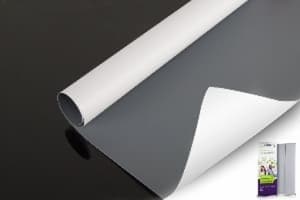
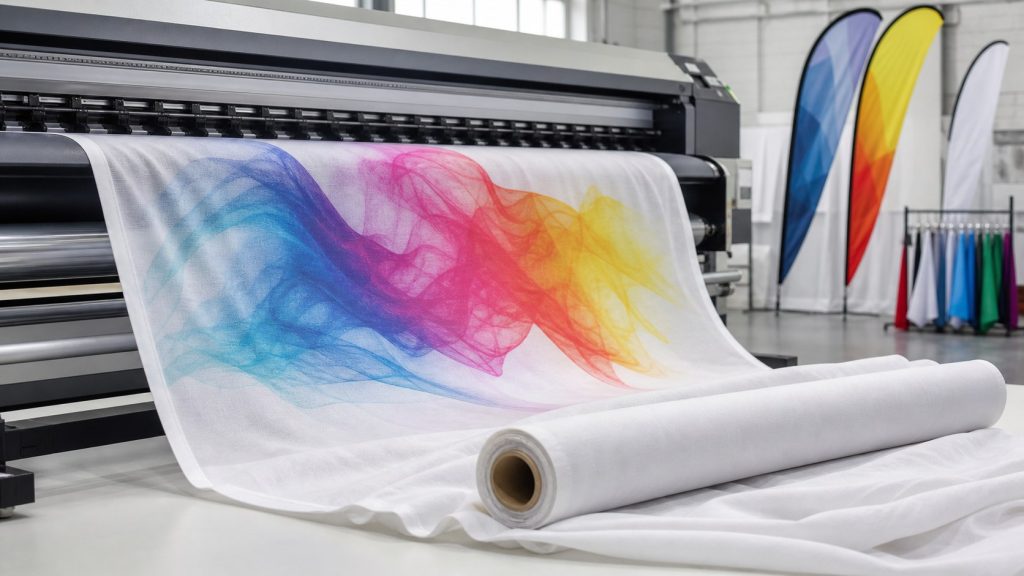
3.2m wide dye sublimation fabric is polyester print media supplied up to 3.2 meters (126 inches) wide for grand-format textile printing. It is used for lightboxes, SEG graphics, displays, backdrops, stretch systems and flags.
Buyer note: UNISIGN supplies unprinted polyester fabric rolls for commercial printing. Finished printed graphics, printing services and wide-format printers are not the primary products on this page.
Do not choose it by width and GSM alone. Match the fabric to the application, printer, transfer paper, calender, shrinkage and finishing method.

Quick Answer: What Should You Check?
For a 3.2m printing line, check these 8 items before you buy:
- Fabric application and construction
- Actual roll width and width tolerance
- Printer maximum media width and print width
- Direct or transfer sublimation process
- Transfer paper and calender working width
- Shrinkage after heat
- Core, roll diameter, roll weight and winding
- Full-width sample test and batch control
3.2m Does Not Always Mean a 3.2m Finished Graphic
Five different widths are involved in one wide-format textile job. They are related, but they are not the same.
| Width | Question to Ask | Main Risk |
|---|---|---|
| Supplied roll width | What is the actual width and tolerance? | A roll may be slightly narrower than the nominal size. |
| Printer media width | What is the maximum roll width the printer accepts? | The roll may not load or track correctly. |
| Printable width | How much of the roll can receive ink? | Unprinted side margins reduce the usable image. |
| Calender width | What is the working width of the heat unit? | Uneven heat or uncovered edges can damage the result. |
| Finished width | What remains after shrinkage and finishing? | The final graphic may not fit the frame or site. |
Choose a 3.2m Fabric by Application
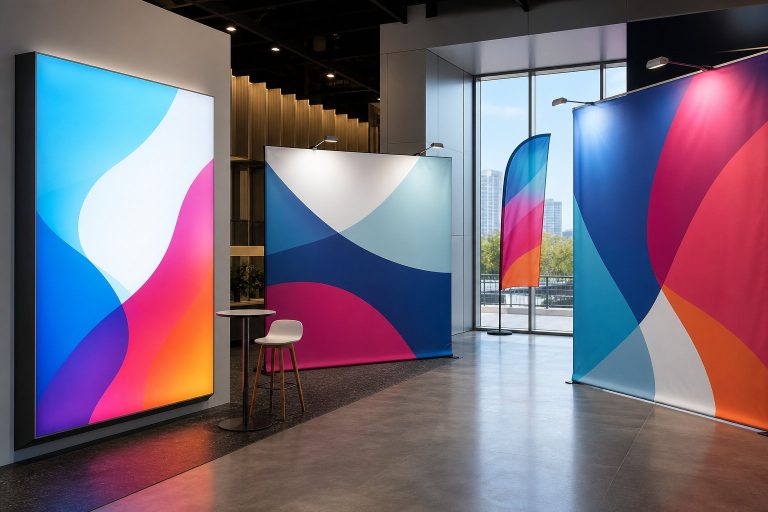
A product list with real images helps buyers confirm that they are looking at the right material. The six options below cover the main 3.2m dye sublimation applications without turning this guide into a full catalog.

SDB180 Light Box Fabric
- 180gsm woven polyester
- Direct or transfer sublimation
- Maximum width: 3.2m
- SEG lightboxes and frame systems

DSP09 Display Fabric
- 230gsm warp-knit fabric
- Direct or transfer sublimation
- Maximum width: 3.2m
- Displays, pop-ups and backdrops

DSP08-T Display Fabric
- 250gsm power stretch fabric
- Two-direction stretch
- Maximum width: 3.2m
- Shapes, trade shows and grand format

DSP-BLK-D Backdrop Fabric
- 250gsm blockout fabric
- Printable on both sides
- Maximum width: 3.2m
- Backdrops, frames and exhibitions

DSP02 Flag Fabric
- 110gsm warp-knit polyester
- Direct or transfer sublimation
- Maximum width: 3.2m
- Good ink penetration for flags

DSP04 Mesh Flag Fabric
- 120gsm warp-knit mesh
- Direct or transfer sublimation
- Maximum width: 3.2m
- Open structure for windy sites
Verified 3.2m Roll Selection
The models below are listed on current UNISIGN product pages at a maximum width of 3.2m / 126 in. Use this table to make a short list, then confirm the current TDS, production width and sample before ordering.
| Model | Fabric Type | GSM | Printing Listed | Max Width | Standard Roll |
|---|---|---|---|---|---|
| SDB180 | Woven backlit | 180 | Direct / transfer / latex | 3.2m / 126 in | 100m / 110 yd |
| SDB190 | Woven backlit, slight stretch | 190 | Direct / transfer / latex | 3.2m / 126 in | 100m / 110 yd |
| SDB250 | Triple-white backlit | 250 | Direct / transfer / latex | 3.2m / 126 in | 50m / 55 yd |
| STB150 | Woven backlit | 150 | Transfer sublimation only | 3.2m / 126 in | 100m / 110 yd |
| DSP06N | Warp-knit display | 230 | Direct / transfer | 3.2m / 126 in | 100m / 110 yd |
| DSP09 | Stretch display | 230 | Direct / transfer | 3.2m / 126 in | 100m / 110 yd |
| DSP-BLK-01F | Black-back backdrop | 240 | Direct / transfer | 3.2m / 126 in | 100m / 110 yd |
| DSP-BLK-D | Double-sided blockout | 250 | Direct / transfer | 3.2m / 126 in | 100m / 110 yd |
| DSP02 | Standard flag | 110 | Direct / transfer | 3.2m / 126 in | 100m / 110 yd |
| DSP04 | Mesh flag | 120 | Direct / transfer | 3.2m / 126 in | 100m / 110 yd |
| T600 | Waterproof tent fabric | 280 | Direct / transfer; UV / latex listed | 3.2m / 126 in | 100m / 110 yd |
Specifications apply to the listed UNISIGN models. Ask for the current technical data sheet and confirm the exact order specification before purchase.
| Application | Best Starting Point | Key Test | Suggested Model |
|---|---|---|---|
| Backlit lightbox | Even light diffusion and strong color | Print inside the real lightbox | SDB180 |
| SEG / frame display | Low shrinkage and controlled stretch | Finish and install in the frame | DSP09 |
| 3D or shaped display | Two-way stretch and recovery | Stretch over the final structure | DSP08-T |
| Two-sided backdrop | Opacity and two printable faces | Check show-through from both sides | DSP-BLK-D |
| Standard flag | Ink penetration and movement | View the reverse side outdoors | DSP02 |
| Flag in wind | Airflow and tear resistance | Test the finished edge and movement | DSP04 |
Planning an SEG project? Use our SEG fabric selection and frame-fit guide to compare backlit and non-lit materials, shrinkage, stretch, keder and finished-frame tests.
Send Us These 7 Details
- Application
- Printer model
- Direct or transfer process
- Required finished width
- Target GSM
- FR standard and market
- Order quantity
Match the Fabric Width to Your Printer
Read the equipment data sheet before ordering media. Do not rely only on the printer name.
| Equipment Example | Maximum Media / Roll Width | Maximum Print Width | What It Shows |
|---|---|---|---|
| Mimaki TS330-3200DS | 3,250mm | 3,240mm | Media width and printable width are different. |
| Agfa Avinci CX3200 | 3.26m roll width | 3.20m single-roll print width | A 3.2m printed area can require a roll wider than 3.2m. |
Equipment sources: Mimaki TS330-3200DS official specifications and the Agfa Avinci CX3200 official brochure. These are width examples, not printer-to-fabric compatibility approvals. Check the current manual for your machine.
Printer Loading Checklist
Media dimensions
- Maximum accepted roll width
- Maximum printable width
- Maximum roll outside diameter
- Maximum roll weight
- Required core diameter
- Allowed fabric thickness
Media handling
- Winding direction
- Edge quality
- Roll tension
- Skew during feeding
- Telescoping or loose winding
- Take-up system setting
Direct vs Transfer Sublimation at 3.2m Width
Before choosing the roll, compare direct and paper-transfer sublimation and check the fabric, paper and heat-machine widths together.
| Item | Direct Sublimation | Transfer Sublimation |
|---|---|---|
| Ink is first printed on | Fabric | Transfer paper |
| Extra wide material | Protective paper may still be needed | Transfer and protection paper must cover the image area |
| Main handling check | Ink control, strike-through and feeding | Paper/fabric alignment and movement in the calender |
| Heat equipment | Heat fixation is required | A calender or heat press transfers the image |
| Best choice | Depends on the fabric model, printer, ink, image and production line | |
For coating, ink penetration and heat-fix checks, use the direct dye sublimation fabric selection guide. Ask whether the exact fabric model is approved for your process. “Polyester” does not mean that every fabric runs the same way.
For paper-transfer printing, choose a transfer-compatible polyester fabric and check paper width, calender contact time and fabric movement together.
Control Tension, Shrinkage and Edge Curl
Wide fabric can look stable at the center while the edges move. Check the full width under your normal production settings.
- Start with square, flat roll edges and even unwind tension.
- Use the lowest stable unwind and take-up tension for your printer and fabric.
- Print test marks at the left edge, center and right edge to detect skew.
- After heat, check both edges for curl, waviness and uneven shrinkage.
- Record machine-direction and cross-direction shrinkage separately.
- Approve the finished and sewn sample, not only the printed roll.
Calculate Width After Heat
Shrinkage can change the fit of SEG graphics, wall panels and sewn backdrops. Measure it in both the machine direction and the cross direction.
Width after heat = original width × (1 − measured cross-direction shrinkage)
Example only: 3,200mm × (1 − 0.02) = 3,136mm after heat, before sewing or other finishing.
This example does not predict the result of every fabric. Use the shrinkage measured with your own printer, ink, temperature, time, tension and finishing process.
For separate roll-length and roll-width values, use the dye sublimation fabric shrinkage guide.
Measure at Four Stages
Record the roll width and mark a test area.
Check feeding, skew and image width.
Measure width and length again.
Check the final frame or installation fit.
Can a 3.2m Roll Make a Seamless Graphic?
Yes, when the finished short dimension fits inside the usable width. For example, a 3.0m short-side graphic may fit on one 3.2m roll only after the items below are checked. One approved panel can remove a visible center seam and reduce sewing, alignment and installation work.
First subtract or allow for:
- Unprinted printer margins
- Fabric width tolerance
- Heat shrinkage
- Cutting and sewing allowance
- SEG silicone or pocket construction
- Final installation tolerance
If the required finished size is larger, use a wider model or divide the image into planned sewn panels. Make this decision before artwork is approved.
Full-Width Sample Test: 7 Steps
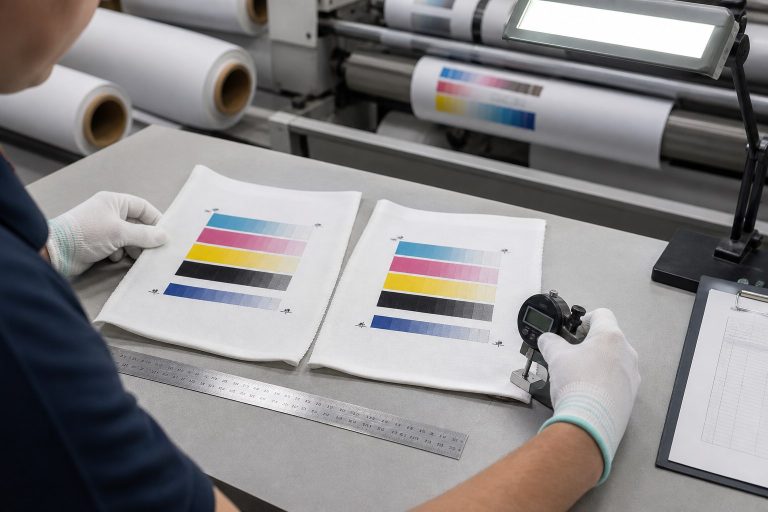
A small hand sample can show color and surface. It cannot prove stable feeding across 3.2m. For a new fabric or supplier, run a representative full-width test.
Check width, edges, winding, surface and visible defects.
Confirm core fit, tension, tracking and take-up.
Use CMYK blocks, gray, deep black, gradients and fine text.
Use your normal paper, temperature, time and pressure.
Record both length and width change.
Cut, sew and add the normal edge system.
Test in the real lightbox, frame, backdrop or flag system.
Test Image Content
- 100% cyan, magenta, yellow and black
- Deep composite black
- Neutral gray
- Skin tones
- Fine text and lines
- Long gradients
- Large solid-color areas
Quality Data to Request Before a Bulk Order
| Data | Why It Matters at 3.2m Width |
|---|---|
| Material and construction | Affects print process, stretch, surface and stability. |
| GSM and tolerance | Helps keep handling and opacity consistent. |
| Actual width and tolerance | Protects the required image and finishing area. |
| Shrinkage test | Helps calculate the finished graphic size. |
| Roll length, core, OD and weight | Confirms the roll can load and run safely. |
| FR documentation | May be required in exhibitions and public spaces. |
| Batch number | Supports repeat orders and issue tracking. |
| Print test result | Shows the fabric was evaluated in production. |
For more supplier checks, read our dye sublimation fabric manufacturer checklist and commercial printing supplier guide.
Packing, MOQ and Container Planning
MOQ and container loading are not one fixed number for every fabric. They depend on the model, width, roll length, core, roll diameter, roll weight, stock and pallet plan.
| Item | What UNISIGN Should Confirm | What the Buyer Should Send |
|---|---|---|
| MOQ | Current minimum by model, width, stock and production plan | Model or application, width and required roll quantity |
| Roll packing | Core size, outside diameter, roll weight, protective wrap and labels | Printer loading limit and warehouse handling needs |
| Pallet plan | Pallet or loose-roll option and final packed dimensions | Destination and unloading method |
| Container loading | Calculated roll count and net/gross weight after the packing plan is fixed | 20ft / 40ft / 40HQ request, product mix and pallet requirement |
| Documents | Current TDS and applicable FR or batch documents | Target market and required standard |
Why Source 3.2m Dye Sublimation Fabric from UNISIGN?
- Application-specific textile families for lightbox, display, backdrop, stretch and flag work
- Multiple products with a listed maximum width of 3.2m / 126 inches
- Direct and transfer dye sublimation options for applicable models
- FR options for applicable products and standards
- Technical data, samples and printing support
- Batch and production checks for repeat commercial orders
See the full UNISIGN textile range, or send your equipment and job details for a shorter product list.
Frequently Asked Questions
How many inches is 3.2 meters?
3.2 meters is about 126 inches.
Can I load a 3.2m fabric roll into any 3.2m printer?
Not automatically. Check the printer’s maximum media width, roll diameter, roll weight, core size and fabric handling system.
Is the full 3.2m width printable?
It depends on the printer. Maximum media width and maximum print width are often different. Check the equipment data sheet.
Do I need fabric wider than 3.2m for a 3.2m printed image?
Possibly. Some printers need extra material outside the print area. Shrinkage and finishing can also reduce the final width.
Which 3.2m fabric is best for an SEG lightbox?
Start with a backlit fabric such as SDB180. Test light diffusion, black density, shrinkage and final frame fit.
Which fabric is best for a wide stretch display?
Use a fabric designed for controlled or power stretch. DSP09 suits many display and backdrop jobs. DSP08-T is for stronger two-direction stretch and shaped displays.
Which 3.2m fabric can block light?
DSP-BLK-D is a 250gsm double-sided printable blockout option. Test opacity and two-side registration in the final display.
Can 3.2m fabric be used for direct and transfer sublimation?
Many listed models support both methods, but compatibility is product-specific. Confirm the exact model and test it on your line.
What shrinkage should I allow?
Use the technical data for the exact product as a starting point, then measure the result under your own heat conditions. Do not use one shrinkage number for every fabric.
Should I test a full-width sample?
Yes. A full-width test checks feeding, skew, edge behavior, heat consistency and finished size. A small swatch cannot show all of these.
What information should I send for a quote?
Send the application, printer model, direct or transfer process, required finished width, target GSM, FR requirement, order quantity and destination country.
Request a 3.2m Wide Fabric Sample
Tell us your printer model, application, print process and finished size. We will recommend suitable 3.2m dye sublimation fabric options for testing.
Request Free Samples
Get Technical Data
Ask for Factory Price
![Top 10 Vinyl Tarp Manufacturers in the World [2026 Guide]](https://unisignflex.com/wp-content/uploads/2026/04/pvc-tarpaulin-product-line.jpg)