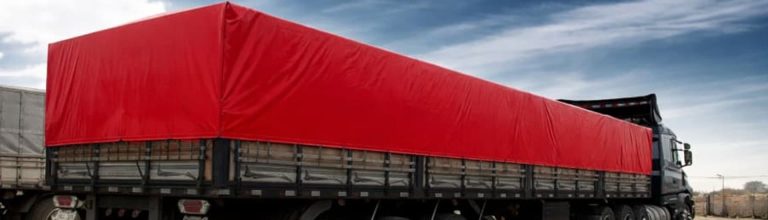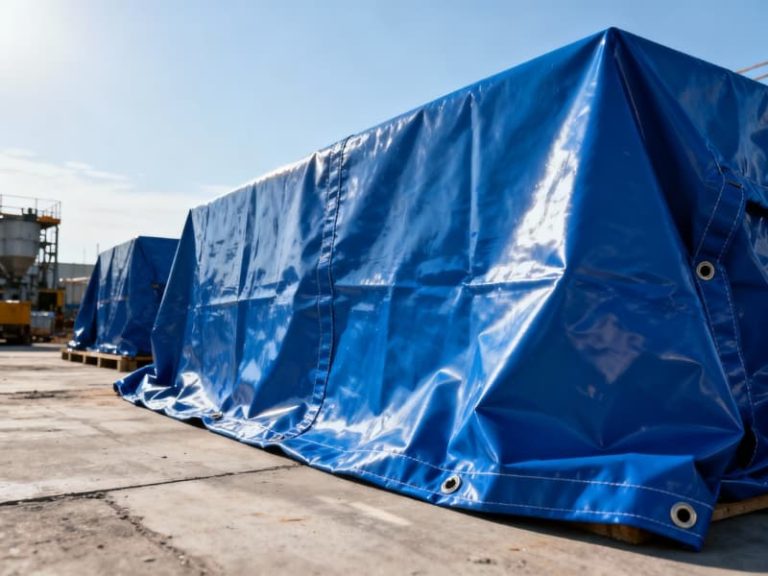
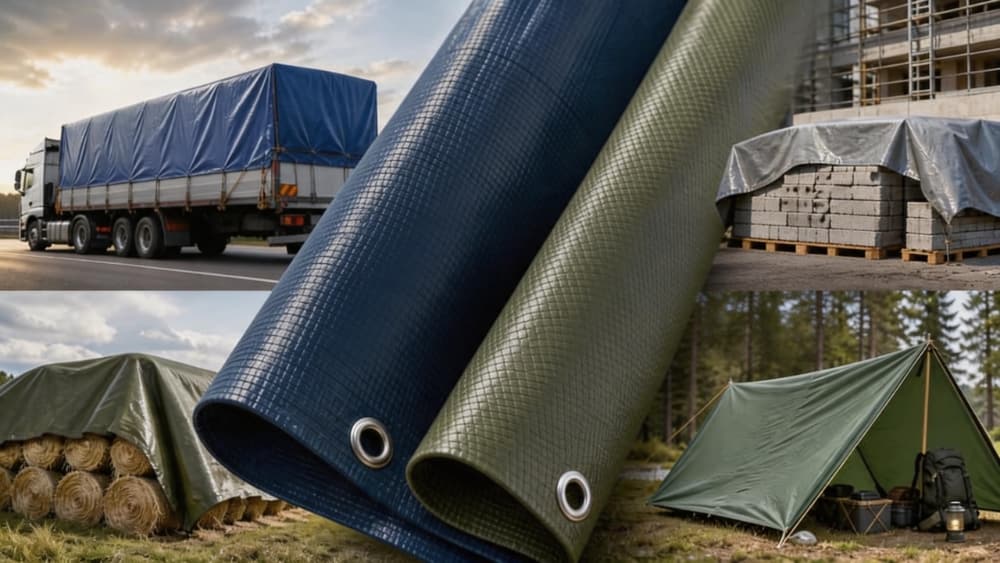
Tarpaulin, often called a tarp, is a waterproof or water-resistant sheet used to protect goods, vehicles, equipment, and outdoor areas from rain, sunlight, wind, dust, and other weather conditions. Most tarpaulins are made from materials such as PVC, PE (polyethylene), canvas, vinyl, or polyester fabric, depending on the application and durability requirements.
You can find tarpaulins in transportation, construction, agriculture, outdoor camping, logistics, and advertising. They are commonly used as truck covers, cargo protection sheets, construction site covers, tent shelters, greenhouse covers, and printable banner materials. Different tarpaulin materials provide different levels of waterproof performance, UV resistance, flexibility, and tear strength.
If you are choosing a tarpaulin for your business or project, understanding the differences between materials, thicknesses, and applications can help you select the right option. In this guide, you will learn the main types of tarpaulin, common uses, key features, and how to choose the best tarp for your needs.
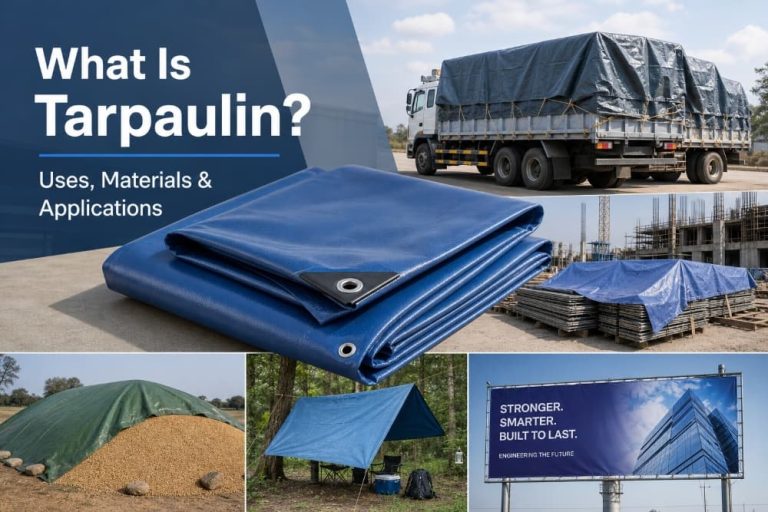
What Does Tarpaulin Mean?
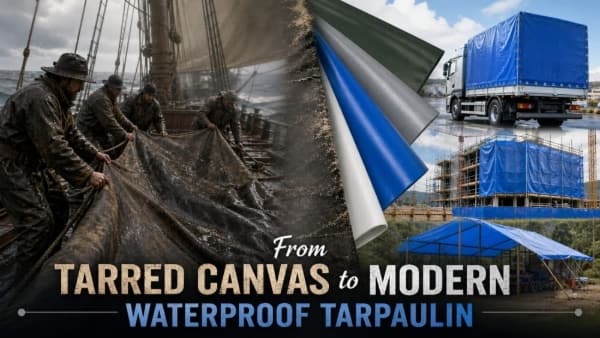
The word “tarpaulin” originally came from the combination of two words: “tar” and “palling.” Early tarpaulins were heavy canvas sheets coated with tar to make them waterproof and more resistant to harsh weather. Sailors and ship crews used them to protect cargo and equipment from rain and seawater long before modern synthetic materials like PVC and PE existed.
Today, the meaning of tarpaulin has expanded far beyond traditional canvas covers. When people talk about tarpaulin now, they usually mean a strong waterproof or water-resistant sheet used for protection, covering, sheltering, or transportation purposes. Modern tarpaulins are commonly made from materials such as PVC, PE (polyethylene), vinyl, polyester fabric, or canvas, depending on the application.
You will often see tarpaulins used to cover trucks, protect construction materials, create temporary outdoor shelters, cover agricultural products, or produce printable advertising banners. Because different industries use different materials and thicknesses, the word “tarpaulin” can refer to many types of protective sheets, from lightweight PE tarps to heavy-duty PVC truck tarpaulins.
What Does “Tarp” Mean?
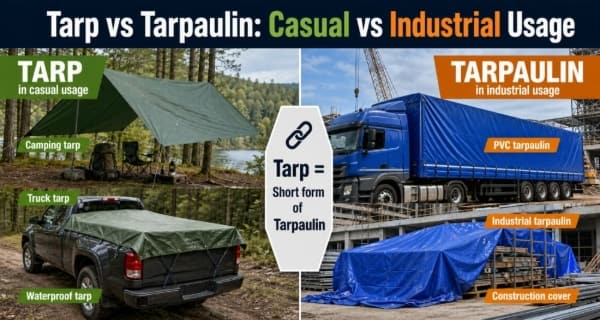
“Tarp” is simply the shortened form of “tarpaulin.” It is the more casual and commonly used term, especially in everyday conversation and in markets like the United States and Canada.
For example, people often say:
- truck tarp
- camping tarp
- waterproof tarp
- heavy duty tarp
instead of saying the full word “tarpaulin.”
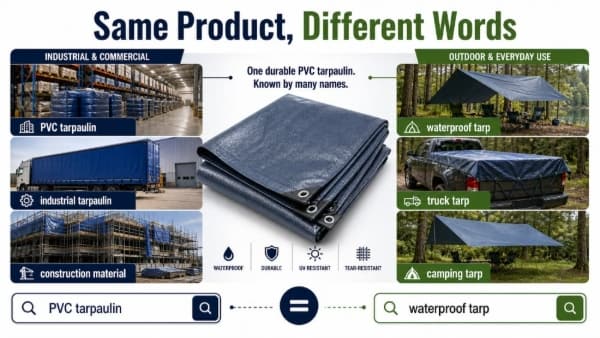
If you search online, you will notice that “tarp” is more common in consumer and outdoor-related searches, while “tarpaulin” appears more often in industrial, manufacturing, construction, and B2B contexts.
What Is the Difference Between Tarpaulin and Tarp?
In most cases, there is no real difference between tarpaulin and tarp. Both words refer to the same type of protective covering material. The main difference is simply the wording and usage context.
“Tarpaulin” is the full technical term and is more commonly used in manufacturing, industrial products, specifications, and international trade. “Tarp” is the shorter everyday version that people commonly use in conversation and online searches.
For example:
- A manufacturer may describe a product as “PVC tarpaulin.”
- A customer may search for “waterproof truck tarp.”
Both are usually referring to the same type of material or product.
Understanding this difference can help you when researching tarpaulin products online, comparing suppliers, or choosing keywords for your business or project.
What Is Tarpaulin Made Of?
Modern tarpaulins can be made from several different materials, and each one is designed for different applications, budgets, and outdoor conditions. Some tarpaulin materials focus on heavy-duty waterproof protection, while others are made for lightweight covering, breathability, printing, or short-term outdoor use.
If you are choosing a tarpaulin for transportation, construction, agriculture, outdoor shelter, or printing applications, understanding the differences between materials can help you choose the right tarp for your project.
PVC Tarpaulin
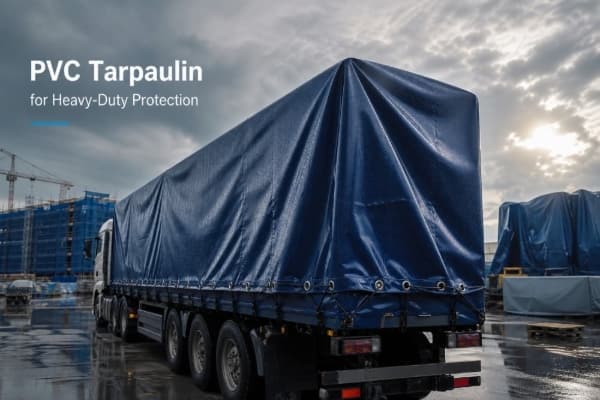
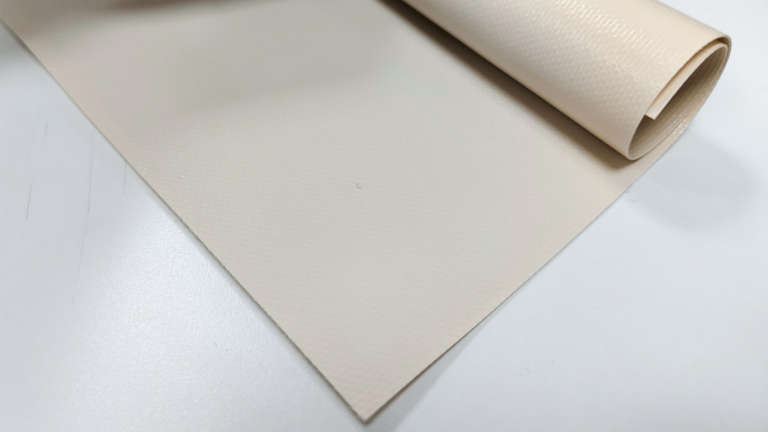
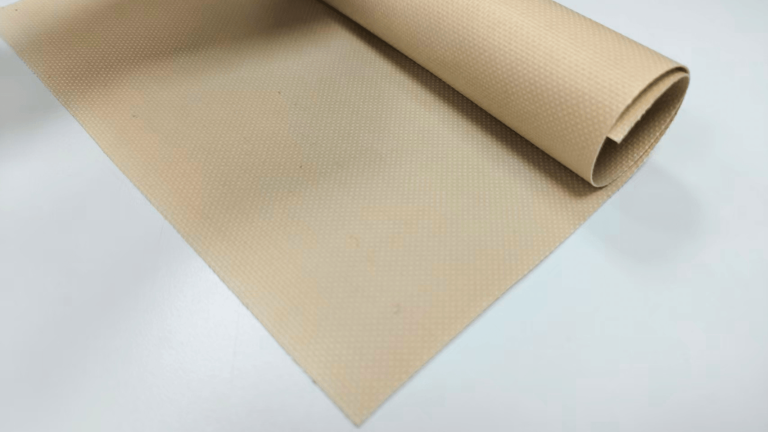
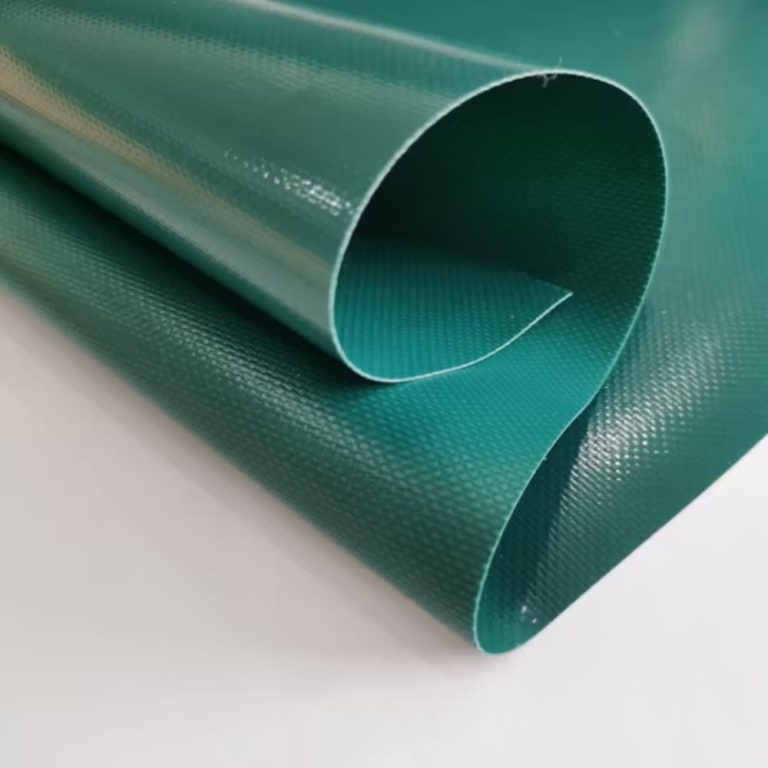
PVC tarpaulin is one of the most durable and widely used tarpaulin materials for heavy-duty outdoor applications. It is usually made from polyester fabric coated or laminated with PVC (polyvinyl chloride), which gives the material strong waterproof performance, high tear strength, and long-term weather resistance.
If you need a tarp for truck covers, cargo protection, industrial covers, construction sites, or long-term outdoor use, PVC tarpaulin is often the preferred choice. Compared with lighter materials like PE tarpaulin, PVC tarps are heavier, stronger, and more resistant to UV exposure, rain, wind, and abrasion.
PVC tarpaulins are also commonly used for:
- truck side curtains
- trailer covers
- industrial equipment covers
- warehouse curtains
- inflatable products
- outdoor canopies
Many PVC tarpaulins can also be produced with flame-retardant, anti-UV, anti-mildew, or cold-resistant properties depending on the application requirements.
PE Tarpaulin
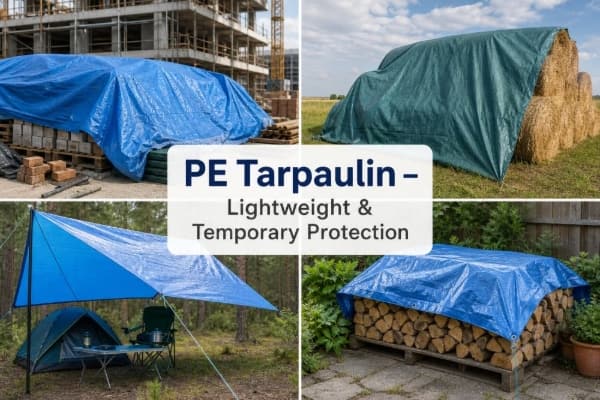
PE tarpaulin is a lightweight and economical tarp material made from polyethylene. It is commonly used for temporary outdoor covering and general-purpose protection where cost and portability are more important than long-term durability.
Compared with PVC tarpaulin, PE tarps are lighter, easier to handle, and usually more affordable. If you need a tarp for temporary construction covering, agricultural protection, camping, or short-term cargo covering, PE tarpaulin is often a practical option.
PE tarpaulins are commonly used for:
- temporary roof covers
- construction site protection
- outdoor ground sheets
- camping shelters
- agricultural covering
- garden and household use
However, PE tarpaulins are generally less durable than PVC tarpaulins and may have a shorter outdoor lifespan under strong sunlight or harsh weather conditions.
Canvas Tarpaulin
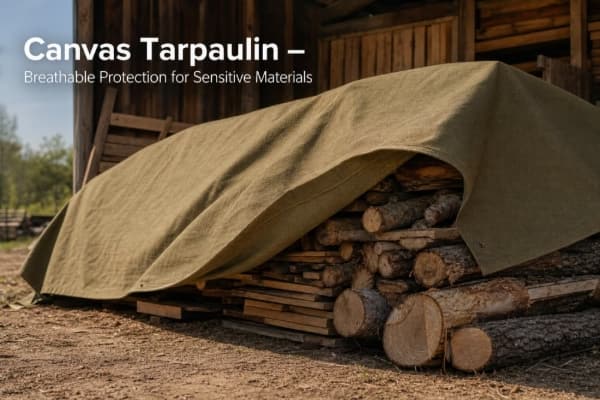
Canvas tarpaulin is a more traditional tarp material usually made from cotton canvas or polyester-cotton fabric. Unlike PVC or PE tarpaulins, canvas tarps are breathable, which helps reduce moisture buildup and condensation underneath the cover.
If you are covering materials that need airflow, such as wood, machinery, or agricultural products, canvas tarpaulin can be a better choice than fully waterproof plastic tarps.
Canvas tarps are commonly used for:
- equipment covers
- machinery protection
- outdoor storage
- camping applications
- lumber covering
Although canvas tarpaulins are durable and reusable, they are usually heavier than PE tarps and may require waterproof treatment for extended outdoor exposure.
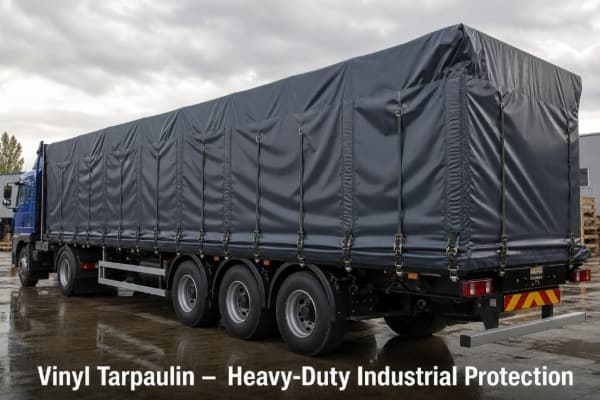
Vinyl Tarpaulin
Vinyl tarpaulin, often called a vinyl tarp, is a heavy-duty waterproof material designed for demanding outdoor and industrial applications. In many cases, vinyl tarpaulin is similar to PVC tarpaulin because both use vinyl-based coatings for waterproof protection and durability.
Vinyl tarps are known for their strong weather resistance, flexibility, and long outdoor lifespan. If you need reliable protection for transportation, construction, industrial equipment, or outdoor storage, vinyl tarpaulin is commonly used for those environments.
Common vinyl tarp applications include:
- flatbed truck covers
- industrial curtains
- equipment covers
- outdoor storage protection
- construction barriers
Compared with lightweight PE tarps, vinyl tarps are usually thicker, stronger, and better suited for heavy-duty use.
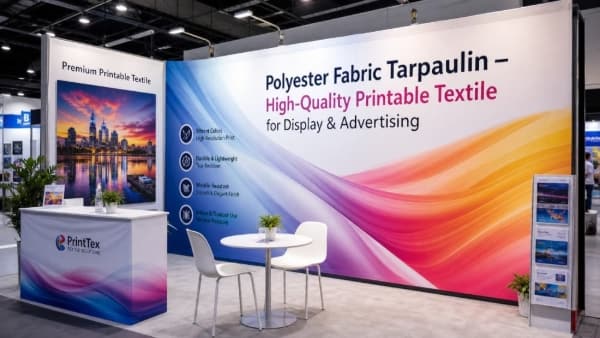
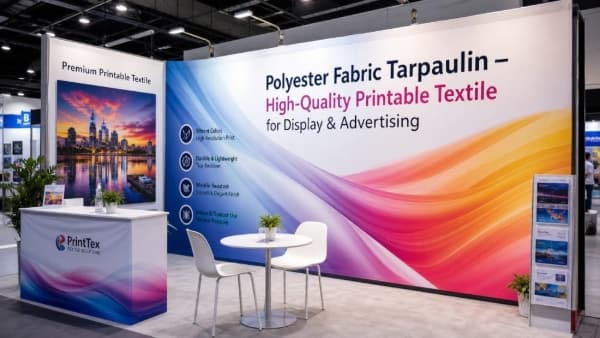
Polyester Fabric Tarpaulin
Polyester fabric tarpaulin is commonly used for printable textile and display applications rather than heavy-duty covering. The material is lightweight, flexible, and designed to work with modern digital printing technologies such as dye sublimation printing, UV printing, and latex printing.
If you need fabric materials for advertising, exhibition displays, soft signage, or indoor graphics, polyester fabric tarpaulin is often a better choice than traditional PVC tarps because it provides a softer texture and higher print quality.
Polyester fabric tarpaulins are commonly used for:
- fabric banners
- soft signage
- exhibition displays
- tension fabric systems
- backdrops
- retail graphics
Compared with PVC banner materials, polyester fabric materials are usually lighter, foldable, and more suitable for high-resolution textile printing applications.
Types of Tarpaulin
When you are choosing a tarpaulin, the material matters more than anything else. Different types of tarps are designed for different working conditions—some focus on long-term outdoor durability, while others are better for temporary covering, ventilation, or safety requirements.
Instead of thinking of tarpaulin as a single product, it helps to see it as a group of materials, each solving a different problem. The table below gives you a quick comparison, followed by a more practical breakdown of each type so you can decide what actually fits your use case.
| Tarpaulin Type | Main Material | Features | Common Uses |
|---|---|---|---|
| PVC Tarpaulin | PVC coated polyester | Waterproof, heavy-duty, UV resistant, long service life | Truck covers, industrial protection, outdoor storage |
| PE Tarpaulin | Polyethylene | Lightweight, low-cost, basic waterproofing | Temporary shelter, construction covering, short-term protection |
| Canvas Tarp | Cotton canvas | Breathable, reduces condensation, natural material | Camping, equipment covering, storage of sensitive goods |
| Mesh Tarpaulin | PVC mesh | Airflow, wind reduction, semi-visibility | Fence screens, scaffolding covers, shade structures |
| Fire Retardant Tarp | PVC with FR treatment | Flame resistant, safety compliant | Construction sites, industrial and regulated environments |
PVC Tarpaulin
PVC tarpaulin is what you usually choose when you need long-term outdoor protection. It is made by coating polyester fabric with PVC, which creates a strong, fully waterproof structure with high resistance to UV, tearing, and harsh weather.
If you are covering trucks, machinery, or equipment that stays outside for months or even years, PVC tarpaulin is usually the safer choice. Compared with PE tarpaulin, it is heavier and more expensive, but the trade-off is much longer service life and better stability in extreme conditions.
In real projects, you will often see PVC tarps used for truck side curtains, logistics covers, construction site roofing, and industrial storage systems where failure is not an option.
PE Tarpaulin
PE tarpaulin is designed for situations where you need basic protection at a lower cost. It is made from woven polyethylene and is much lighter than PVC, which makes it easy to carry, install, and replace.
If your project is short-term—like covering building materials during construction or protecting goods during transport—PE tarpaulin is often enough. It provides waterproof protection, but it is not designed for long exposure to strong sunlight or heavy weather.
Compared with PVC tarpaulin, PE tarps are more economical, but you should expect a shorter lifespan, especially in outdoor environments.
Canvas Tarp
Canvas tarpaulin is different from plastic-based tarps because it is breathable. This means air can pass through the material, which helps reduce moisture and condensation underneath the cover.
If you are covering items like wood, tools, or equipment that should not trap moisture, canvas can be a better option than fully waterproof tarps. It is also commonly used in camping because it creates a more natural and comfortable shelter environment.
However, if your priority is full waterproofing for long-term outdoor exposure, PVC or PE tarpaulins are usually more suitable.

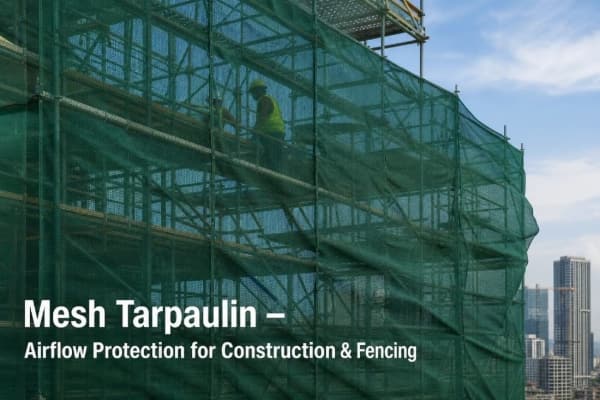
Mesh Tarpaulin
Mesh tarpaulin is designed for airflow rather than full coverage. Instead of blocking wind completely, it allows air to pass through while still providing shading and partial protection.
If you have seen construction site fences or scaffolding wrapped with semi-transparent material, that is usually mesh tarpaulin. It helps reduce wind pressure while still offering dust control and privacy.
This type is not meant for waterproof sealing, but it works well in environments where ventilation is more important than full protection.
Fire Retardant Tarpaulin
Fire retardant tarpaulin is typically based on PVC material with an added flame-resistant treatment. It is used in environments where safety regulations require materials that can slow down or resist fire spread.
If you are working on construction sites, industrial zones, or projects with strict safety requirements, this type is often mandatory rather than optional.
Compared with standard PVC tarpaulin, the key difference is not waterproof performance or strength, but safety behavior under high heat or fire exposure.
What Is Tarpaulin Used For?
Tarpaulin is used anywhere you need to protect something from weather, dust, sunlight, or short-term environmental exposure. In real projects, you don’t choose tarpaulin just by material—you choose it based on how long the protection needs to last and how harsh the conditions are.
For example, if you are covering goods for a few days, a lightweight PE tarpaulin is usually enough. But if you are protecting equipment on a truck or construction site for months, you will more likely need a heavy-duty PVC tarpaulin with stronger waterproof and UV resistance.
Below are the most common industries where tarpaulin is used, and how you can think about material selection in each case.
Transportation Industry
In transportation, tarpaulin is mainly used to protect goods during loading, storage, and long-distance shipping. You will often see it used as truck tarps, trailer covers, and for general cargo protection on flatbed trucks.
The main goal here is to keep cargo safe from rain, wind, road dust, and sunlight during transit. If your trucks run long routes or operate outdoors most of the time, PVC tarpaulin is usually the better choice because it holds up better under constant tension and weather exposure. PE tarps can still work for short-distance or temporary transport, but they tend to wear out faster.
Construction Industry
On construction sites, tarpaulin is used to cover materials, protect unfinished structures, and sometimes act as temporary barriers. You will commonly see construction tarps, site covers, and scaffold sheeting used around buildings under construction.
Here, the conditions are often harsh—wind, dust, rain, and constant movement. If you are covering scaffolding or protecting materials for a longer project, PVC tarpaulin is usually preferred because of its strength and durability. For short-term coverage of building materials, PE tarpaulin can be a more economical option.
Agriculture
In agriculture, tarpaulin is used to protect harvested crops and farming equipment. Common applications include hay covers, grain protection, and greenhouse covers.
If you are storing hay or grain outdoors, you need protection from rain and moisture while still considering airflow in some cases. PE tarpaulin is often used for seasonal or temporary covering because it is cost-effective. For longer storage or more demanding environments, PVC tarpaulin offers better weather resistance and longer service life.
Outdoor & Camping
For outdoor activities, tarpaulin is used as lightweight shelter or ground protection. You will see it used as a camping tarp, tent shelter, or rain fly in hiking and camping setups.
In this case, weight and portability matter more than industrial strength. PE tarpaulin is commonly used because it is light and easy to carry. Canvas tarpaulin is also popular when breathability and comfort are more important than full waterproof sealing. PVC tarpaulin is usually less common here because it is heavier and less flexible for backpacking use.
Printing & Advertising
In the printing and advertising industry, tarpaulin is widely used as a flexible base material for large-format graphics. This includes printable tarpaulin, flex banner, frontlit banner, and billboard material.
Here, the key requirement is printability and color performance rather than just protection. PVC tarpaulin is commonly used because it provides a stable surface for high-quality printing and holds ink well under outdoor exposure. Depending on the application, different coatings and fabric structures are used to balance durability and visual quality, especially for long-term outdoor advertising.
Key Features of Tarpaulin
When you are choosing a tarpaulin, you are really choosing how it will perform in real working conditions—rain, sunlight, wind, handling, and long-term exposure. Different materials like PVC and PE can perform very differently, so it’s worth understanding what each key feature actually means in daily use, not just on paper.
Waterproof Performance
Waterproof performance tells you how well a tarpaulin can keep water out during rain, storms, or long outdoor exposure. In real use, this is what decides whether your cargo, equipment, or covering stays completely dry or slowly absorbs moisture over time.
If you are covering goods on a truck or protecting materials on a construction site, this feature directly affects whether you will face damage or not. PVC tarpaulin usually offers stronger and more stable waterproof performance because of its coated structure, making it more suitable for long-term outdoor use. PE tarpaulin is also waterproof, but it is typically used for shorter-term protection where long exposure is not a concern.
UV Resistance
UV resistance is about how well the material can handle long exposure to sunlight without becoming brittle, faded, or weakened. If your tarpaulin is used outdoors for weeks or months, UV performance becomes very important.
In practical terms, poor UV resistance means the tarp may crack or lose strength faster, especially in hot climates. PVC tarpaulin generally performs better in long-term UV exposure compared to PE tarps, which are more suitable for temporary or seasonal covering. If you are working on outdoor storage or transport that stays under direct sunlight, this is one of the features you should not overlook.
Tear Strength
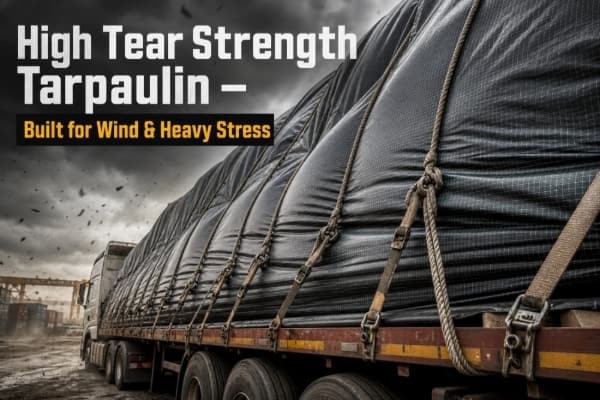
Tear strength describes how well the tarpaulin can resist ripping when it is pulled, stretched, or exposed to strong wind. In real situations, this often matters more than people expect—especially on trucks or construction sites where the material is constantly under tension.
If a tarpaulin tears easily, even a small damage can spread quickly and make the whole cover unusable. PVC tarpaulin usually provides higher tear strength due to its reinforced fabric base, making it more suitable for heavy-duty applications. PE tarpaulin can handle lighter use, but it is not designed for high-stress environments.
Flame Retardancy
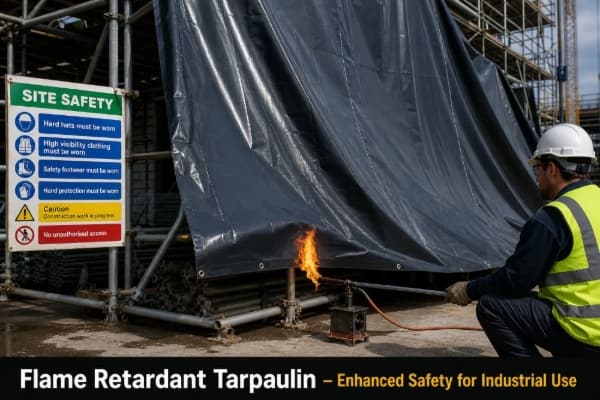
Flame retardancy refers to how the tarpaulin reacts when exposed to fire or high heat. It does not necessarily mean the material is completely fireproof, but it can slow down flame spread and reduce risk in sensitive environments.
This feature is especially important on construction sites, industrial areas, or any project where safety regulations apply. Flame-retardant PVC tarpaulin is commonly used in these situations. PE tarpaulin usually does not provide the same level of fire safety unless specially treated, so it is less common in regulated environments.
Weather Resistance
Weather resistance is a combination of how well the tarpaulin handles rain, wind, temperature changes, and general outdoor exposure. In real use, this is what determines whether the tarp stays stable across different seasons.
If you are using tarpaulin outdoors year-round, you need a material that does not easily degrade when conditions change. PVC tarpaulin is generally more stable in harsh weather, while PE tarpaulin works better for short-term or occasional use. If your project involves long exposure outdoors, weather resistance becomes a key factor in choosing the right material.
Mold Resistance
Mold resistance is about how well the tarpaulin prevents mold or mildew from forming, especially in humid or wet environments. This is important if the tarp stays folded, stored, or exposed to moisture for long periods.
In real applications like agriculture or storage covering, poor mold resistance can affect both the tarpaulin itself and the materials underneath it. PVC tarpaulin usually has better resistance due to its surface structure, while PE tarps may require more careful storage to avoid long-term moisture issues.
Flexibility
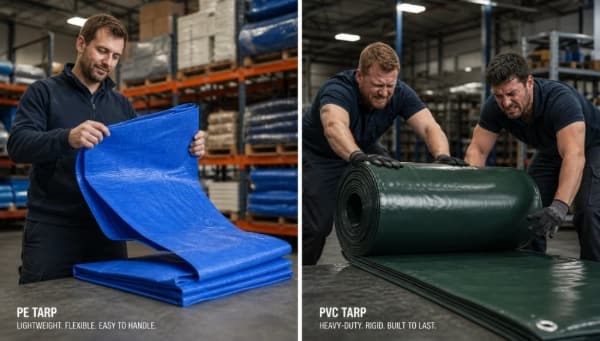
Flexibility describes how easy it is to handle, fold, install, and transport the tarpaulin. In practical use, this affects how quickly you can deploy it and how convenient it is for repeated use.
If you are working in situations where you frequently set up and remove covers—such as camping, temporary construction, or logistics—flexibility becomes very important. PE tarpaulin is usually lighter and easier to handle, making it more convenient for short-term use. PVC tarpaulin is heavier and more rigid, but it offers better durability for long-term applications where frequent movement is not required.
Advantages of Tarpaulin
Tarpaulin is popular in many industries because it solves a very simple problem: protecting goods and structures in real outdoor conditions without high cost or complicated setup. Below are the practical advantages you can expect when using tarpaulin in real applications, not just on paper.
- Cost-effective protection — You can cover large areas or valuable goods without investing in rigid structures, which is especially useful for temporary projects or large-scale coverage like construction or logistics storage.
- Long service life — When you choose the right material, such as PVC for long-term outdoor use, tarpaulin can stay functional for months or even years under proper conditions, while PE is better suited for shorter cycles.
- Easy installation — Most tarpaulins are designed to be quickly deployed and secured with ropes, eyelets, or frames, which saves time on job sites where speed matters.
- Reusable material — Unlike disposable coverings, tarpaulin can be folded, stored, and reused multiple times, making it practical for ongoing operations like transport, agriculture, or seasonal covering.
- Excellent outdoor durability — In real use, tarpaulin performs well against rain, sunlight, and wind, especially PVC-based tarps, which are often chosen for long-term outdoor exposure compared to lighter PE options.
- Available in multiple sizes and thicknesses — You can choose different weights and dimensions depending on the job, whether you need a lightweight cover for temporary protection or a heavy-duty sheet for industrial and transportation use.
How to Choose the Right Tarpaulin
Choosing the right tarpaulin is less about finding “the best one” and more about matching the material to how you will actually use it. A truck cover, a construction sheet, and a greenhouse cover all face very different conditions, so the right choice depends on your application, budget, and how long you expect it to last.
Below is a practical way to decide step by step, based on real usage scenarios.
Choose by Application
The easiest way to start is by asking: where will you actually use the tarpaulin?
If you are using it as a truck cover or trailer cover, your priority is strong tension resistance and long outdoor exposure. In this case, PVC tarpaulin is usually more reliable because it can handle wind, rain, and long-distance transport better than lightweight options.
For a canopy or temporary shelter, you care more about ease of setup and weight. PE tarpaulin is often enough if the structure is temporary, while PVC is better if the canopy will stay outdoors for a longer period.
In agriculture, such as covering hay or protecting grain, you are usually balancing cost and coverage size. PE tarpaulin is commonly used for seasonal protection, while PVC is chosen when you need longer storage or stronger weather resistance.
For construction sites, durability matters more than cost. Materials are often exposed to wind, dust, and rough handling, so PVC tarpaulin is typically preferred for scaffolding, site covers, and long-term protection.
Choose by Thickness
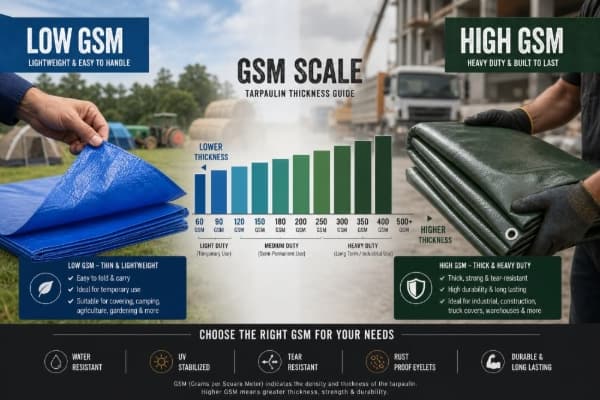
Thickness affects how strong and durable a tarpaulin feels in real use. It is often measured in GSM (grams per square meter), which simply means how much the material weighs per square meter.
In simple terms:
- Lower GSM = lighter, easier to handle, but less durable
- Higher GSM = thicker, stronger, but heavier and more expensive
If you only need lightweight coverage for short-term use—like temporary rain protection or quick agricultural covering—a lower GSM PE tarpaulin is usually enough.
If you need heavy-duty performance, such as truck covering, industrial protection, or long outdoor exposure, a higher GSM PVC tarpaulin is a safer choice. It handles tension, wind, and repeated use much better.
Choose by Waterproof Level
Not all waterproof tarpaulins perform the same in real rain conditions. Some only resist light rain, while others can handle continuous heavy exposure.
If you are covering goods for a short time or in mild weather, standard PE tarpaulin usually provides enough protection. But if water exposure is frequent or prolonged—such as outdoor storage or transportation during rainy seasons—PVC tarpaulin is more stable and less likely to leak over time.
In practice, the more critical your cargo or equipment is, the higher waterproof performance you should prioritize.
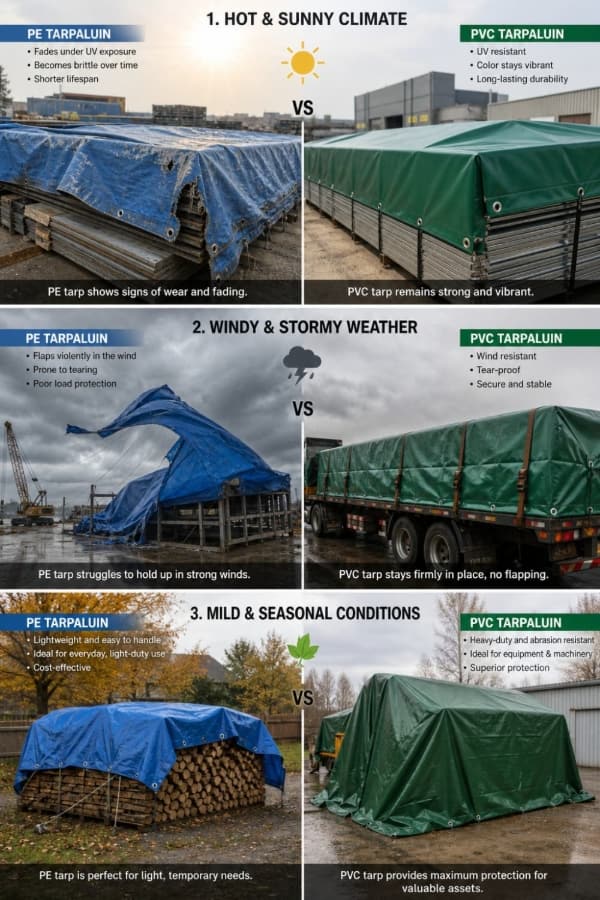
Choose by Climate Conditions
Climate has a direct impact on how long your tarpaulin will last.
If you are working in hot and sunny regions, UV exposure becomes a key factor. PVC tarpaulin performs better under long-term sunlight because it is more resistant to UV degradation.
In windy or storm-prone areas, strength and tear resistance matter more than weight. Heavier-duty materials like PVC-coated tarpaulin are less likely to tear or fail under tension.
For mild or seasonal climates, PE tarpaulin can be a practical and cost-efficient choice since extreme durability is not always required.
Choose by Durability Requirements
The final question is simple: how long do you need the tarpaulin to last?
If you only need protection for a few days or weeks, a lightweight PE tarpaulin is usually sufficient and cost-effective.
If you expect months of outdoor use, or repeated installation and removal, you should consider PVC tarpaulin. It is more resistant to wear, stretching, and environmental stress, which makes it suitable for long-term or industrial applications.
In short, the more critical and long-term your application is, the more you should prioritize durability over initial cost.
What Is GSM in Tarpaulin?
If you are comparing tarpaulins, you will often see “GSM” mentioned in product descriptions. In simple terms, GSM is a way to describe how heavy and thick the material is. It helps you understand whether a tarpaulin is light for temporary use or strong enough for long-term outdoor protection.
Instead of thinking of GSM as a technical measurement, it is more useful to think of it as a quick way to judge durability and application suitability.
GSM meaning
GSM stands for grams per square meter. It tells you how much one square meter of tarpaulin weighs.
In real terms, a higher GSM usually means the material is thicker, stronger, and more resistant to wear. A lower GSM means the tarpaulin is lighter and easier to handle, but also less durable under harsh conditions.
For example, if you pick up a low-GSM PE tarpaulin, it will feel thin and flexible. A high-GSM PVC tarpaulin, on the other hand, will feel heavier, denser, and more solid.
Common GSM ranges
In practical use, tarpaulins are usually grouped into a few general ranges:
- Lightweight (around 80–150 GSM) — Often PE tarpaulins used for short-term covering, temporary shelters, or quick protection jobs.
- Medium weight (around 150–350 GSM) — A balance between cost and durability, used in general construction or agricultural covering.
- Heavy-duty (350 GSM and above) — Typically PVC tarpaulins designed for long-term outdoor use, truck covers, industrial protection, and demanding environments.
These ranges are not strict rules, but they help you quickly understand what level of performance to expect.
How GSM affects strength and durability
GSM directly influences how a tarpaulin performs in real working conditions.
If the GSM is low, the material is usually lighter and easier to handle, but it may tear more easily under strong wind or repeated tension. This is fine for temporary use, but not ideal for long-term exposure.
If the GSM is higher, the tarpaulin usually has better tear resistance, stronger structure, and longer outdoor life. This is why heavy-duty PVC tarpaulins are often chosen for truck covers or construction sites, where the material is constantly exposed to stress and weather.
In simple terms: higher GSM usually means better durability, but also more weight and higher cost.
Practical selection guidance
When choosing GSM, it helps to think about how long and how hard the tarpaulin will be used.
If you only need short-term protection—like covering materials during transport or protecting goods for a few days—a lighter GSM PE tarpaulin is usually enough.
If you are working in construction, agriculture, or regular outdoor use where the tarp will stay in place for weeks or months, a medium to higher GSM option is more suitable.
For demanding applications like truck covers, industrial storage, or long-term outdoor exposure, you should generally look at higher GSM PVC tarpaulins, where strength and durability are more important than weight.
In real purchasing decisions, GSM is not just a number—it is one of the simplest ways to predict how long your tarpaulin will actually last in your specific environment.
What Is the Difference Between PVC and PE Tarpaulin?
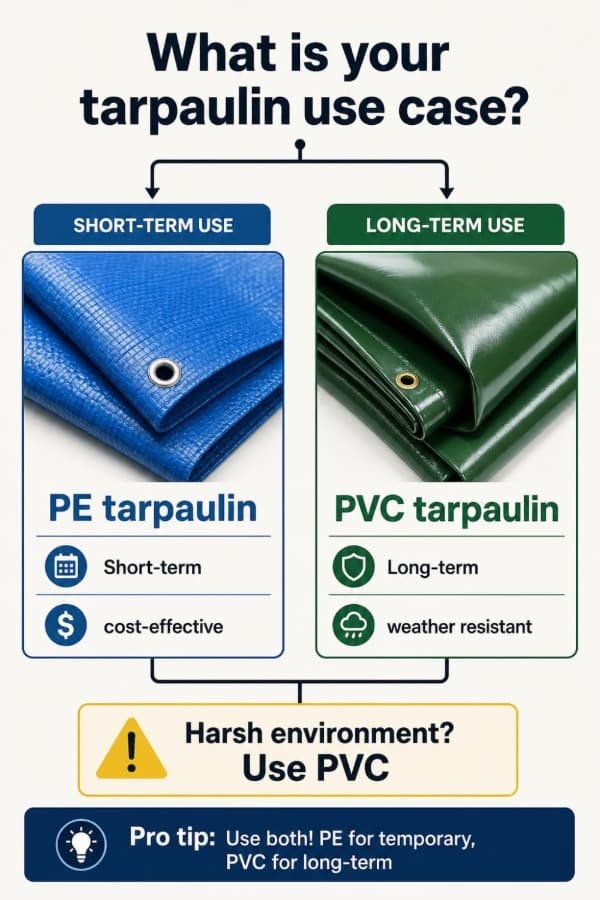
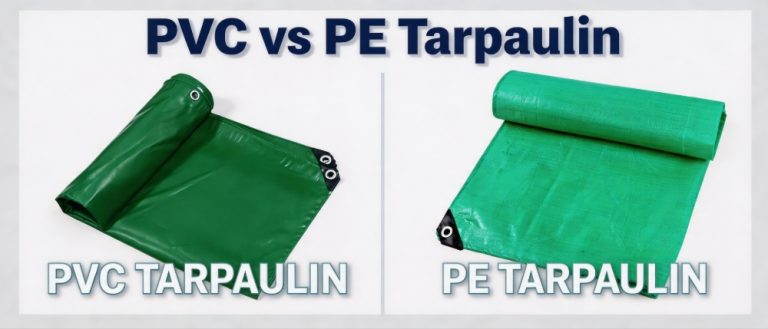
If you are deciding between PVC and PE tarpaulin, the main difference is not just the material itself, but how long and how hard you expect it to work in real conditions. PVC is generally designed for heavier and longer-term use, while PE is more focused on lightweight and short-term protection.
In simple terms, PVC tarpaulin is built for durability and repeated outdoor exposure, while PE tarpaulin is more about convenience and cost efficiency for temporary covering tasks.
PVC vs PE Tarpaulin Comparison
| Feature | PVC Tarpaulin | PE Tarpaulin |
|---|---|---|
| Durability | High | Medium |
| Waterproof | Excellent | Good |
| Lifespan | Longer | Shorter |
| Cost | Higher | Lower |
| Applications | Industrial | General use |
How to choose between PVC and PE
In real use, your choice usually comes down to how long the tarpaulin will stay in service and how harsh the environment is.
If you are working on something like truck covers, construction sites, or outdoor storage that stays exposed for weeks or months, PVC tarpaulin is usually the safer choice. It handles wind, rain, and UV exposure better over time, so you don’t need to replace it frequently.
On the other hand, if your use case is temporary—such as short-term cargo covering, seasonal agricultural protection, or basic construction shielding—PE tarpaulin often makes more sense. It is lighter, easier to handle, and more cost-effective when long-term durability is not critical.
Practical selection logic
A simple way to decide is this:
- If your priority is long service life and strong outdoor resistance, you will likely need PVC tarpaulin.
- If your priority is low cost and temporary protection, PE tarpaulin is usually enough.
In many real projects, people actually use both: PE for short-term covering during early stages, and PVC for long-term or high-value protection once conditions become more demanding.
How Long Does Tarpaulin Last?
There is no fixed lifespan for tarpaulin because its durability depends heavily on how and where you use it. The same sheet can last a few months in harsh conditions or several years in stable environments. In real use, what matters more is not the number of years, but the combination of material quality and working conditions.
If you are choosing a tarpaulin for your project, it helps to understand what actually affects how long it will last in daily use.
UV exposure
Sunlight is one of the biggest factors that affects tarpaulin lifespan. Continuous UV exposure slowly breaks down the material surface, making it weaker, more brittle, and easier to tear over time.
If your tarpaulin is used outdoors in strong sunlight—such as truck covers, construction sites, or agricultural storage—it will naturally age faster than indoor or shaded applications. PVC tarpaulin generally handles UV exposure better than PE, especially in long-term outdoor use, but both materials will degrade if exposed constantly without protection.
Climate conditions
Weather conditions directly influence how long a tarpaulin can perform properly. High temperatures can soften or stress the material, while cold environments can make it less flexible and more prone to cracking during handling.
In areas with heavy rain or frequent storms, constant moisture and wind pressure also shorten lifespan because the material is under continuous physical stress. In general, harsher and more unpredictable climates require more durable materials, with PVC tarpaulin usually performing better for long-term exposure compared to lighter PE options.
Material quality
Material type and overall build quality are the core factors that decide durability. PVC tarpaulin is typically thicker, more reinforced, and better suited for long-term and heavy-duty use. PE tarpaulin is lighter and more economical, but it is usually designed for short-term or seasonal applications.
GSM also plays an important role here. A higher GSM generally means thicker material and better resistance to tearing and wear, while lower GSM is easier to handle but less durable under stress. In real purchasing decisions, this is often where users decide between lightweight convenience and long-term stability.
Maintenance & usage habits
How you use and store tarpaulin can significantly change its lifespan. If it is dragged on rough surfaces, left under constant tension, or exposed to sharp edges, it will wear out much faster.
Simple habits like cleaning dirt after use, avoiding unnecessary folding stress, and storing it in a dry place when not in use can noticeably extend its service life. In practice, many tarpaulins fail early not because of material quality, but because of poor handling or storage conditions.
PVC vs PE lifespan in real use
In general, PVC tarpaulin tends to last longer in outdoor and industrial environments because of its stronger structure and better resistance to UV and weather exposure. PE tarpaulin usually has a shorter lifespan but is sufficient for temporary or low-stress applications where replacement is acceptable.
Practical takeaway
If your project is short-term or seasonal, PE tarpaulin is usually enough and cost-efficient. If you need long-term outdoor coverage, repeated use, or exposure to harsh conditions, PVC tarpaulin is generally the more reliable choice.
In real use, tarpaulin lifespan is not just about the product itself—it is about matching the material to the environment and how carefully it is used.
How to Maintain Tarpaulin
Proper maintenance is one of the simplest ways to extend the life of a tarpaulin. In real use, most damage doesn’t happen during normal coverage, but during cleaning, folding, or storage. If you handle it correctly, even a mid-range tarpaulin can last significantly longer and perform more consistently.
Below are the practical steps you can follow in everyday use.
Cleaning
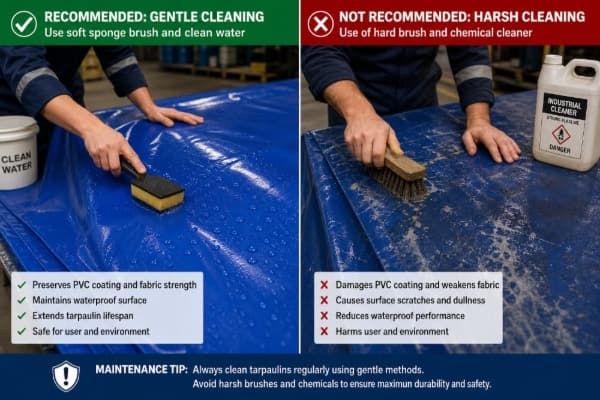
When cleaning a tarpaulin, the goal is to remove dirt without damaging the surface coating. In most cases, simple water and a soft brush are enough to clean dust, mud, or light stains.
If you are dealing with heavier dirt, you can use mild soap mixed with water, but avoid strong chemical cleaners because they can weaken the waterproof coating over time. This is especially important for PVC tarpaulin, where the protective layer is key to long-term performance.
A common mistake is scrubbing too hard or using sharp tools, which can scratch the surface and reduce waterproof effectiveness even if the damage is not visible immediately.
Storage
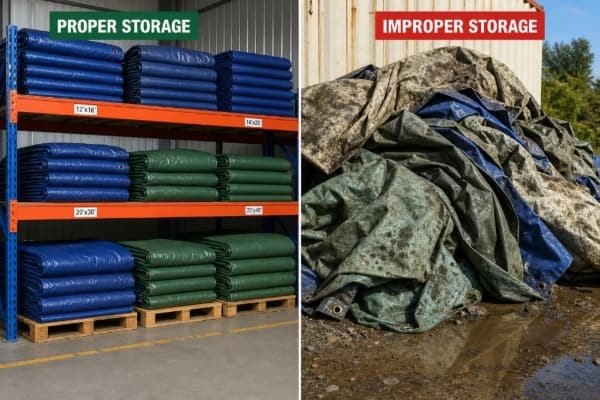
How you store tarpaulin has a direct impact on how long it lasts. The most important rule is to keep it in a dry and shaded environment.
If tarpaulin is stored while still damp, moisture can lead to mold, odor, and material degradation over time. Direct sunlight during storage can also slowly age the material, especially for PE tarpaulins.
In real use, many early failures happen not during operation, but because the tarpaulin was folded and stored without proper drying.
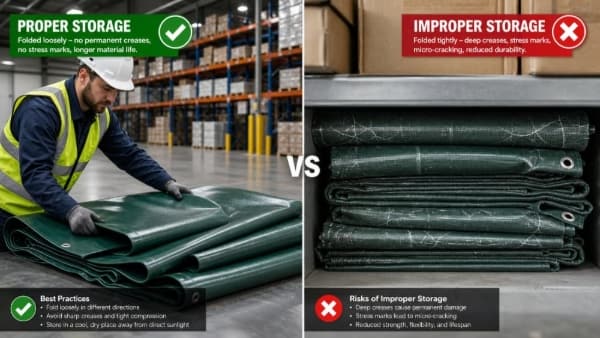
Folding
Correct folding helps prevent permanent creases and cracking. Instead of folding the tarpaulin in the same lines every time, it is better to change folding directions occasionally to avoid stress concentration on the same points.
If a tarpaulin is always folded tightly in the same pattern, the repeated stress can eventually create weak lines where tearing starts.
A practical habit is to fold it loosely when possible and avoid forcing it into very small storage spaces, especially for thicker PVC tarpaulins, which need more gentle handling.
Repair
Small damage does not always mean the tarpaulin needs to be replaced. In many cases, early repair can significantly extend its usable life.
If you notice small holes or minor tears, you can use repair patches or sealing tape designed for tarpaulin material. Fixing damage early prevents it from spreading, especially in windy conditions where stress can quickly enlarge a small tear.
The key is to repair as soon as possible. Waiting too long often turns a small, easy fix into a full replacement.
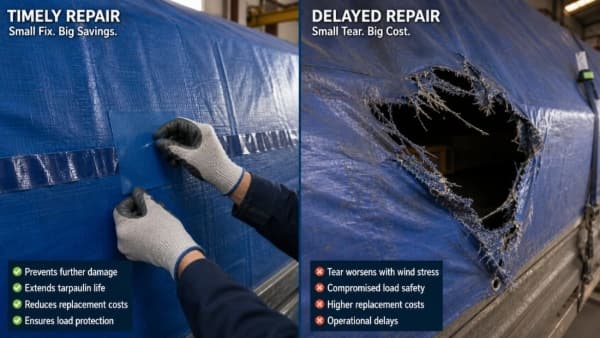
In practice, tarpaulin lifespan is not only determined by material quality like PVC or PE, but also by how carefully you clean, store, fold, and repair it. Proper maintenance often makes a bigger difference than most users expect.
Common Tarpaulin Sizes
Tarpaulin sizes are usually written in length × width (for example, 6×8 means 6 feet by 8 feet). In real use, the right size is not just about covering an object exactly—it also depends on how you plan to secure the edges, overlap the material, and handle wind or movement.
Below are some of the most common tarpaulin sizes and how they are typically used in real situations.
6×8 tarp
A 6×8 tarp is considered a small-size option. In practice, you usually use it for light coverage where the object is not too large or exposure time is short.
You might choose this size for covering small tools, garden equipment, or quick protection of items during transport. It is also commonly used when portability matters more than full-area coverage.
If you find yourself needing to move or adjust the tarp frequently, this size is easier to handle, but it may not be suitable for large or irregular-shaped loads.
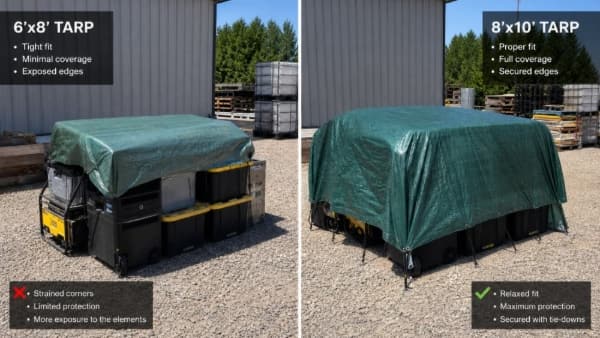
8×10 tarp
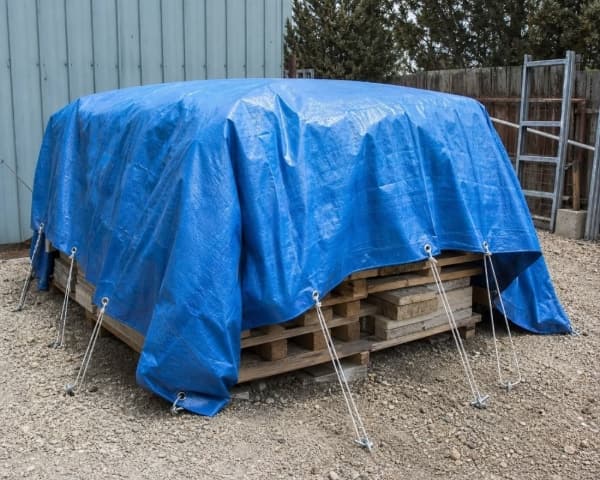
An 8×10 tarp is a very common mid-small size that works well for general-purpose covering.
You can use it for small vehicles, stacked materials, or temporary outdoor protection. It gives you a bit more flexibility compared to 6×8, especially when you need extra edge overlap for tying or securing.
In real use, this size often becomes a “default choice” for light construction or household outdoor covering tasks.
10×12 tarp
A 10×12 tarp is one of the most frequently used medium sizes in both commercial and industrial applications.
It works well for covering medium-sized loads, small trucks, construction materials, or agricultural products. At this size, you usually start thinking more about durability and wind resistance, not just coverage area.
If you are unsure which size to choose for general use, 10×12 is often a balanced option between coverage and manageability.
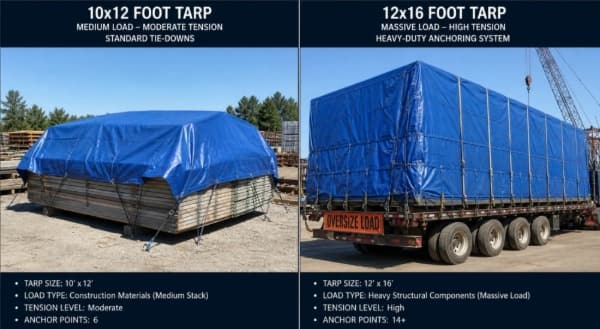
12×16 tarp
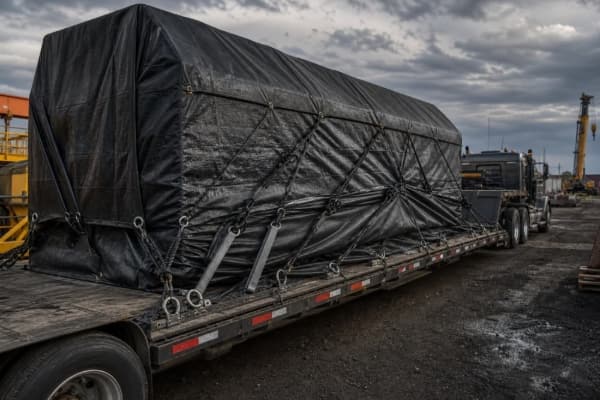
A 12×16 tarp is better suited for larger coverage needs where protection area becomes more important than easy handling.
You will often see this size used for truck covers, construction site protection, or larger equipment storage. Because of its size, it usually requires stronger fixing points and better material strength, especially in windy outdoor environments.
At this stage, material choice (such as PVC vs PE) becomes more important because larger tarps are exposed to higher tension and environmental stress.
How to choose the right size
In real applications, choosing the right tarpaulin size is not only about matching the object dimensions. You should also consider:
- Coverage overlap — You usually need extra space beyond the object size for secure tying and wind resistance
- Fixing method — Rope, eyelets, or frames may require additional edge allowance
- Environment conditions — Windy or outdoor settings often require larger coverage for stability
- Ease of handling — Larger tarps provide better coverage but are harder to install and move
A simple rule is: if you are between two sizes, the slightly larger option is usually safer for real-world use.
Custom tarpaulin size
If standard sizes like 6×8, 10×12, or 12×16 do not fully match your application, a custom tarpaulin size is often the better solution.
Custom sizing is commonly used for irregular cargo, specific truck dimensions, industrial equipment, or branded advertising covers where precise fitting is required.
In practice, custom tarpaulin helps you avoid both problems: a tarp that is too small to cover properly or too large and difficult to secure.
FAQs About Tarpaulin
Below are quick, practical answers to the most common questions about tarpaulin. Each answer is kept short so you can directly use it for decision-making or quick reference.
What is tarpaulin used for?
Tarpaulin is used to cover and protect goods, equipment, and outdoor areas from rain, sun, wind, and dust. You’ll see it commonly used in transport, construction, agriculture, and outdoor storage.
Is tarpaulin waterproof?
Yes, most tarpaulin materials are waterproof. PVC tarpaulin offers stronger and more reliable waterproof performance, while PE tarpaulin is suitable for lighter, short-term protection.
What material is best for tarpaulin?
PVC is generally best for heavy-duty and long-term outdoor use, while PE is better for lightweight and temporary applications. The right choice depends on your usage duration and environment.
What is the difference between tarp and tarpaulin?
There is no real difference in function. “Tarp” is just a shorter, more casual term for tarpaulin, commonly used in everyday language.
Which is better, PVC or PE tarpaulin?
PVC is better for durability, weather resistance, and long-term use, while PE is better for cost efficiency and temporary covering. Your choice depends on budget and usage time.
How long does tarpaulin last outdoors?
Tarpaulin can last from a few months to several years depending on material quality and exposure. PVC lasts longer in harsh outdoor conditions, especially under strong sunlight and wind.
Is tarpaulin UV resistant?
Yes, many tarpaulins are UV resistant, but performance varies. PVC tarpaulin generally offers better UV resistance than PE for long-term outdoor exposure.
Can tarpaulin be printed?
Yes, certain tarpaulins such as PVC-coated and polyester-based materials are printable. They are widely used for banners, advertising, and signage.
What thickness of tarpaulin is best?
It depends on usage. Light GSM is suitable for temporary covering, while higher GSM is better for heavy-duty applications like truck covers and construction protection.
Is canvas tarpaulin waterproof?
Canvas tarpaulin is not fully waterproof unless it is specially treated. It is more breathable and often used where airflow is needed.
What color tarpaulin lasts longest in sunlight?
Darker colors like blue or black generally resist UV degradation better than lighter colors. However, material quality matters more than color alone.
Can tarpaulin be recycled?
Some tarpaulin materials, especially PE-based types, can be recycled depending on local facilities. PVC recycling is more limited and depends on processing capabilities.
What is heavy duty tarpaulin?
Heavy-duty tarpaulin refers to thicker, stronger materials (usually high GSM PVC) designed for long-term use in demanding environments like construction, transport, and industrial storage.
What GSM tarpaulin should I choose?
Lower GSM is suitable for temporary use, while higher GSM is better for durability and long-term outdoor protection. In general, higher GSM means stronger and longer-lasting material.
Is tarpaulin suitable for truck covers?
Yes, tarpaulin is widely used for truck and trailer covers. PVC tarpaulin is usually preferred because it offers better strength, waterproofing, and wind resistance for transport use.
Why Choose UNISIGN Tarpaulin?
When you are choosing a tarpaulin supplier, the real question is usually not “who has the best product,” but “who can consistently deliver what you need without surprises in quality, size, or lead time.” UNISIGN is built around that kind of practical, long-term reliability.
15+ years manufacturing experience
With over 15 years in tarpaulin production, UNISIGN understands how materials behave in real use, not just in specifications. For you, this means fewer trial-and-error risks when selecting material, GSM, or application type.
OEM/ODM customization capability
If your project has specific requirements—branding, structure, or special application—you are not limited to standard options. OEM/ODM support allows you to adjust design, thickness, and finishing based on your actual use case, not just catalog sizes.
Custom sizes and specifications
Not every job fits standard dimensions like 6×8 or 10×12. Custom sizing helps you avoid issues like poor coverage, wasted material, or difficult installation. This is especially important for truck covers, industrial equipment, or advertising applications.
Global export experience
Working with international shipments is not only about logistics, but also consistency in documentation, packaging, and delivery expectations. For you, this reduces the risk of delays, miscommunication, or compliance issues in cross-border orders.
Strict quality control system
Each production stage is checked for consistency in coating, thickness, and durability. In practice, this means you are less likely to receive batch variations that affect performance in real outdoor conditions like wind, rain, or UV exposure.
Industrial-grade materials used
UNISIGN focuses on materials designed for real working environments, not light decorative use. This matters when your tarpaulin is used for trucks, construction sites, or long-term outdoor coverage where failure is not an option.
If you are comparing suppliers, the key difference usually comes down to reliability over time—not just product specifications. This is where consistent manufacturing control and practical customization support make a real difference in actual use.
![Top 10 Vinyl Tarp Manufacturers in the World [2026 Guide]](https://unisignflex.com/wp-content/uploads/2026/04/pvc-tarpaulin-product-line.jpg)