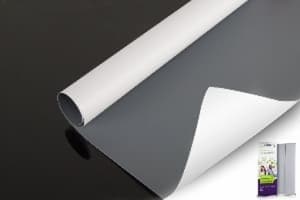
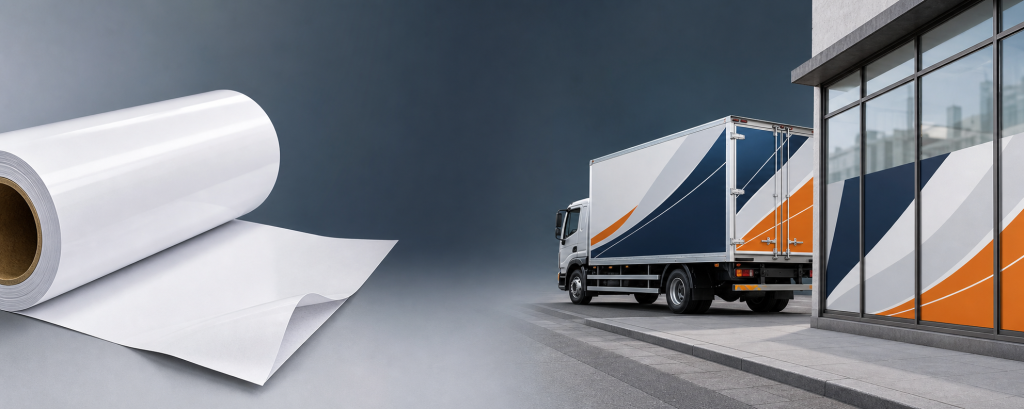
80 micron printable self adhesive vinyl is large-format roll media with a nominal 80µm / 0.08mm / 3.15mil printable face film. The standard SAV10/120 and transparent SAV10T/120 options use a 120gsm release liner. UV1501 is a different 80µm polymeric option with a 140gsm liner.
Choose by the surface, film class, adhesive, ink, required life and liner—not by 80 micron alone. An 80 micron film is not automatically less durable than a 100 micron film.

| Specification | Current Listed Range |
|---|---|
| Face Film | 80 micron / 80µm / 0.08mm / 3.15mil |
| Standard Liner | 120gsm for SAV10/120 and SAV10T/120 |
| Polymeric Option | 140gsm liner for UV1501 |
| Width Range | 0.914–1.52m / 36–60in |
| Standard Length | 50m / 164ft |
| Other Listed Lengths | 25m / 30m / 75m / 100m |
| Listed Ink Options | Solvent / Eco-Solvent / UV / Latex |
| Product Paths | Standard White / Transparent / Polymeric Bubble-Free |
| Main Uses | Flat Signs / Windows / Storefronts / Vehicle and Truck Advertising after model testing |
Quick buying answer
- Standard white promotional graphics: start with SAV10/120.
- Transparent window graphics: compare SAV10T/120.
- Polymeric, bubble-free option: review UV1501 for flat panels and simple curves.
- Complex curves or deep channels: ask for a suitable cast film instead of choosing by thickness.
Data scope: this page summarizes current public information for the listed UNISIGN models, reviewed on August 30, 2026. Confirm the latest tolerance, film class, finish, adhesive, ink compatibility, durability conditions, MOQ, lead time and technical document for the exact product and order.
What Does 80 Micron Self Adhesive Vinyl Mean?
80 micron normally refers to the nominal thickness of the printable face film. It may also be written as 80 mic, 80µm, 80 μm, 80um, 0.08mm or about 3.15mil. It does not include the adhesive or release liner unless the product data sheet says so.
| Number | Part Measured | Meaning |
|---|---|---|
| 80 micron / 0.08mm / 3.15mil | Printable face film | Nominal film thickness |
| 120gsm | Release liner | 120 grams of liner per square meter |
| 80120 | Common short specification | 80 micron face film + 120gsm liner |
| 140gsm | Release liner | A different liner weight used by some 80 micron products |
Important: film class, adhesive, liner construction, surface, exposure and laminate normally affect final performance more than the 80 micron number alone.
Choose an 80 Micron Product by Model
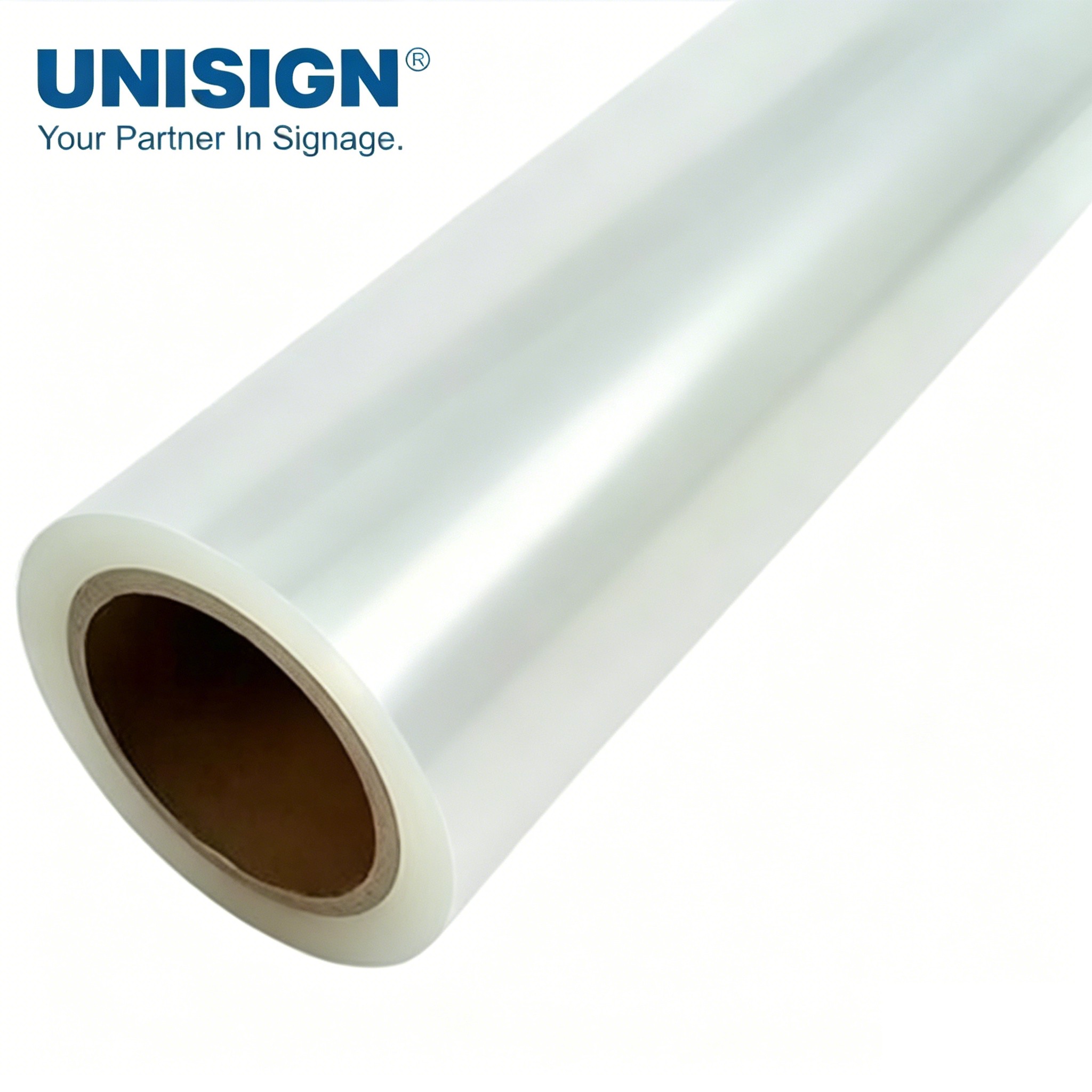
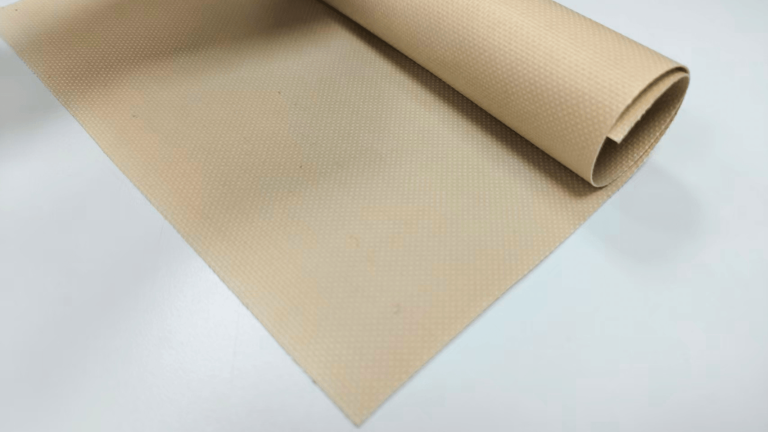
A product list belongs near the top of this page because 80 micron describes thickness, not one finished product. These three verified UNISIGN paths serve different jobs. The photos help identify the material, but a production sample is still required before a bulk order.

SAV10/120
- 80 micron face film
- 120gsm release liner
- 0.914–1.52m widths
- 50m standard roll
- Standard white starting option

SAV10T/120
- 80 micron transparent film
- 120gsm release liner
- 0.914–1.52m widths
- 50m standard roll
- Glass and clear graphic starting point

UV1501
- 80 micron polymeric film
- 140gsm release liner
- Bubble-free feature
- 0.914–1.52m widths
- Public page lists 3–5 years outdoors
Durability note: the 3–5 year figure above is the current claim on the UV1501 public product page. Ask for the current model-specific TDS and the conditions behind the claim, including printing, laminate, exposure, climate, surface and installation.
Compare the UNISIGN 80 Micron Product Paths
| Model | Film / Liner | Main Difference | Best Starting Use | Important Check |
|---|---|---|---|---|
| SAV10/120 | 80µm / 120gsm | Standard white option | Flat signs, promotions, doors and vehicle panels after testing | Confirm film class, adhesive, finish and required life |
| SAV10T/120 | 80µm transparent / 120gsm | Transparent face film | Windows, glass and clear graphic effects | Confirm white ink, backing, opacity and glass suitability |
| UV1501 | 80µm polymeric / 140gsm | Bubble-free, higher-specification path | Flat panels and simple curves for longer projects | Confirm curve, laminate and full durability conditions |
Do not assume all three models share the same adhesive, surface finish or durability. The correct comparison is model against model, not 80 micron against 80 micron.
Is There a Special 80 Micron Window Film?
Yes. SAV08T/70 is a separate ultra-clear window-film construction. It should not be grouped with the standard 80µm + 120gsm products because it uses a removable adhesive and a PET release film measured in microns rather than a paper liner measured in gsm.
| SAV08T/70 Item | Current Public Value |
|---|---|
| Face Film | 80µm clear monomeric PVC |
| Adhesive | 25µm solvent-based removable acrylic PSA |
| Release Film | 75µm matte PET, 105g/m² |
| Widths | 0.914 / 1.07 / 1.27 / 1.52m |
| Starting Uses | Storefront windows, retail displays, promotions and branding |
| Important Limit | “1-year removable adhesive” is not the same as a general 1-year outdoor-life claim |
Confirm roll length and the complete ink list because the current public page does not present those fields consistently.
What Are the Complete Base Specifications?
| Item | Current Public Range | What to Confirm Before Ordering |
|---|---|---|
| Face Film | 80 micron / 0.08mm / 3.15mil | Nominal value, tolerance, color and construction |
| Film Class | Model-specific; UV1501 is listed as polymeric | Monomeric, polymeric or cast for the exact SKU |
| Release Liner | 120gsm or 140gsm by model | Paper type, PE coating, silicone release and flatness |
| Finish | Glossy or matte options may be available | Exact finish for the model and order |
| Adhesive | Model-specific | Color, chemistry, tack, removal need and surface |
| Widths | 0.914 / 1.07 / 1.27 / 1.37 / 1.52m | Available width for the exact model |
| Standard Length | 50m / 164ft | Core, packing and roll tolerance |
| Other Listed Lengths | 25m / 30m / 75m / 100m | Availability, MOQ and packing |
| Printing | Solvent / Eco-Solvent / UV / Latex options are listed | Exact model, printer, ink, heat and profile |
| Applications | Signs, windows, doors, storefronts and vehicle advertising | Surface, curve, exposure, removal and required life |
120gsm vs 140gsm Release Liner
GSM describes the liner mass per square meter. It does not describe PVC thickness or outdoor durability. A 140gsm liner has 16.7% more paper mass than a 120gsm liner, but construction and coating still matter.
| Check | 120gsm Liner | 140gsm Liner |
|---|---|---|
| Paper Mass | 120g/m² | 140g/m² |
| Theoretical Difference | Baseline | 16.7% higher paper mass |
| UNISIGN Examples | SAV10/120 and SAV10T/120 | UV1501 |
| What GSM Does Not Prove | PE coating, moisture stability, silicone release, cutting quality, printer feeding, anti-curl performance or outdoor life | |
| Best Test | Print, contour-cut, weed, store and apply the real roll format under your production conditions | |
A 140gsm liner is not automatically the better purchase. Use the liner that matches the film, printer, cutting process and handling requirement.
80 Micron vs 100 Micron Printable Vinyl
100 micron film is 25% thicker than 80 micron film by nominal thickness. That difference can change handling, but it does not decide material quality, curve performance or service life.
| Question | 80 Micron | 100 Micron |
|---|---|---|
| Nominal Thickness | 0.08mm / 3.15mil | 0.10mm / 3.94mil |
| Thickness Difference | Baseline | 25% thicker |
| Handling | Can feel more flexible | Can feel more substantial |
| Flat Signs | Can be suitable | Can be suitable |
| Simple Curves | Select by film class, adhesive and the real curve; test the exact model | |
| Complex Curves | Usually evaluate a suitable cast film, not thickness alone | |
| Durability | Depends on construction, adhesive, laminate, ink, exposure, climate and installation | |
For the 100 micron product range, see 100 Micron Printable Self Adhesive Vinyl with 140gsm Liner.
Monomeric vs Polymeric vs Cast: Which One Matters More?
Film construction usually matters more than an 80 vs 100 micron comparison. Use the application shape and required life to choose the class, then check thickness.
| Film Class | Best Starting Use | Main Limit |
|---|---|---|
| Monomeric | Cost-controlled short-term graphics on flat, stable surfaces | More shrinkage risk and less suitable for curves |
| Polymeric | Medium-term flat work and simple curves where better stability is needed | Not automatically suitable for deep channels or compound curves |
| Cast | Complex curves, recesses and demanding vehicle wraps | Higher cost and must still match the adhesive and application |
UV1501 is publicly listed as polymeric. For SAV10/120 and SAV10T/120, ask UNISIGN to confirm the current construction in the model-specific TDS rather than inferring it from thickness.
Should You Choose White or Transparent Film?
| Film Choice | Choose It When | Test First |
|---|---|---|
| White Film | You want a normal printable base for signs and promotions | Opacity, base color, final print color and edge appearance |
| Transparent Film | You need glass graphics or a clear effect | White ink, backing, day/night appearance, viewing direction and glass suitability |
| Higher Hiding Need | You must cover an old graphic or strong base color | Use a verified high-opacity or blockout model; do not assume every white film hides the base |
Adhesive color and adhesive strength are separate choices. Clear, grey and black describe color; permanent, removable and high tack describe performance. Ask for both values.
Permanent, Removable or High Tack?
| Adhesive Type | Best Starting Use | Main Risk to Test |
|---|---|---|
| Permanent | Signs intended to stay in place | Removal damage or residue |
| Removable | Promotions and events with planned removal | Edge lift during use and residue after the stated period |
| High Tack | More difficult or lower-energy surfaces after testing | Surface damage, difficult removal and incorrect use on dusty or oily bases |
“Removable” does not mean zero residue on every surface for any length of time. “High tack” does not make every rough, dusty, oily, wet or loose surface suitable.
For a fuller comparison, see Permanent Adhesive Vinyl vs Removable Adhesive Vinyl.
Which Printing Inks Can Be Used?
The current UNISIGN product pages list solvent, eco-solvent, UV and Latex options. Compatibility must be confirmed for the exact model, printer, ink, profile, drying or curing temperature and finishing process.
| Ink | What to Check During the Sample Test |
|---|---|
| Solvent | Ink load, drying, odor, surface strength and lamination time |
| Eco-Solvent | Color, drying, scratch resistance, outgassing and contour cutting |
| UV | Ink flexibility, cracking, adhesion and cutting at printed edges |
| Latex | Heat, liner flatness, curl, edge lift and the exact model approval |
Before production, follow our Latex printing test guide for printer model, preset, curing and liner checks.
A printer can feed a roll without proving that the finished graphic is suitable. Test printing, cutting, lamination, application and removal as one process.
What Widths and Roll Lengths Are Available?
The listed width range for the three core 80 micron models is 0.914–1.52m. Standard length is 50m. Other lengths are listed, but availability and MOQ must be confirmed by model.
| Metric | Approximate Imperial | Order Check |
|---|---|---|
| 0.914m | 36in | Printer loading width and usable print width |
| 1.07m | 42in | Availability for the exact model |
| 1.27m | 50in | Application nesting and waste |
| 1.37m | 54in | Printer, cutter and laminate width |
| 1.52m | 60in | Maximum listed width for these models |
| 50m | 164ft | Standard roll length; do not confuse it with 150ft |
Because 1.52m is the maximum listed width for these core 80 micron models, use the 1.52m wide self adhesive vinyl roll guide to check printer clearance, usable width, core and packing.
Also confirm core size, splice rule, roll tolerance, carton dimensions, pallet quantity, net weight, gross weight, MOQ and lead time. These values can change by width and order.
Where Can 80 Micron Printable Vinyl Be Used?
Typical jobs include vehicles and trucks, glass and storefronts, flat promotional graphics and short-term outdoor signs. The correct model still depends on film class, surface shape, adhesive, removal need and exposure.


| Application | Start With | Critical Check |
|---|---|---|
| Flat Sign Board | Standard white 80µm option | Board surface, opacity, edge lift and exposure |
| Storefront Window | White or transparent model by visual effect | White ink, viewing direction, removal and glass suitability |
| Door Graphic | Flat-surface model | Paint condition, cleaning, edges and removal |
| Bus or Truck Panel | Model approved for the real panel shape | Flat vs simple vs compound curves, laminate and removal |
| Short-Term Outdoor Promotion | Product with verified outdoor conditions | Sun, rain, orientation, climate, ink and required life |
Which Surfaces Need Extra Care?
Printable adhesive vinyl needs a clean, dry, stable and compatible surface. A stronger adhesive cannot repair a weak or contaminated substrate.
| Surface or Condition | Risk | Action |
|---|---|---|
| Dusty, oily or wet surface | Low bond and edge lift | Clean, dry and test before production |
| Fresh paint | Gas release, bubbles or paint damage | Follow paint curing guidance and test removal |
| Low-energy plastic | Poor adhesion | Ask for a tested high-tack system |
| Rough wall or loose coating | Small contact area or substrate failure | Use a wall-specific product and test a real section |
| Compound curve or deep channel | Lift, shrinkage and tension | Evaluate a suitable cast film and installer process |
| Glass with strong sun exposure | Heat stress and appearance change | Assess glass type, coverage, color and local conditions |
| Old graphic underneath | Show-through or weak base | Remove the old graphic or use a verified high-opacity system |
Why Do Printable Vinyl Jobs Fail?
- The film class does not match the surface shape.
- The surface is dusty, oily, wet, fresh or loose.
- The adhesive type or color is selected without a real surface test.
- The liner curls or changes under printer heat.
- Ink is not fully dry or cured before lamination.
- Print, laminate and vinyl shrink at different rates.
- Edges are stretched, touched or installed under tension.
- The outdoor-life claim is used without its real conditions.
- A transparent film is printed without checking white ink or backing.
- A sample is tested on a different surface from the final job.
How Should You Test an 80 Micron Sample?
Test the complete production and application process, not only print color. Use the exact printer, ink, profile, laminate, cutter, surface and installer method planned for the order.
- Measure: check roll width, face-film thickness and liner information.
- Inspect: check surface, edges, liner flatness and visible defects.
- Print: include solid colors, fine text, gradients, deep black and high ink load.
- Dry or cure: follow the ink system and record time and temperature.
- Finish: laminate, contour-cut, weed and handle the sample.
- Apply: install on the real glass, painted panel, board or plastic.
- Observe: check bubbles, edge lift, shrinkage, color and surface reaction.
- Remove: if removal matters, test at planned time points and check residue or damage.
What Technical Data Should You Request?
| Document or Test | What It Should Show |
|---|---|
| Product TDS | Film, adhesive, liner, tolerance, temperature, storage and application limits |
| Thickness Test | Whether the value is face film only or film plus adhesive |
| Peel Adhesion | Test method, substrate, dwell time, temperature and result |
| Dimensional Stability | Heat or aging condition and measured change |
| Ink Test | Printer, ink, profile, drying or curing and finish result |
| Outdoor Statement | Printed or unprinted, laminated or unlaminated, orientation and climate |
| Batch Record | Production lot, inspection date and traceability |
| SDS / Compliance | Document relevant to the exact product and destination market |
UNISIGN should not use one document to represent every 80 micron product. Ask for information linked to the exact SKU and production order.
How Is Roll Quality Checked?
A useful control path is Raw Material → Coating → Finished Roll → Printing Test → Packing → Shipment. Buyers should ask what value is checked, how it is checked and which batch record stores the result.


- Check face-film thickness and tolerance.
- Check liner weight, release and flatness.
- Check adhesive coating and visible uniformity.
- Check roll width, length, edges and winding.
- Print-test the batch with a suitable ink system.
- Record defects and connect results to the production batch.
What Should You Send for a Factory Quote?
Send these 10 details to compare the correct product and price:
- Application: sign, window, door, truck, vehicle or other.
- Surface: glass, painted metal, board, plastic or wall.
- Shape: flat, simple curve or compound curve.
- Printer model and ink type.
- Required width and roll length.
- White or transparent face film.
- Permanent, removable or high-tack need.
- Indoor or outdoor use and required period.
- Destination country.
- Order quantity and required delivery date.
For the full category, see Self Adhesive Vinyl, Vinyl Sticker Material and Printable Vinyl Roll.
Frequently Asked Questions
What is 80 micron printable self adhesive vinyl?
It is printable roll media with a nominal 80µm face film. 80µm equals 0.08mm or about 3.15mil. The adhesive and liner are separate parts of the construction.
Does 80 micron include the adhesive and liner?
Normally, no. It usually describes the face film only. Confirm the measurement definition in the model-specific TDS.
What does 80 micron with 120gsm liner mean?
It means the printable face film is nominally 80µm thick and the release liner has a mass of 120g/m². The short trade description may be written as 80120.
Is 80 micron vinyl thinner than 100 micron vinyl?
Yes. A 100 micron film is 25% thicker by nominal thickness. This does not prove that it will last longer or fit curves better.
Is 80 micron vinyl suitable for outdoor use?
Some models are. Outdoor life depends on film class, adhesive, ink, laminate, surface, orientation, climate and installation. Ask for the exact model conditions.
Can 80 micron printable vinyl be used on vehicles?
Some 80µm products can be used on flat panels or simple curves after testing. For compound curves, recesses and deep channels, evaluate a suitable cast film.
Which 80 micron option is transparent?
SAV10T/120 is the current transparent 80µm + 120gsm starting option. Test white ink, backing, opacity and the final glass appearance.
What is the difference between SAV10/120 and UV1501?
SAV10/120 is the standard 80µm + 120gsm path. UV1501 is an 80µm polymeric, bubble-free option with a 140gsm liner. They should not be compared by thickness alone.
Can I print it with Latex ink?
The current UNISIGN pages list Latex among the ink options, but you must confirm the exact model and test printer heat, liner flatness, curl, color and finished adhesion.
What sample should I request?
Request the exact model, width and finish from normal production. Test it with your printer, ink, laminate, cutter, real surface and removal plan.
Request an 80 Micron Printable Vinyl Sample
Send UNISIGN your application + surface + curve + printer + ink + width + film color + adhesive need + required life + quantity. The team can compare SAV10/120, SAV10T/120, UV1501 or another suitable product for your test.
![Top 10 Vinyl Tarp Manufacturers in the World [2026 Guide]](https://unisignflex.com/wp-content/uploads/2026/04/pvc-tarpaulin-product-line.jpg)