
In the world of advertising, the choice of fabric plays a crucial role in determining the effectiveness and longevity of promotional displays. Whether it’s for billboards, banners, or other outdoor or indoor advertising applications, understanding the quality standards of advertising fabric is essential, especially for dealers when recommending to end customers.
Table of Contents
Here are 4 key aspects to consider when evaluating the quality of advertising fabric:
1.Durability
Durability is one of the top priorities. High-quality advertising fabric should be able to withstand various environmental factors and mechanical stress over time. For example, it needs to resist tearing when subjected to wind forces, especially in outdoor settings where strong winds are common. If the opaque is not good enough, the printed image will be affected by other objects behind the image when it is displayed.
Opacity
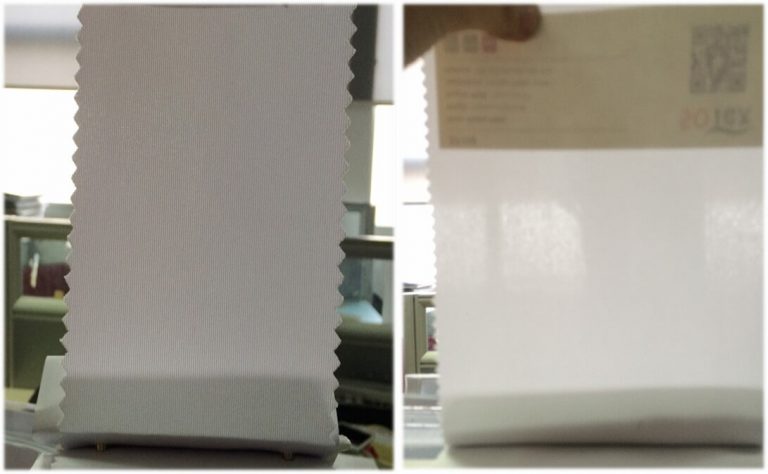
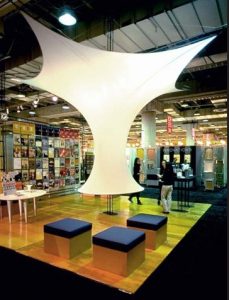
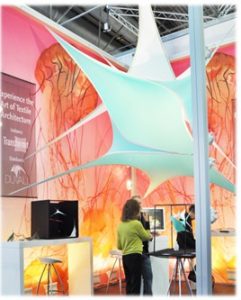
There are many special shapes, and the fabric needs to have good elasticity to meet various shape requirements.
Power Stretch
A good way to assess this is by checking the fabric’s tensile strength. This can usually be determined through laboratory tests or by referring to the manufacturer’s specifications. Fabrics made from robust materials like high-density polyester tend to have better durability compared to those of lower quality.
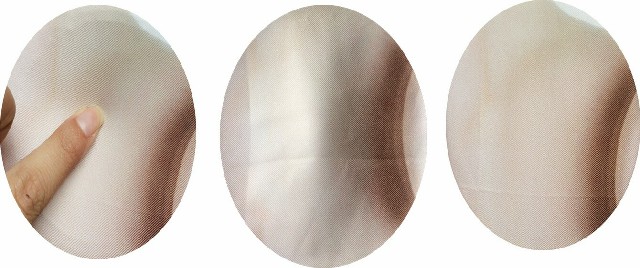
Stretch memory
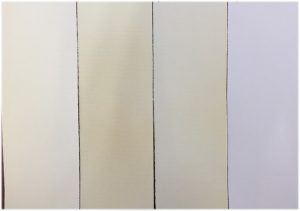
Product whiteness stability. When customers make ICC curves, they are based on specific fabric colors. Once the fabric color changes, the curve will lose its effect and need to be readjusted.
Aesthetics and regional customer preferences – Triple white is mostly white in the United States, and blue and white is mostly in China.
Additionally, look at how well the fabric holds up during repeated folding and unfolding, as this is often the case when setting up and taking down advertising displays. If the fabric starts showing signs of fraying or weakening after just a few uses, it’s likely not of a high standard.
If the fabric shrinks in the warp and weft directions during the printing process, the following situations will occur:
- The image quality will deteriorate and ghosting will occur.
- The image size will change.
- The image shape will also change, making it more difficult to cut.
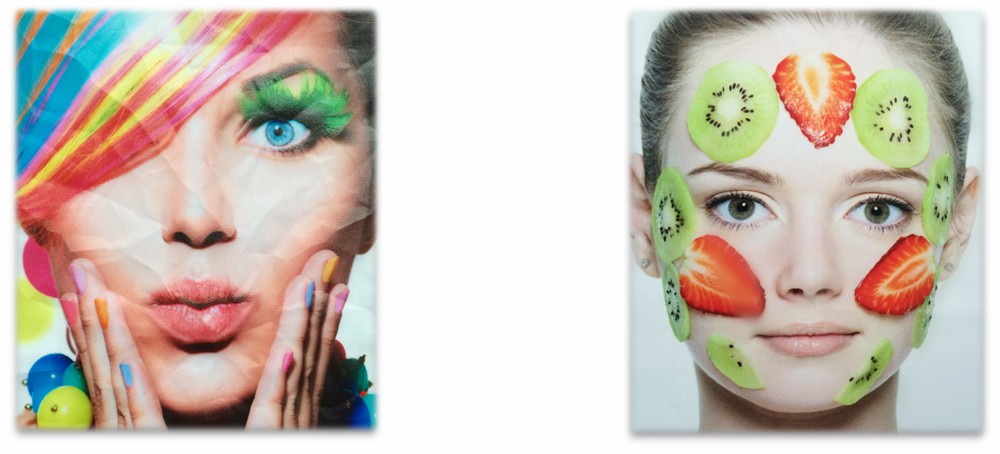
Anti Crease
Heat Shrinkage
Anti CreaseAnti-yellowish
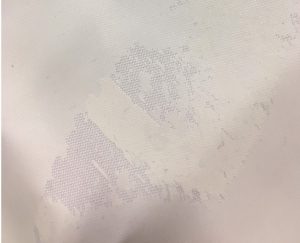
Coating fastness
Backlit fabric tend to turn yellow after high-temperature color transfer, which affects the printing effect. Therefore, the material needs to be resistant to yellowing at high temperatures.
Some countries also require textile products to meet fire retardant requirements.
Common flame retardant standards: German B1, US NFPA-701, US CPAI-84, California 19, Japanese JIS L 1091, French M1 grade – NFP 92, etc.
2.Resistance to Ultraviolet (UV) Rays
Since many advertising fabrics are used outdoors, exposure to sunlight and its ultraviolet rays is inevitable. UV rays can cause the fabric to fade and deteriorate over time. Quality advertising fabric should have excellent UV resistance.
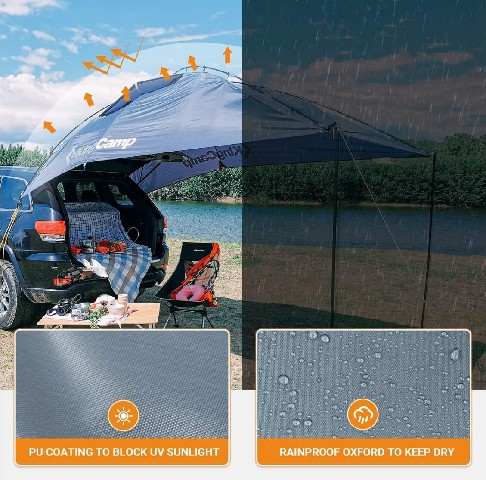
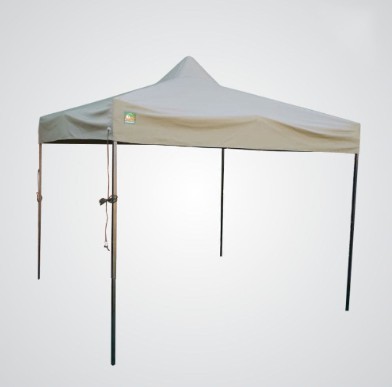
Manufacturers often use special coatings or incorporate UV-resistant additives during the production process. To evaluate this, you can look for information on the fabric’s UV protection factor (UPF). A higher UPF indicates better protection against UV rays.
Another way is to observe samples of the fabric that have been exposed to sunlight for a certain period. If the colors remain vivid and the fabric’s physical properties haven’t significantly degraded, it’s a good sign of strong UV resistance.
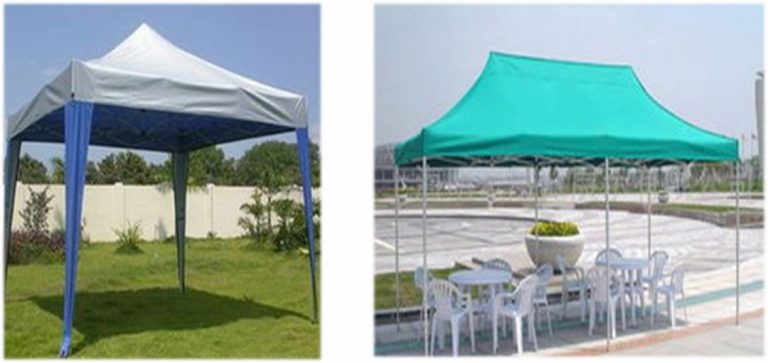
3.Waterproofing
Waterproofing is vital, especially for outdoor advertising materials that may be exposed to rain, snow, or other forms of moisture.
A good advertising fabric should be able to repel water effectively and prevent it from seeping through. You can test this by simply pouring a small amount of water on the fabric surface and observing how it behaves. If the water beads up and rolls off easily, it indicates good waterproofing properties.
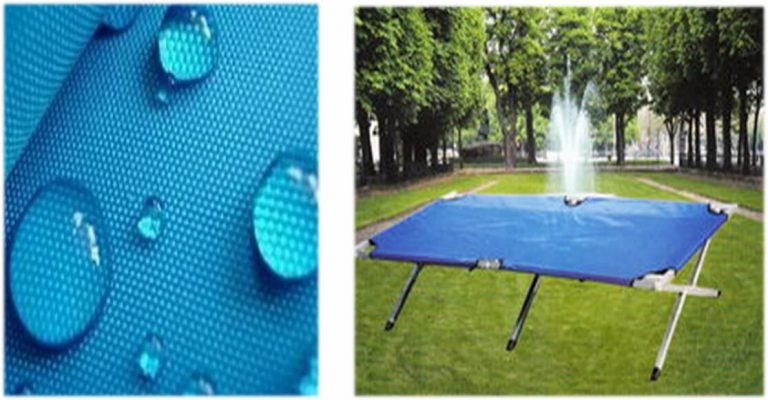
On the other hand, if the water is absorbed quickly or leaves wet spots, the fabric’s waterproofing may be insufficient. Some advanced waterproof fabrics also have breathable properties, which allow moisture vapor from inside the fabric to escape while keeping external water out, enhancing the overall performance and durability of the advertising display.
4.Color Retention
The ability of the fabric to maintain its original colors over time is crucial for a visually appealing and long-lasting advertising display.
High-quality dyes and printing techniques are used in good advertising fabrics to ensure that the colors don’t fade easily, even after prolonged exposure to sunlight, washing (if applicable), or other environmental influences.
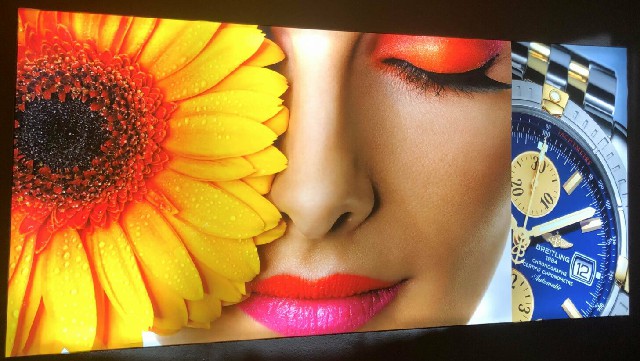
Backlit Whiteness – Backlit fabric will be used with light boxes, so the color after lighting is very important. When customers match colors, the white color value of the draft is the standard, and they also require the color of the fabric itself to be as close to the standard color value as possible.
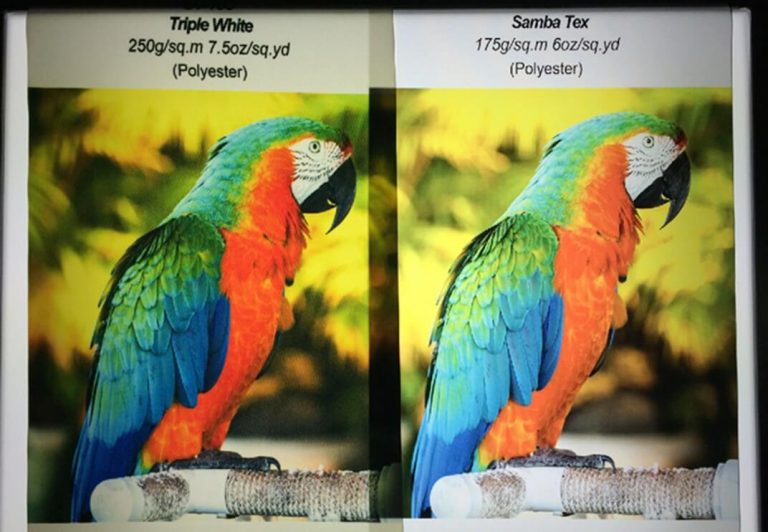
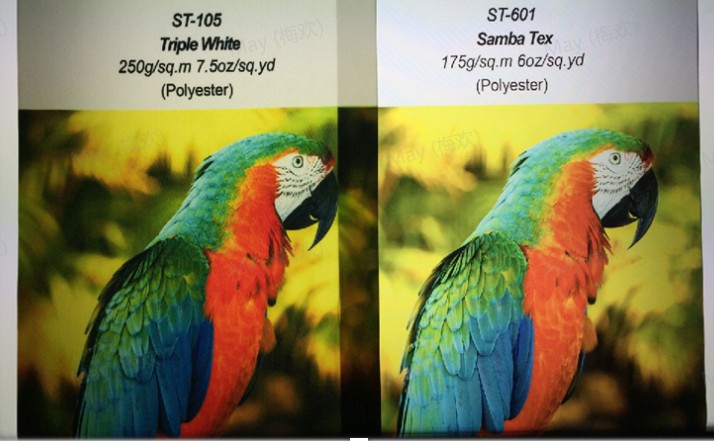
Light Leakage – Light spots appear from the side or front of the fabric, affecting the image quality and effect.
A fabric that can retain its vibrant colors for an extended period is not only more attractive to the viewers but also reflects its overall quality.
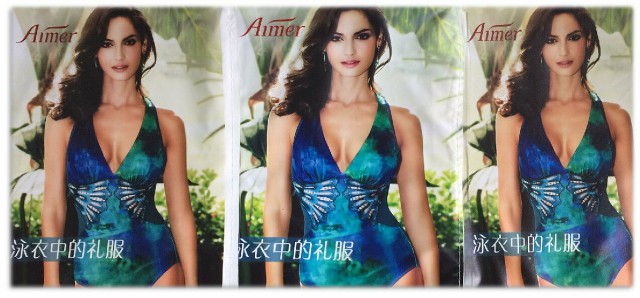
Ink penetration-During the printing process, only one side of the flag is printed. During use, both sides need to have the same color effect.
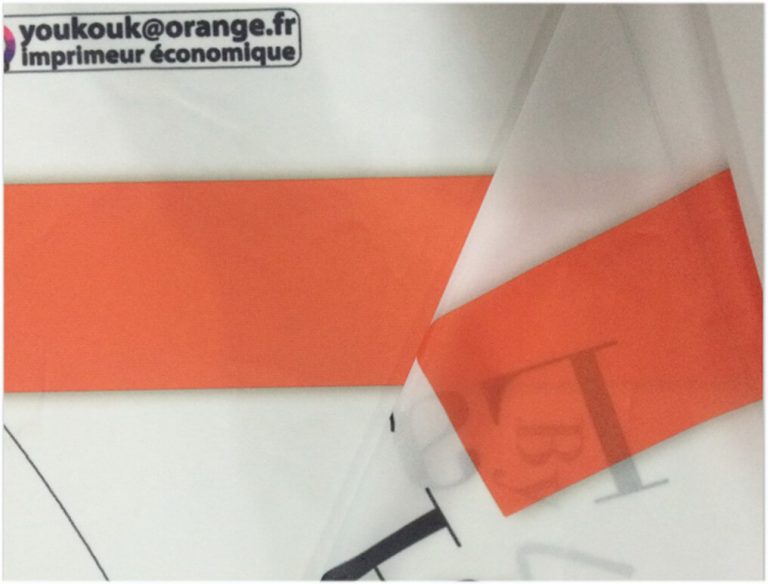
Consistency of both sides- If the material structure of the front and back sides is inconsistent, the picture effects on both sides cannot be the same.
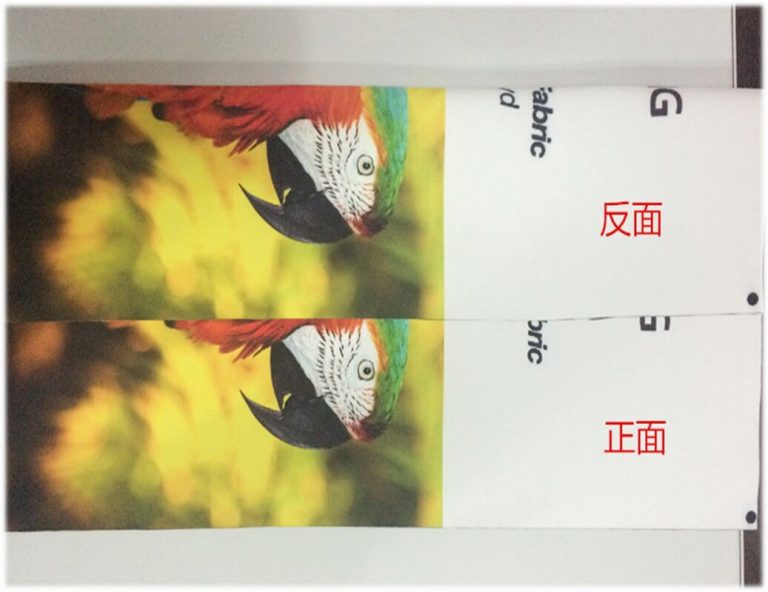
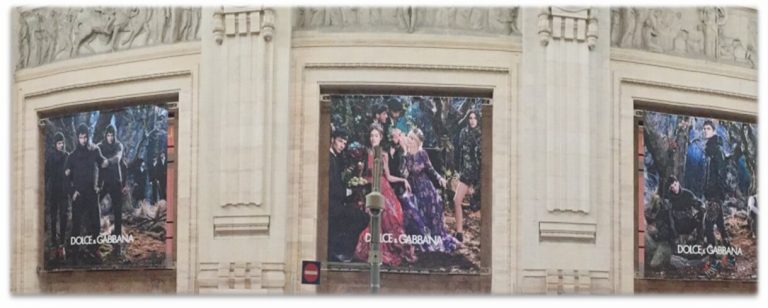
Opacity- When the product has images on both sides, the materials and appearance of both sides are required to be similar, so that the printed images on both sides will be similar.
Many of these products are suspended and used alone, without any obstructions behind them. When there are images on both sides, if the shielding is not good, the images on both sides will affect each other and the expected display effect cannot be achieved.In conclusion, when dealing with advertising fabric, being aware of these quality standards – durability, UV resistance, waterproofing, and color retention – enables dealers to make informed recommendations to their end customers.
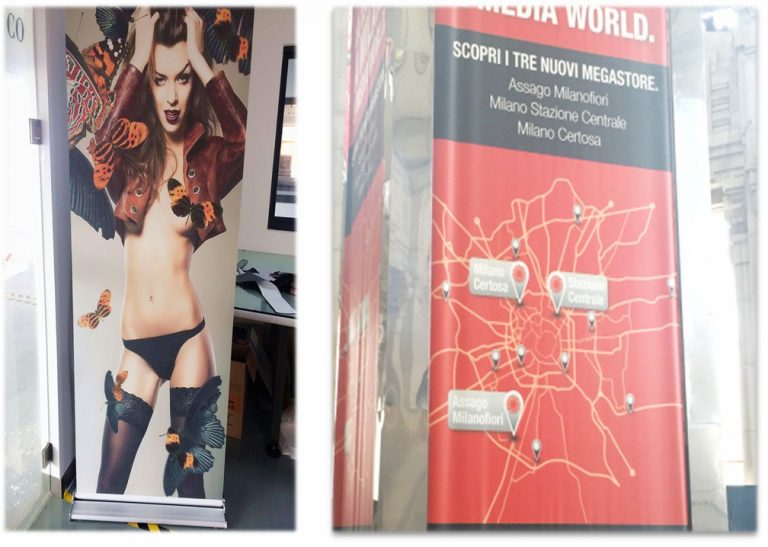
Anti-curling- When hanging or applying roll-up banners, the product display surface needs to remain flat and crisp for a long time, and the two sides will not curl up, which will affect the display effect.
By choosing fabrics that meet these high standards, advertisers can ensure that their promotional messages are displayed effectively and last for a long time, maximizing the return on their advertising investments.
UNISIGN® is a professional banner fabric material manufacturer in China. Our annual production of polyester fabric for dye sublimation has realized 25 million square meters. And our dye sublimation polyester fabric is available worldwide.
Backed by a professional production team, dedicated sales experts, and responsive support staff, we are committed to providing customized solutions tailored to your needs.
Looking for reliable dye sublimation polyester fabric?
Contact us today to discuss your requirements and get a personalized quote!