
Acrylic vs. Polycarbonate: Which Clear Plastic Should You Choose?
The Quick Verdict: Which One Is Right for You?
Choose Acrylic (PMMA) if: You prioritize maximum optical clarity, high surface gloss, natural UV resistance, and a budget-friendly price for displays, signage, or aesthetic glazing.
Choose Polycarbonate (PC) if: You require “virtually unbreakable” strength, high impact resistance, fire-rated safety, and the ability to withstand extreme temperatures or heavy industrial use.
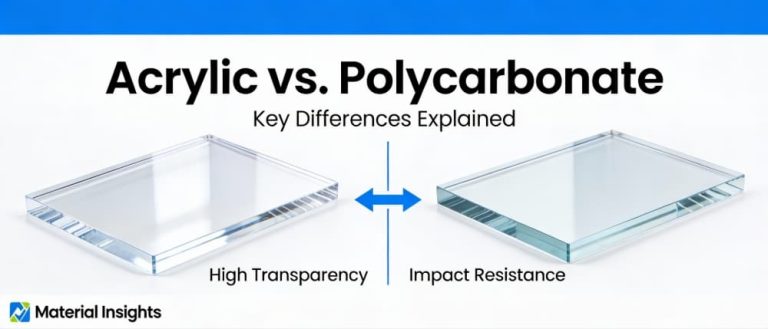
The Glass Alternative Dilemma
At a glance, they are indistinguishable. Two crystal-clear, glass-like sheets resting side-by-side. But the moment your project faces its first environmental stressor—be it a high-velocity impact, a chemical cleaning agent, or a decade of punishing UV exposure—that visual similarity vanishes.
You are likely here because you need the ultimate glass alternative, but you’re caught in a high-stakes trade-off. Choosing incorrectly isn’t just a technical error; it’s a financial one. A decision based solely on price might lead to shattered panels in a safety-critical environment, while over-specifying for a simple retail display can drain your project’s ROI.
The Unisign Perspective: Engineering Balance
As a leading global manufacturer and supplier based in China, Unisign doesn’t just see these as “plastic sheets.” We see them as engineering solutions. Every year, our factory floors produce millions of square meters of both materials, destined for everything from deep-sea aquariums to high-speed riot shields.
We’ve helped thousands of global partners—architects, signage fabricators, and industrial engineers—navigate the complex “Performance vs. Cost” matrix. In this 2026 Master Specifier’s Guide, we are pulling back the curtain on the molecular science, the fabrication secrets, and the real-world failures we’ve seen, so you can make a decision backed by data, not guesswork.
The 60-Second Verdict: Comparison at a Glance
When time is of the essence, you need raw data to drive your specifications. Both materials are half the weight of glass, yet they offer vastly different physical properties.
Below is a side-by-side technical comparison designed to help you identify the winner for your specific environment.
Technical Specification Matrix
| Key Feature | Acrylic Sheet (PMMA) | Polycarbonate Sheet (PC) |
|---|---|---|
| Impact Resistance | 17x stronger than glass | 250x stronger than glass |
| Light Transmittance | 92% (Superior Clarity) | 88% (Standard Grade) |
| Service Temp (Continuous) | Up to 180°F (82°C) | Up to 240°F (115°C) |
| Scratch Resistance | High (Polishable surface) | Low (Requires Hard-coat) |
| Flammability Rating | Class B2 (Slow-burning) | Class B1 (Self-extinguishing) |
| Bending & Forming | Thermoforming (Heat only) | Cold-bending (Room temp) |
| Market Price Point | Economic / High Value | Premium / Specialty ROI |
The Master Specifier’s Conclusion
If you are still weighing your options, the decision usually boils down to a single priority:
Choose Acrylic if your project demands maximum transparency, high-end aesthetics, and long-term UV stability on a conservative budget. It is the gold standard for retail displays, high-clarity signage, and decorative glazing.
Choose Polycarbonate if your project involves extreme safety risks, high-heat environments, or potential vandalism. It is the non-negotiable choice for industrial machine guards, security windows, and structural roofing where failure is not an option.
Pro Tip from the Unisign Factory:
Don’t let the “scratch resistance” of Polycarbonate discourage you. At Unisign, we offer specialized Hard-Coated (Anti-scratch) Polycarbonate that bridges the gap, giving you the strength of PC with a surface hardness approaching that of Acrylic. Ask our team about specialized coatings if your project requires both high impact and high abrasion resistance.
Understanding the Molecular DNA: Why They Behave Differently
To choose the right material, you need to look beyond the surface. The reason one sheet shatters while the other bends lies in their “Molecular DNA.” As a manufacturer, we understand that these physical behaviors are pre-determined at the moment of polymerization.
Acrylic (PMMA): The Secret to “Better-Than-Glass” Clarity
Acrylic is scientifically known as Polymethyl Methacrylate (PMMA). It is created through the polymerization of Methyl Methacrylate (MMA) monomers.
Why it’s so clear: Unlike standard glass, which contains iron impurities that create a faint green tint at the edges, Acrylic is almost entirely free of contaminants. Its molecular structure is amorphous (non-crystalline), allowing 92% of visible light to pass through without interference.
The “Rigid” Reality: The carbon chains in Acrylic are tightly packed and relatively inflexible. This gives the material its high surface hardness (making it harder to scratch than Polycarbonate) but also makes it brittle. When it reaches its limit, it doesn’t bend—it snaps.
Polycarbonate (PC): The Engineering of “The King of Plastics”
Polycarbonate is a vastly different beast. It is formed by the reaction of Bisphenol A (BPA) and Phosgene.
The Energy Absorber: On a molecular level, Polycarbonate consists of long-chain polymers linked by carbonate groups. These chains are incredibly resilient; they act like microscopic springs.
Why it won’t break: When a hammer hits a Polycarbonate sheet, the molecular chains “vibrate” and deform to absorb the kinetic energy rather than resisting it until they break. This is why Polycarbonate is the “King of Plastics”—it possesses a toughness that allows it to dent or bend under pressures that would pulverize glass or acrylic.
The Fabricator’s Guide: How Manufacturing Method Affects Your Project
Not all Acrylic or Polycarbonate sheets are created equal. The way we produce them in our Unisign facility dictates how they will behave under your CNC bits or heat guns.
Cast vs. Extruded Acrylic: Why Professionals Prefer Cast
When sourcing Acrylic, you will encounter two main types. Knowing the difference is critical for your project’s success:
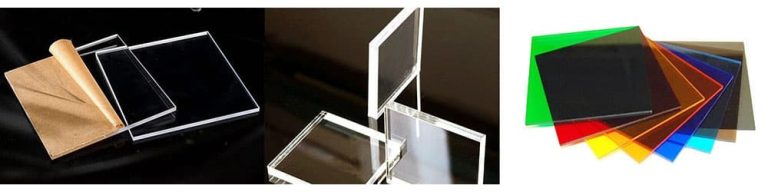
Cast Acrylic: We pour the liquid MMA into a mold (usually glass) and let it harden. This results in a higher molecular weight.
Why you want it: It is easier to machine. When you laser-cut cast acrylic, the edges are crisp and polished. When you mill it, the material doesn’t melt and gum up your drill bits. It also offers superior optical clarity.
Extruded Acrylic: The material is pushed through a series of rollers.
The trade-off: It is more cost-effective and has a tighter thickness tolerance (the sheet is more uniform). However, it has a lower melting point, making it trickier to laser cut or CNC without melting.
The Versatility of Polycarbonate Extrusion
Unlike Acrylic, which is often cast, 95% of the Polycarbonate we produce is extruded. This process allows us to create specialized structures that serve specific engineering needs:
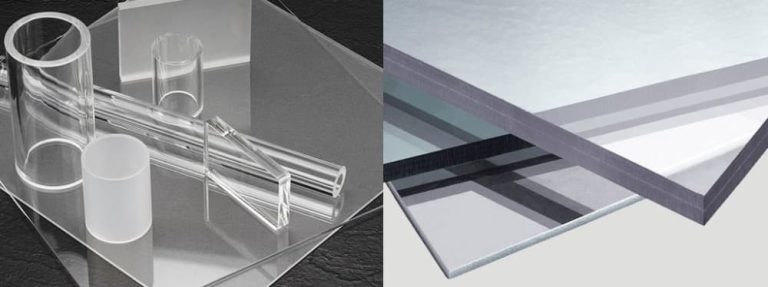
Solid Sheets: The standard “flat” sheet used for riot shields and machinery guards.
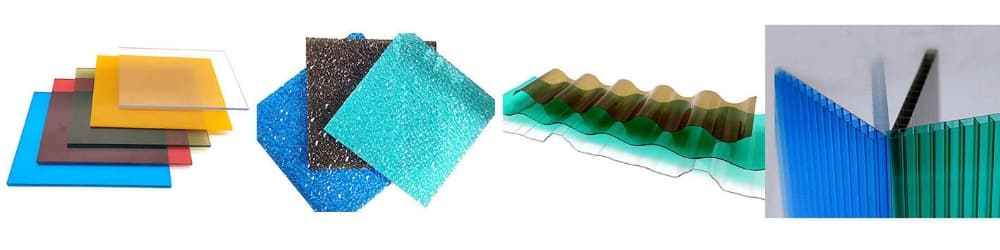
Multiwall Polycarbonate: By changing the extrusion die, we create sheets with hollow internal “ribs.” This creates air pockets that offer incredible thermal insulation and high strength-to-weight ratios, making it the premier choice for modern greenhouse roofing and architectural facades.
The “Maker’s Dilemma”: Fabrication & Machining Secrets
Choosing a material is only half the battle. The other half is how that material behaves when it meets your tools. As a manufacturer, we see many projects fail not because the material was “bad,” but because the fabrication method was mismatched. Here is the technical truth about working with these two polymers.
The Laser Cutting Conflict: Vaporization vs. Charring
If your design requires intricate, flame-polished edges straight off the machine, your choice is already made.
Acrylic (The Laser’s Best Friend): Acrylic is a “clean” polymer. When a laser hits it, the material vaporizes (turns to gas) instantly. This leaves behind a crystal-clear, flame-polished edge that requires zero post-processing.
Polycarbonate (The Laser’s Nightmare): Polycarbonate is a high-heat-resistant material with a higher carbon content. Instead of vaporizing, it tends to absorb the heat and burn. This results in a discolored, soot-covered, or “charred” black edge.
Master Tip: If you must use Polycarbonate for complex shapes, CNC milling or water-jet cutting is the professional standard to avoid the “burnt edge” look.
Bending Logic: Cold-Forming vs. Thermoforming
How you shape the sheet drastically affects your labor costs and project timeline.
Polycarbonate (The “Cold” Advantage): Think of Polycarbonate like sheet metal. Because of its ductile molecular structure, you can cold-bend it at room temperature using a break press. No ovens, no heating elements, and no waiting. This significantly reduces your production time.
Acrylic (The Heat Requirement): Acrylic is rigid. Attempting to bend it “cold” will result in an immediate, explosive snap. To shape Acrylic, you must perform thermoforming—heating the material until it reaches its “glass transition” state (around 320°F/160°C), shaping it, and then cooling it under controlled conditions. This adds equipment costs and energy consumption to your ROI.
Stress & Annealing: Why Do Sheets Crack Mysteriously?
Have you ever finished a perfect cut, only to see tiny spider-web cracks (crazing) appear a week later? This is caused by Internal Stress.
When we extrude or when you CNC mill these plastics, “stress” is trapped inside the molecular chains. If you then apply a solvent, glue, or even certain cleaning agents, that stress is released violently in the form of cracks.
The Unisign Difference: At our facility, we employ an Annealing process for high-specification orders. We subject the sheets to a controlled heat cycle that “relaxes” the polymers, neutralizing internal tension. If your project involves heavy machining or chemical exposure, always specify annealed sheets to ensure long-term structural integrity.
Drilling & Fastening: Avoiding the “Shatter Zone”
This is where most DIY and even professional shop floors go wrong.
Polycarbonate: You can use standard metal drill bits. The material is so tough that the bit won’t “grab” and crack the sheet. You can even drill right up to the edge without fear.
Acrylic: This requires specialized plastic drill bits (with a 0-degree rake or a “scraped” edge). A standard bit is designed to “pull” itself into the material; with brittle Acrylic, this pulling action causes the sheet to shatter the moment the bit exits the bottom.
Pro-Tip: Always use a backup board (a scrap piece of wood) underneath Acrylic when drilling to prevent “blow-out” at the exit point.
Performance in Extreme Environments
Once your project is installed, the real test begins. Will it survive ten years of scorching sunlight? Will a janitor’s cleaning spray cause it to crack? Or will it meet the strict fire codes of a public airport? In extreme environments, the “natural” properties of these plastics diverge sharply.
UV & Weathering: Natural Immunity vs. Engineered Protection
The sun’s ultraviolet (UV) radiation is the primary enemy of clear plastics, causing a phenomenon known as photodegradation—or what you recognize as “yellowing.“
Acrylic (The Natural Survivor): Acrylic is inherently UV-stable. Its molecular structure does not absorb UV light in the same destructive way other plastics do. At Unisign, our acrylic sheets are guaranteed to remain crystal clear for 10 to 30 years in outdoor environments without significant yellowing or loss of light transmittance.
Polycarbonate (The Coated Warrior): In its raw state, Polycarbonate is highly sensitive to UV. Without protection, it will turn yellow and become brittle within 24 months.
The Solution: To solve this, we use Co-extrusion technology to apply a high-concentration UV-resistant layer to one or both sides of the sheet. This microscopic shield absorbs 99.9% of harmful radiation, allowing Polycarbonate to survive the harshest deserts or high-altitude environments.
Chemical Resistance: The “Silent Killer” Called Crazing
One of the most common reasons for material failure isn’t physical impact—it’s chemical incompatibility. When the wrong liquid meets a stressed plastic surface, it triggers “crazing”—thousands of microscopic cracks that make the sheet look cloudy and eventually lead to structural failure.
Acrylic’s Weakness: Acrylic is highly sensitive to alcohols and solvents like acetone (nail polish remover) or benzene. Even a quick wipe with a high-alcohol sanitizer can cause immediate surface micro-cracking.
Polycarbonate’s Weakness: Polycarbonate is notoriously sensitive to ammonia-based cleaners (like common blue window sprays) and high-alkaline detergents. These chemicals attack the carbonate bonds, causing the sheet to turn “milky” or crack at the fastening points.
Master Specifier Tip: Always specify “Plastic-Safe” cleaners. If your environment involves heavy chemical exposure (like a laboratory or a gas station), you may need our Chemical-Resistant (CR) Coated Polycarbonate, which features a silica-based hard coat to block chemical penetration.
Fire Safety & Standards: Meeting the UL 94 Requirements
For public infrastructure—airports, hospitals, and high-rise facades—fire performance is a non-negotiable legal requirement.
Polycarbonate (The Fire-Safe Champion): Polycarbonate is naturally flame-retardant. It has a high ignition temperature and is self-extinguishing.
Rating: Usually meets Class B1 (Europe) or UL 94 V-0 to V-2 standards. If you hold a flame to it, it will melt and char, but once the flame is removed, it stops burning. It does not produce flaming droplets that spread the fire.
Acrylic (The Fuel Factor): Standard acrylic is classified as a Class B2 (combustible) material. It ignites more easily than Polycarbonate and will continue to burn even after the flame source is removed. While it produces very little smoke, it can contribute to a “pool fire” by dripping as it melts.
| Material | Fire Rating (UL 94) | Behavior Under Exposure |
|---|---|---|
| Acrylic (Standard) | UL 94 HB (Horizontal Burn) | Ignites easily, burns steadily, and produces flaming drips that can spread fire. |
| Polycarbonate | UL 94 V-0 / V-2 (Vertical) | Self-extinguishing; it chars and creates a barrier, but does not support combustion once the flame is removed. |
Industry-Specific Selection Guide: Matching Material to Mission
Data sheets are important, but real-world performance is what defines your project’s success. At Unisign, we analyze thousands of applications annually to identify which material delivers the highest ROI for specific sectors. Here is where the “Acrylic vs. Polycarbonate” debate meets reality.
Architecture & Design: The Pursuit of Light and Longevity
In modern architecture, transparency is more than a look; it’s a functional requirement for energy efficiency and human well-being.
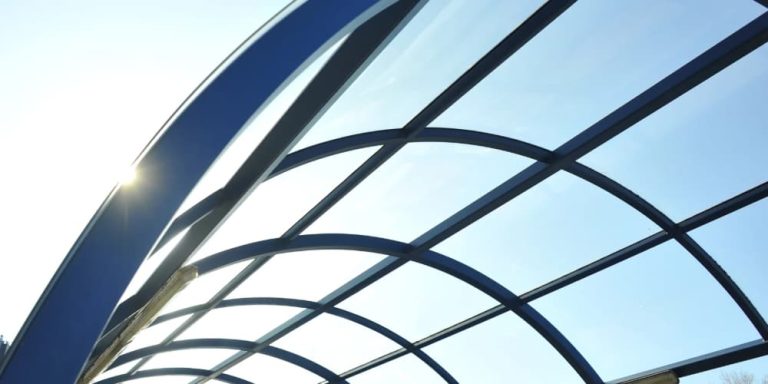
Skylights & Roofing: Polycarbonate is the industry standard. Its ability to withstand hail, falling debris, and extreme thermal expansion makes it safer than glass. Our Multiwall Polycarbonate is especially popular for its superior insulation properties.
Clear Bubble Tents: For the booming glamping industry, Polycarbonate is the only choice. While Acrylic looks great, it cannot match the impact resistance needed for outdoor structures or the cold-bending capability required to create seamless, 360-degree domes.
Acoustic Barriers: High-mass Acrylic is often preferred for highway sound walls. It offers better sound dampening than thinner polycarbonate and maintains its crystal-clear view for drivers over decades of sun exposure.
High-Security & Safety: Failure is Not an Option
When human life or expensive machinery is at stake, the material must absorb energy without shattering.
Riot Shields & Personal Protection: These are almost exclusively Polycarbonate. The material must bend and absorb the energy of a projectile or a blow. Acrylic would shatter into dangerous shards under the same stress.
Machine Guards: In industrial plants, Polycarbonate protects operators from high-speed debris. Its “virtually unbreakable” nature ensures that even if a machine part fails, the barrier remains intact.
Bullet-Resistant Laminates: This is a “team effort.” High-security glazing often uses Laminated Polycarbonate—multiple layers bonded together with specialized interlayers to stop various calibers of ballistics.
Visual Communication: Aesthetics that Convert
In the world of retail and marketing, clarity and light management are the primary drivers of sales.
High-End Retail Displays (POP): Acrylic is the king of the showroom. Its polished edges and high-gloss surface give luxury products (like jewelry or cosmetics) a premium feel that Polycarbonate cannot replicate.
3D Illuminated Letters: Acrylic offers superior light diffusion. When backlit with LEDs, Acrylic distributes the light evenly without “hot spots,” ensuring your brand logo looks sharp and vibrant.
LED Light Guide Plates (LGP): Because of its 92% light transmittance, Acrylic is the best material for edge-lit panels, ensuring maximum brightness with minimal energy consumption.
Emerging Tech: The Frontier of Innovation
As technology evolves, the requirements for clear plastics move into the realm of thermal management and sensor precision.
EV Battery Insulation: Polycarbonate is used in Electric Vehicle battery housings due to its high heat resistance and UL 94 V-0 flame-retardant rating. It acts as a lightweight, safe barrier in high-voltage environments.
Medical Devices: Both are used, but Acrylic is favored for its chemical purity in fluid manifolds, while Polycarbonate is used for housings that must survive the high temperatures of an autoclave (sterilization).
Autonomous Sensor Windows: For LiDAR and camera systems in self-driving cars, Optical-Grade Polycarbonate is used. It provides the impact protection needed for the front of a vehicle while maintaining the precise light transmission required for laser sensors.
The Professional Buyer’s Wisdom: Avoid These 5 Costly Mistakes
Even experienced procurement managers and engineers can fall into expensive traps when sourcing clear plastics. At Unisign, we’ve seen these five mistakes occur across every industry. Understanding them now will save you thousands of dollars in replacement costs and legal liabilities later.
1. The “Bulletproof” Myth: Thickness ≠ Absolute Safety
One of the most dangerous misconceptions is that a thick sheet of Polycarbonate is “bulletproof.”
The Reality: In the security industry, we use the term “Bullet-Resistant.” No material is truly bulletproof if subjected to enough force or the wrong caliber.
The Risk: Buying a standard 12mm Polycarbonate sheet for a high-security bank teller window without checking its UL 752 rating is a liability. Bullet resistance often requires specific multi-layer lamination (combining PC and Acrylic with specialized interlayers) to catch the projectile and prevent “spalling” (shards flying off the back). Never assume thickness equals a ballistic rating.
2. Over-Specifying: Don’t Buy an Armored Car for a Grocery Trip
We often see clients insist on Polycarbonate for applications where Acrylic would actually perform better.
The Mistake: Choosing Polycarbonate for indoor retail signage or decorative partitions just because “it’s stronger.”
The Cost: Not only is PC roughly 35% more expensive, but it also lacks the edge-glow and “crystal” aesthetic of Acrylic. If your material isn’t at risk of heavy impact, you are paying a premium for a level of toughness you will never use, while sacrificing the superior clarity of PMMA.
3. Ignoring Thermal Expansion: The “Buckling” Disaster
Clear plastics expand and contract significantly more than the metal or wood frames they are often mounted in.
The Science: Polycarbonate, for example, can expand up to 3mm per linear meter with a significant temperature change.
The Result: If you install a large outdoor skylight or facade with tight, fixed screws and no expansion gaps (slotted holes), the sheet will bow, buckle, or crack at the bolt points during the first heatwave. Always calculate the Coefficient of Linear Thermal Expansion before finalizing your mounting design.
4. Surface Maintenance Blindness: The “Tough but Soft” Irony
Buyers are often shocked when their “unbreakable” Polycarbonate becomes cloudy and scratched within months.
The Trap: Polycarbonate has a much softer surface than Acrylic. While you can’t break it with a hammer, you can scratch it with a rough paper towel or a ring on your finger.
The Fix: Unlike Acrylic, which can be buffed and polished back to its original shine, Polycarbonate surface damage is usually permanent. If your application involves high touch-traffic, you must either choose Acrylic or specify Hard-Coated (Abrasion-Resistant) Polycarbonate.
5. Confusing Trade Names with Chemical Truths
Many buyers come to us asking for “Plexiglass” or “Lexan,” thinking these are unique materials.
The Fact: These are simply brand names. Plexiglass, Perspex, and Lucite are all Acrylic (PMMA). Lexan and Makrolon are all Polycarbonate (PC).
The Sourcing Secret: When you source by brand name, you are often paying for the marketing budget of a multi-billion dollar corporation. By specifying the chemical requirements (e.g., “Optical Grade Cast PMMA” or “UV-Stabilized Extruded PC”), you can secure the same—or better—performance from a high-quality manufacturer like Unisign at a much more competitive price point.
Sustainability & The Circular Economy: The 2026 ESG Mandate
In 2026, the choice between Acrylic and Polycarbonate is no longer just a technical or financial decision—it is an environmental one. As global regulations tighten and Corporate Social Responsibility (CSR) becomes a pillar of procurement, understanding the lifecycle of your materials is essential.
At Unisign, we are committed to helping our partners meet their Environmental, Social, and Governance (ESG) goals through transparent manufacturing and advanced recycling pathways.
Recyclability: The Infinite Loop vs. High-Value Recovery
Both materials are 100% recyclable, but they follow different paths back into the supply chain.
Acrylic (PMMA) — The “Infinite” Potential: Acrylic is a star of the circular economy. Through a process called chemical depolymerization, used acrylic sheets can be broken back down into their original liquid monomer (MMA). This “Recycled-MMA” (R-MMA) can then be used to create brand-new acrylic sheets with virtually no loss in optical clarity or mechanical strength. This makes Acrylic one of the few plastics capable of a truly closed-loop lifecycle.
Polycarbonate (PC) — High-Performance Mechanical Recycling: Polycarbonate is typically recycled through mechanical processes. The sheets are sorted, cleaned, and shredded into high-quality regrind pellets. These pellets are then blended with virgin resin to create new industrial-grade products. While repeated mechanical recycling can slightly affect optical purity, the structural integrity remains excellent for secondary applications like automotive parts, electrical housings, and construction materials.
Unisign’s Green Commitment: Manufacturing for Tomorrow
Sustainability is not just about the end-of-life for a product; it’s about how it’s born. We have re-engineered our production facilities to ensure that every square meter of material we ship has the lowest possible carbon footprint.
1. Low-Energy Production Lines
We have invested in next-generation extrusion and casting technology that reduces energy consumption by up to 20% compared to traditional methods. By optimizing heat recovery systems in our casting ovens, we minimize wasted energy during the long curing cycles required for high-quality PMMA.
2. Zero-Waste Scrap Recovery
On our factory floor, no scrap goes to a landfill. All “off-cuts” from our CNC and trimming processes are immediately captured, sorted by grade, and fed back into our internal recycling stream. This closed-loop system ensures maximum material efficiency and reduces the demand for virgin petroleum-based raw materials.
3. Compliance and Transparency
All Unisign Acrylic and Polycarbonate sheets are produced in compliance with REACH and RoHS standards, ensuring they are free from hazardous substances. For our global partners, this means a simplified supply chain and peace of mind when meeting local environmental certifications.
Master Specifier Note: If your project requires LEED certification or specific ESG reporting, contact our technical team. We can provide the necessary material data sheets and sustainability documentation to support your green building or product initiatives.
Strategic Sourcing: Why Global Partners Trust Unisign (China)
In the globalized economy of 2026, sourcing is no longer just about finding the lowest price; it’s about supply chain resilience, technical precision, and manufacturing transparency. For over a decade, Unisign has served as the bridge between raw chemical engineering and high-end finished products.
Here is why market leaders from Europe, North America, and Southeast Asia choose us as their strategic partner for clear plastic solutions.
The Factory Advantage: Vertical Integration
Unlike trading companies that act as middlemen, Unisign operates a vertically integrated production model. * From Resin to Sheet: We control the process from the moment the high-grade MMA or Polycarbonate resin enters our facility to the final protective film application.
Consistency at Scale: This integration allows us to maintain a “single-source” quality standard. Whether you order 50 sheets or 5,000, every panel shares the same molecular stability, thickness tolerance, and optical clarity.
Cost Efficiency: By eliminating intermediaries, we pass the logistical and administrative savings directly to our clients, ensuring a competitive ROI without compromising material grade.
Beyond the Raw Sheet: One-Stop Custom Fabrication
Most projects require more than just a square sheet of plastic. They require components ready for assembly. Unisign’s facility is equipped with a state-of-the-art Custom Fabrication Center, allowing you to bypass the need for local secondary processors.
Precision Machining: We offer high-speed CNC milling, diamond polishing (for Acrylic), and precision drilling to your exact CAD specifications.
Advanced Functional Coatings: This is where Unisign truly leads the market. We can apply specialized treatments to enhance the natural properties of your sheets:
Anti-Scratch (Hard Coat): Essential for Polycarbonate in high-traffic areas.
Anti-Static (ESD): For semiconductor cleanrooms and electronic housings.
Anti-Fog: Perfect for medical visors, freezer doors, and sports goggles.
Custom UV-Stabilization: Tailored for the specific solar intensity of your geographic region.
Quality Assurance: Global Standards, Local Accountability
We understand that for an engineer or procurement officer, a certificate is as important as the material itself. Our products are engineered to meet and exceed the most stringent international regulations, ensuring they pass local building codes and safety audits anywhere in the world.
SGS Certified: Independent verification of mechanical and physical properties.
FDA Compliance: Our food-grade materials are safe for use in commercial kitchens and medical environments.
REACH & RoHS: Ensuring our plastics are free from restricted hazardous substances, supporting your ESG and sustainability mandates.
Rigorous In-House Testing: Every batch undergoes impact testing, light transmittance analysis, and thermal stress tests before leaving our loading docks.
Global Logistics Expertise: Navigating international shipping in 2026 requires more than just a container. Unisign provides specialized export packaging (reinforced pallets and moisture-proof wrapping) and flexible shipping terms (FOB, CIF, DDP) to ensure your material arrives on time and in mint condition.
Final Verdict: Your 2026 Decision Matrix
Choosing the right material shouldn’t be a guessing game. It is about aligning the material’s molecular “DNA” with your project’s ultimate goal. To simplify your specification process, follow this master logic path:
If Optical Clarity > Impact Strength → Choose Acrylic.
Best for: Retail displays, luxury signage, aquariums, and decorative partitions.
If Safety & Durability > Aesthetics → Choose Polycarbonate.
Best for: Machine guards, security glazing, riot shields, and architectural roofing.
If Budget is the Primary Constraint → Choose Extruded Acrylic.
Best for: High-volume, standard-clarity projects where impact risk is minimal.
If Heat Resistance & Fire Code are Critical → Choose Polycarbonate.
Best for: Public infrastructure, EV components, and industrial environments.
Ready to Specify Your Project?
Selecting between Acrylic and Polycarbonate is the first step; choosing the right manufacturing partner is the second. At Unisign, we provide the technical data, the precision fabrication, and the global logistics to ensure your choice performs perfectly in the field.
Don’t leave your project to chance. Whether you need a single prototype or a full-scale industrial supply, our engineering team is ready to help you optimize for both performance and ROI.