Billboard banner material should match the way the sign is lit, the background behind the graphic, and the structure holding it in place. Choosing only by price or weight can overlook the difference between a solid advertising face, an illuminated panel, and an open mesh graphic.
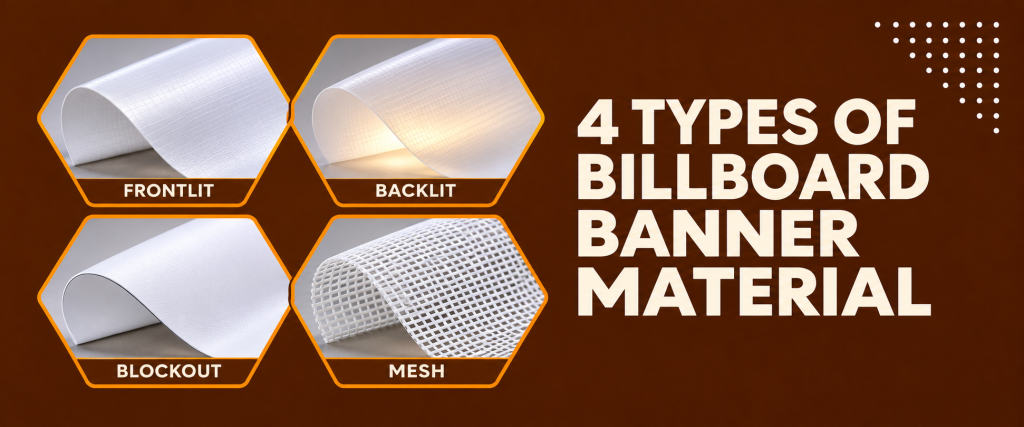
This guide compares four types of billboard banner material: frontlit PVC, backlit PVC, blockout PVC, and PVC mesh. These practical groups help sign makers and print buyers select a suitable starting material before confirming the exact grade, printing process, and finishing plan.
1. Frontlit PVC Banner Material
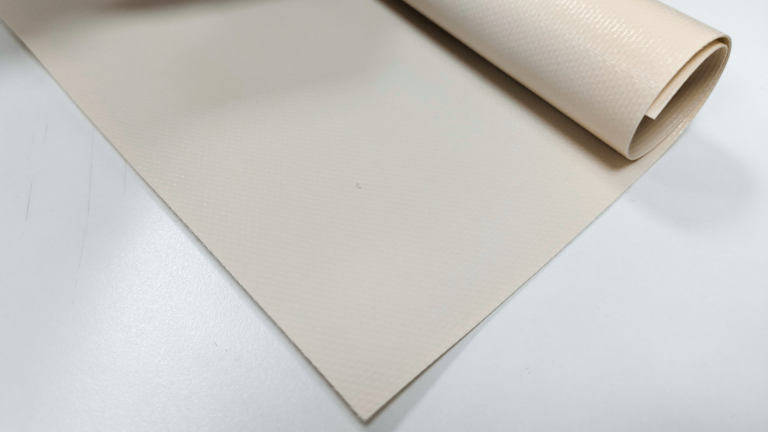
Frontlit PVC banner material is the starting point for a billboard viewed in daylight or illuminated by lamps aimed at its face. The white printable surface carries the image, while the reinforcement supports the flexible panel. CFM11/510 is a coated matte grade listed for frontlit billboards and other advertising displays.

Here’s Why It’s Popular:
- Example: CFM11/510 coated frontlit banner; 510 g/m².
- Reinforcement: 1000D × 1000D yarn; listed density 18 × 18 per square inch.
- Supply: Listed widths 1–3.2 m and 5 m; standard roll length 50 m.
- Listed inks: Solvent, eco-solvent, UV, and latex.
- Advantages:
- A continuous print face for large outdoor graphics.
- A matte finish to assess for the intended viewing angle and lighting.
- Wide-roll options for planning panel sizes and seam positions.
Choose the backing as well as the print face. If an old advertisement, a colored support, or light behind the sign affects the image, compare the hiding power of the proposed grade against that actual background. Grey-back and black-back frontlit options should be specified by model, rather than assumed from the face color.
Explore material specifications
Request a Free Sample2. Backlit PVC Banner Material
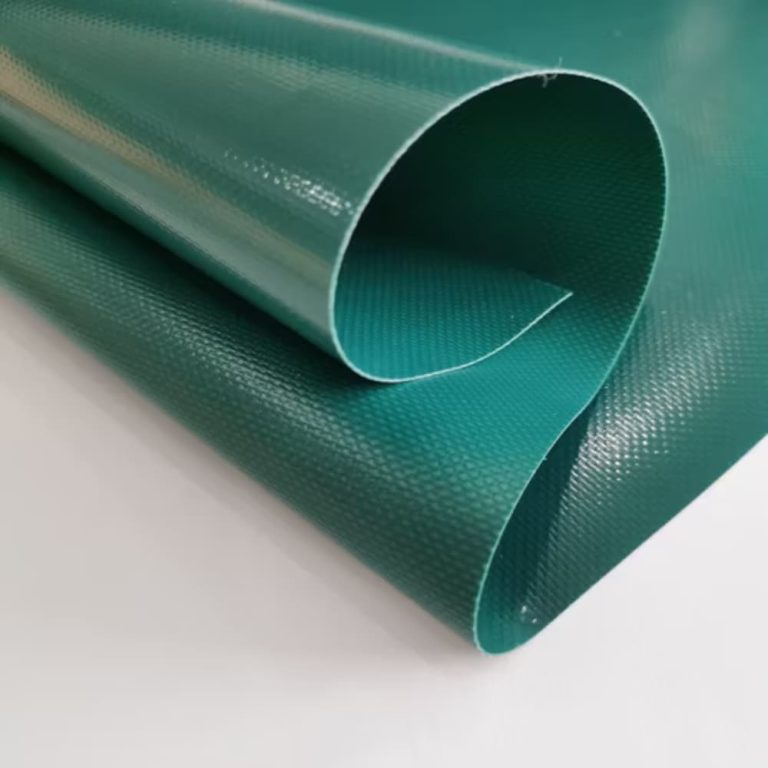
Backlit PVC banner material is intended for a sign with light behind the graphic. It is translucent, allowing the lighting system to work through the printed face. LBG51/610 is a laminated backlit grade listed for large-format lightboxes and illuminated displays, making it a useful option for compatible backlit billboard cabinets.

Here’s Why It’s Popular:
- Example: LBG51/610 laminated backlit banner; 610 g/m².
- Reinforcement: 500D × 1000D yarn; listed density 18 × 12 per square inch.
- Supply: Listed widths 1–3.2 m and 5 m; standard roll length 50 m.
- Listed inks: Solvent, eco-solvent, UV, and latex.
- Advantages:
- A translucent sign face for illuminated advertising.
- A reinforced construction for compatible tensioning systems.
- A named backlit grade for coordinating print and cabinet trials.
Approve the artwork with the cabinet lights switched on and off. Ink density, light distribution, cabinet depth, seams, and edge shadows all influence the result. A frontlit or blockout roll cannot be substituted simply because it has a similar weight or width.
Explore material specifications
Request a Free Sample3. Blockout PVC Banner Material
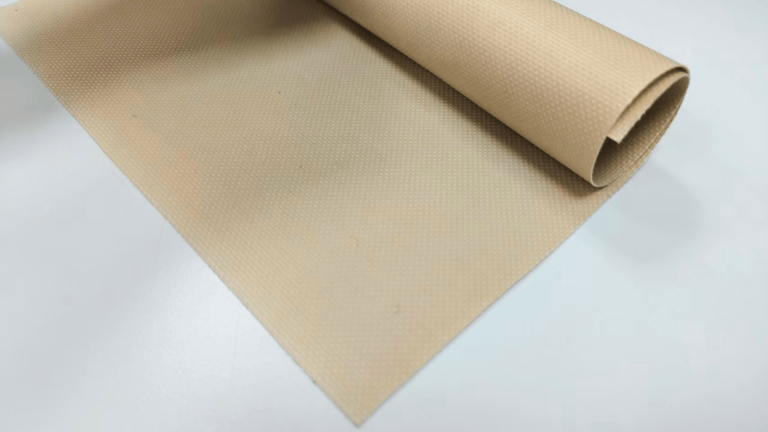
Blockout PVC banner material is useful when light or graphics behind the panel should not interfere with the image. Some blockout grades also offer two printable faces. CDM2525/510 is a coated, woven-base model specifically listed as double-side printable, with billboard and other display applications.

Here’s Why It’s Popular:
- Example: CDM2525/510 coated blockout banner; 510 g/m².
- Reinforcement: 250D × 250D yarn; listed density 36 × 36 per square inch.
- Print faces: Two printable sides on this model.
- Supply and inks: Listed widths 1–3.2 m and 5 m; 50 m standard rolls; solvent, eco-solvent, UV, and latex are listed.
- Advantages:
- A construction intended to control show-through.
- Two printable faces for suitable double-sided display designs.
- A white print surface on each side of the specified model.
Blockout and black-back frontlit describe different product choices. A black reverse does not create a second white printable face. Confirm both print surfaces, opacity, and front-to-back artwork alignment on the selected sample, especially when the finished display will be viewed from both directions.
Explore material specifications
Request a Free Sample4. PVC Mesh Banner Material
PVC mesh banner material has openings between its coated yarns. It is a practical option when the advertising design calls for an open graphic face, such as an approved mesh billboard or building-wrap installation. M1212NP is a coated mesh model supplied with a printing liner, with a liner-free option also listed.

Here’s Why It’s Popular:
- Example: M1212NP coated mesh banner with liner.
- Reinforcement: 1000D × 1000D yarn; listed mesh density 12 × 12 per square inch.
- Supply: Listed widths 1–3.2 m and 5 m; standard roll length 50 m.
- Production check: Confirm the liner configuration and whether the listed 360 g/m² weight includes the liner.
- Advantages:
- An open structure that allows air to pass through the graphic.
- A material option for projects designed around mesh advertising.
- A liner configuration to match the printer and ink-collection setup.
The openings also remove part of the image surface, so review contrast, lettering, and fine details from the intended viewing distance. Confirm the print process and liner removal before finishing. Mesh does not establish a safe wind rating by itself; the support, panel size, reinforced edges, and fixing design need to suit the site.
Explore material specifications
Request a Free SampleWhy Choose UNISIGN?
- Four functional banner families: Compare frontlit, backlit, blockout, and mesh options.
- Model-specific specifications: Review construction, reinforcement, weight, width, and print compatibility together.
- Samples before production: Evaluate the material with the intended artwork and finishing process.
UNISIGN supplies unprinted banner rolls for sign makers, printers, and distributors. Share the billboard lighting, dimensions, and installation details so suitable material samples can be shortlisted.
Request Factory Prices and Free Samples
Request factory prices and free samples with the display size, lighting direction, background, printer and ink, finishing method, required roll width, quantity, and destination.