


UNISIGN · Outdoor advertising roll materials
Billboard Banner Material Rolls: A Buyer’s Guide
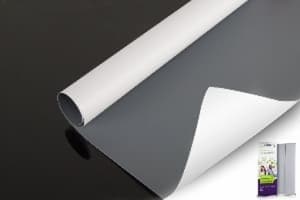
For a billboard lit from the front, start with a white printable banner face. Choose the back colour to suit the background, then match the roll width, print method and finishing plan to the actual display size.
UNISIGN supplies unprinted PVC banner rolls for sign makers, print shops and distributors. Compare 6 frontlit models and request samples for your project.

Choose by Lighting and Background
First confirm how the billboard is lit. Then choose a backing that keeps the background from changing the image.
| Your display | Start with | Check on the sample |
|---|---|---|
| Front-lit graphic with a light, even support | White-back frontlit option | White face, glare, colour and any show-through |
| Coloured support or an old image behind the new print | Grey-back or black-back frontlit | Hiding power against the actual support |
| Rear light that could affect a front-lit graphic | A suitable opaque build, often with black backing | Complete material opacity in the planned lighting |
| Sign lit from behind | Backlit banner material | Even light and colour in both day and night views |
| Two different printed faces | A two-side-printable blockout model | Both print faces, show-through and alignment |
| Project specified for an open mesh graphic | Mesh banner material | Image detail, liner or ink collection, and the site fixing design |
Back colour and printability are separate choices. Black back does not mean two white printable sides. Opacity comes from the whole material build. Check the selected sample in the project lighting.
For a sign lit from behind, compare PVC lightbox face materials and sample checks with the cabinet and lighting requirements.
Compare 6 UNISIGN Frontlit Roll Options
These models list front-lit billboards among their uses. Shortlist by finish, backing and the project specification, then approve a printed and finished sample.

LFG55G/280
- 280 GSM
- Glossy face · grey back
- Listed widths: 1–3.2 m; 5 m
- Standard length: 50 m
Compare a lighter grey-back roll when the project calls for this weight and finish.
View LFG55G/280 specifications →
LFM1166B/340
- 340 GSM
- Matte face · black back
- Listed widths: 1–3.2 m; 5 m
- Standard length: 50 m
Compare a 340 GSM black-back option for a front-lit graphic.
View LFM1166B/340 specifications →
LFM1818/380
- 380 GSM
- Matte face
- Listed widths: 1–3.2 m; 5 m
- Standard length: 50 m
Compare a matte laminated roll for your print and finishing setup.
View LFM1818/380 specifications →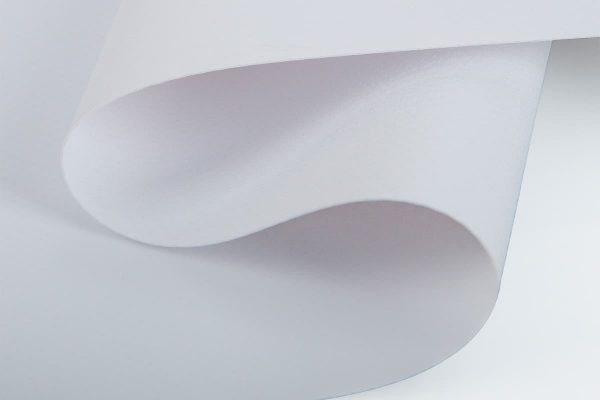
CFM11/440
- 440 GSM
- Matte face
- Listed widths: 1–3.2 m; 5 m
- Standard length: 50 m
Compare a 440 GSM coated roll using a printed and finished sample.
View CFM11/440 specifications →
LFM11B/510
- 510 GSM
- Matte face · black back
- Listed widths: 1–3.2 m; 5 m
- Standard length: 50 m
Compare a heavier black-back build when specified for the project.
View LFM11B/510 specifications →CFM11/510
- 510 GSM
- Matte face
- Listed widths: 1–3.2 m; 5 m
- Standard length: 50 m
Compare 510 GSM coated material with the other approved roll options.
View CFM11/510 specifications →Model Specifications at a Glance
| Model | Build | GSM | Face / backing | Listed widths | Standard length |
|---|---|---|---|---|---|
| LFG55G/280 | Laminated | 280 | Glossy face · grey back | 1–3.2 m; 5 m | 50 m |
| LFM1166B/340 | Laminated | 340 | Matte face · black back | 1–3.2 m; 5 m | 50 m |
| LFM1818/380 | Laminated | 380 | Matte face | 1–3.2 m; 5 m | 50 m |
| CFM11/440 | Coated | 440 | Matte face | 1–3.2 m; 5 m | 50 m |
| LFM11B/510 | Laminated | 510 | Matte face · black back | 1–3.2 m; 5 m | 50 m |
| CFM11/510 | Coated | 510 | Matte face | 1–3.2 m; 5 m | 50 m |
Data and photos come from the linked product pages. CFM11/440 and CFM11/510 use a shared product photo on those pages. For models without a back colour in the listing, specify it in the sample request. Confirm exact width, tolerance, roll format and availability with the quote.
Coated or Laminated Billboard Banner?
Laminated banner
PVC film layers are bonded to a reinforcing fabric. Compare the face, backing, base fabric and finishing result for the exact model.
Coated banner
PVC coating is applied to a reinforcing fabric. Compare the exact coating, fabric, print result and finishing data.
Both are ways to make the banner material. A protective film applied after printing is a separate choice.
| Compare | Evidence to request | Why it matters |
|---|---|---|
| Image quality | A print using your ink, profile and speed | Check colour, fine text, banding and surface texture |
| Strength | Tear and tensile values in both directions, with test method and units | Compare tested builds, not GSM alone |
| Outdoor use | Product-specific exposure information for your planned display period | Match the material to the job duration and site conditions |
| Joining and edges | A trial seam, hem or pocket made with your process | Check the finished material before the full run |
| Cost | Quotes with the same width, length, quantity and delivery basis | Compare usable finished area and the total job cost |
Use the billboard operator’s accepted material specification. Higher GSM and a particular manufacturing process do not, by themselves, establish a longer life or a safe outdoor installation.
Match Print Quality to the Viewing Distance

Check 4 things on a printed section
- Actual viewing distance: review at the nearest normal viewing point.
- Clear message: use readable text, strong contrast and simple artwork.
- Surface and light: check glare, fabric texture, colour and show-through.
- Print setup: check the full-size artwork scale, ink, profile and production speed.
Follow the operator’s current artwork specification. Image PPI at final size and printer DPI are different measurements.
A useful proof: print part of the real artwork at full size. Review it at the planned distance, then close up for print defects. Include a dark area, a light area, fine text and a join where relevant.
Plan the Visible Size, Roll Width and Seams
- Get the drawingRecord the visible width and height, plus the operator’s fixing and finishing details.
- Set the usable widthCheck the printer’s real image width, side margins and edge holders.
- Add finishing spaceInclude overlaps, hems, pockets and trim once in the layout.
- Compare both directionsRotate the layout where suitable and compare panel count, joins and waste.
Worked width example
Assumed values for planning:
- 2 panels, each with 3.15 m usable width
- One 0.05 m seam overlap
- 0.10 m total outside-edge allowance
Visible span = 2 × 3.15 − 0.05 − 0.10 = 6.15 m.
A 6.20 m visible span would need a revised layout. These are example values, not prescribed seam or pocket sizes. Add the required finishing along the other axis too.
Before choosing a wider roll
- Confirm actual media and print-width limits.
- Check loaded roll weight, core and roll diameter.
- Compare panel waste and finishing access.
- Keep key text and faces away from joins.
- Approve a sample joint and panel alignment.
Example of separate equipment limits: Mimaki lists 3,250 mm maximum media width and 3,200 mm maximum print width for the UJV55-320. Check the exact printer and loading mode used for your job.
Compare Cost per Finished Billboard Area
A low roll price is only one part of the decision. Compare quotes using the same job, print quality and finished size.
1. Roll and delivery
- Price per m² and per roll
- Width, length and actual weight
- Packing, freight and import costs
2. Print and finishing
- Ink and production time
- Panel joins and alignment
- Hems, pockets and trim
3. Usable output
- Offcuts and setup material
- Required samples and trials
- Accepted finished display area
Use the same cost basis
Total material, delivery, print and finishing costs ÷ accepted finished display area (m²)Example: a 3.2 m × 50 m roll contains 160 m². If the whole roll produces 144 m² of accepted finished display area, material yield is 90%. Calculate material cost over 144 m², not 160 m². This is an assumed example, not a promised yield.
Approve a Printed and Finished Sample
Use the chosen material with the production settings and finishing process planned for the billboard.
Print and appearance
- Label the model, lot, face and backing.
- Check colour, ink adhesion and drying or curing.
- Review glare, fine text and banding.
- Test opacity against the real background.
Seams and edges
- Make a trial of the planned weld, stitch or other join.
- Check the specified hem or pocket.
- Review panel alignment, edge curl and visible seams.
- Confirm the operator’s finishing and fixing requirements.
For outdoor use, have the project team approve the site fixing and installation design. GSM and mesh openings alone do not establish a wind-load rating.
Send These 8 Details for a Roll Quote

- Visible display size and full finishing drawing
- Front light, rear light or two-sided use
- Preferred model, GSM, face and back colour
- Printer, ink and usable print width
- Roll width, length, core and loading limits
- Seam, hem, pocket and packing needs
- Quantity in rolls or square metres
- Destination, required date and display period
Billboard Banner Material FAQs
What material is used for a printed billboard?
A billboard lit from the front can use a printable PVC banner with a white print face. Choose the backing, weight, width and finish to match the operator’s material specification. Displays lit from behind need a suitable backlit material.
Is black-back banner better than white-back banner?
Black backing is useful when hiding the support, an old graphic or rear light matters. White-back material can suit other front-lit layouts. Compare the printed sample against the actual background; backing colour alone does not measure opacity.
Does black back mean both sides can be printed?
No. A black reverse does not mean two white printable faces. For two-sided graphics, choose a model that explicitly lists two printable sides and check opacity and front-to-back alignment.
Should I buy coated or laminated billboard vinyl?
Compare the exact models. Ask for print samples, tear and tensile data, outdoor-use information and a trial of the planned seam and edge finish. The manufacturing label alone does not give a complete strength, life or cost comparison.
Will a wider roll remove all billboard seams?
Only if the full layout fits the usable print width and roll format. Include overlaps, hems, pockets and trim, and check both artwork orientations. The roll’s nominal width is not the visible finished span.
What is the best GSM for an outdoor billboard?
Use the project’s accepted material specification first. GSM measures mass per area, not wind safety or service life. The frontlit models on this page range from 280 to 510 GSM for comparison; approve the selected model and finishing for the job.
Which inks do these UNISIGN models list?
The six linked product pages list solvent, eco-solvent, UV and Latex inks. Test the exact material with your printer, ink, profile, speed and curing settings before the full run.
What should I send for a roll quotation?
Send the visible size and full finishing drawing, lighting method, backing choice, printer and ink, required width and length, roll core, quantity and destination. Add the operator’s material requirements and planned display period.
Specifications and Further Reading
Model data is drawn from the six linked UNISIGN product pages. For related choices, see frontlit banner materials, black-back banner options and the full PVC banner range. The equipment-width example cites Mimaki’s UJV55-320 specifications. The panel layout uses the planning assumptions stated beside it.
Reviewed: September 16, 2026. Confirm the current model data sheet, order size, sample result and operator requirements with your quotation.
Choose a Roll for Your Billboard Project
Send the display size, lighting, printer, finishing drawing and order quantity. We can help shortlist material rolls and arrange labelled samples.