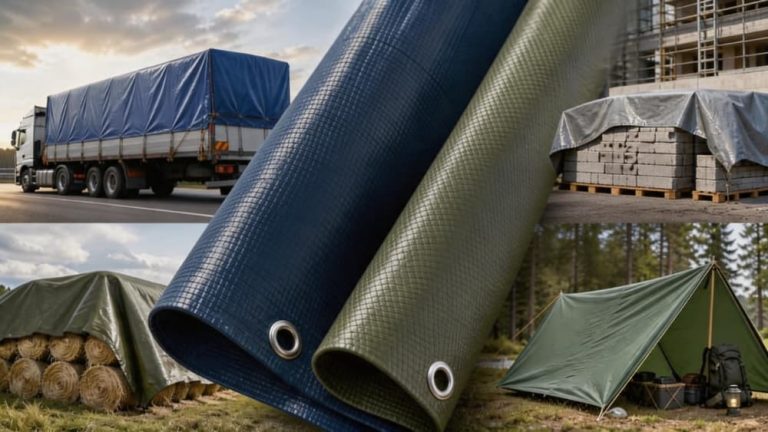
Tent fabric material needs to suit the particular panel and the complete tent system. Printed canopy faces, opaque roof panels, sidewalls, and transparent windows do not all require the same construction.
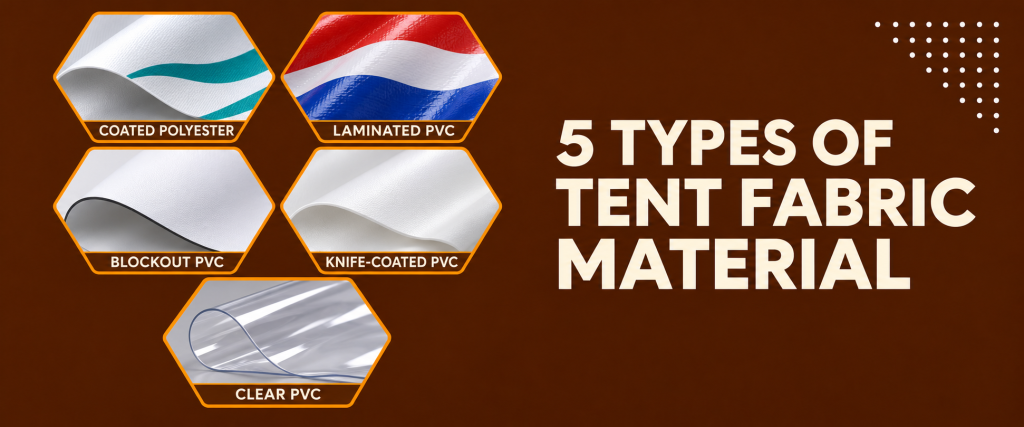
This guide compares five practical tent material options: acrylic-coated polyester, laminated PVC, coated blockout PVC, knife-coated PVC, and clear PVC. The groups describe useful purchasing choices and can overlap; clear PVC is a film option for appropriate transparent components.
1. Acrylic-Coated Polyester Tent Fabric
Acrylic-coated polyester is a textile option for branded canopies and outdoor event applications. UNISIGN T600 Poseidon uses a woven 600D base with acrylic coating on one side. It is useful when printed appearance and fabric handling are central to the enquiry.

Here’s Why It’s Popular:
- Model: T600 Poseidon.
- Listed weight: 280 g/m²; maximum width 3.2 m; standard length 100 m.
- Printing: Direct or transfer dye sublimation on the fabric side; confirm the specified side and setup for other listed systems.
- Application focus: Printed tent and outdoor-event components.
- Advantages:
- A woven textile base for printed event graphics.
- A defined coating side and printable fabric face.
- A lighter material option to evaluate for the intended canopy design.
Approve color and dimensional behavior through the intended print and finishing process. Fabric coating alone does not establish the water performance of sewn seams or the wind resistance of a complete canopy.
Explore material specifications
Request a Free Sample2. PVC Laminated Tent Fabric
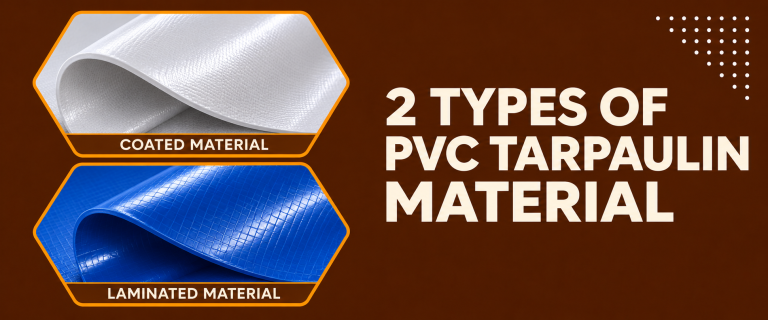
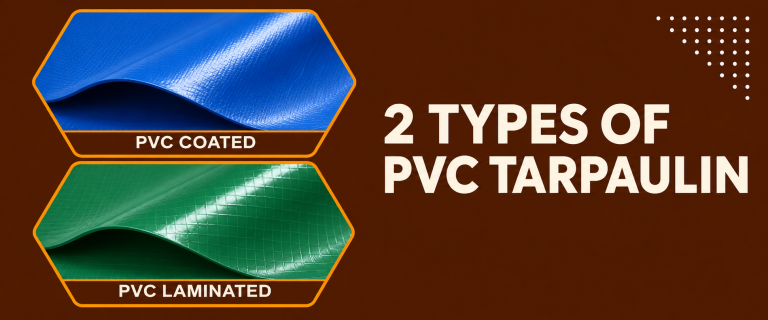
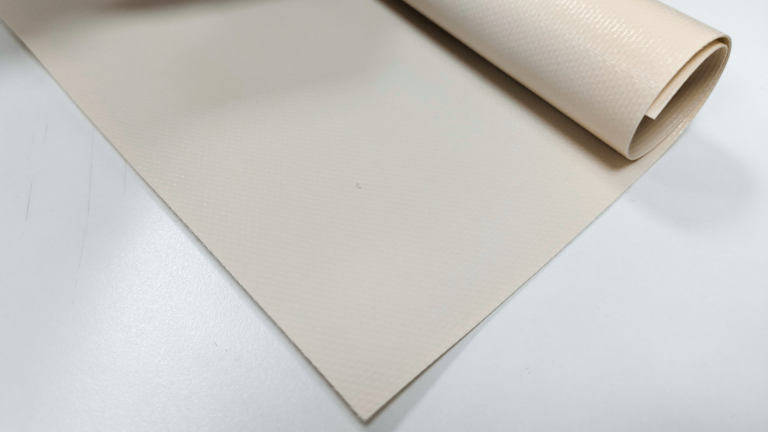
PVC laminated tent fabric combines reinforcing yarns with PVC layers. ULT1817/550 provides a 550 g/m² example for discussing tent panels, awnings, and related covers. Striped and solid-color options may serve different appearance requirements.

Here’s Why It’s Popular:
- Model: ULT1817/550.
- Base: 500D × 500D; 18 × 17 per square inch.
- Supply: Listed maximum width 5.1 m; 50 m or 100 m rolls.
- Application focus: Suitable tent, awning, and cover components.
- Advantages:
- A laminated reinforced sheet for fabricators to evaluate.
- Wide-roll formats for planning panel joints.
- Color options for the intended external appearance.
Review adhesion, flexibility, and the planned joint on the selected grade. Confirm whether light transmission is acceptable rather than assuming a colored PVC sheet is blockout.
Explore material specifications
Request a Free Sample3. PVC Coated Blockout Tent Fabric
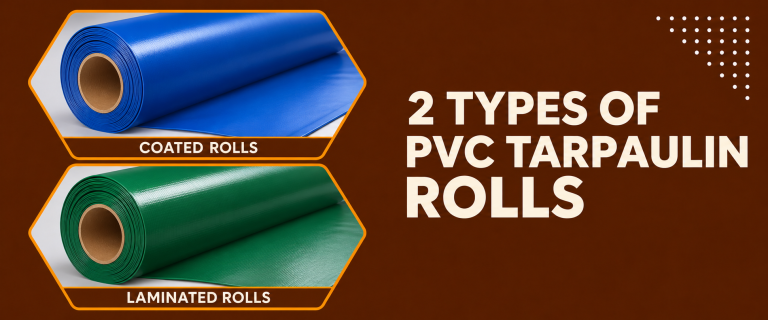
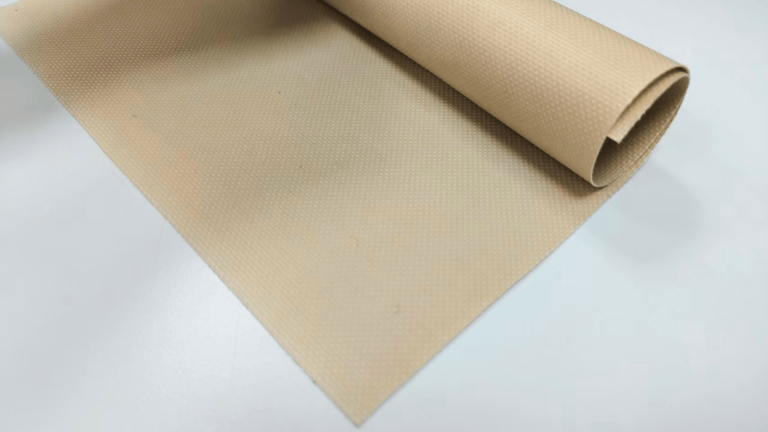
A blockout specification is useful when light passing through a tent panel would interfere with the intended interior. UCT1122/750B is a coated PVC tarpaulin listed with a blockout function and tent applications.

Here’s Why It’s Popular:
- Model: UCT1122/750B; 750 g/m².
- Base: 1000D × 1000D; 20 × 20 per square inch.
- Supply: Listed maximum width 5.1 m; 50 m or 100 m rolls.
- Application focus: Panels with an agreed opacity requirement.
- Advantages:
- A dedicated light-control option.
- A coated polyester reinforcement for suitable fabricated tent panels.
- A model reference for approving opacity and surface appearance.
Evaluate a sample under the expected lighting. Blockout is a light-control feature, not a complete thermal-comfort or insulation rating.
Explore material specifications
Request a Free Sample4. Knife-Coated PVC Tent Fabric
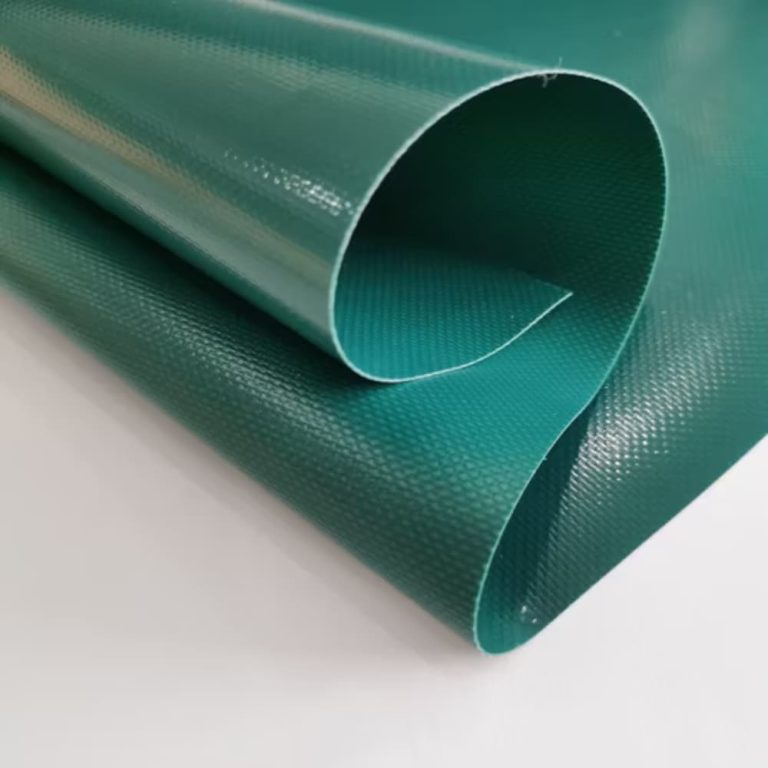
Knife-coated PVC provides another specification route within the coated family. UKCT112323/850 is listed for tents, with a blockout function and acrylic lacquer on both sides. Its heavier construction should be assessed against the project requirements.

Here’s Why It’s Popular:
- Model: UKCT112323/850; 850 g/m².
- Base: 1000D × 1000D; 23 × 23 per square inch.
- Supply: Listed maximum width 3.45 m; 50 m or 100 m rolls.
- Application focus: Tent panels specified around this construction and finish.
- Advantages:
- A named knife-coated grade for technical comparison.
- A specified two-sided lacquer finish.
- An additional blockout option with a different reinforcement and roll width.
The knife-coated and blockout categories overlap. Compare test results, joints, and handling requirements rather than treating weight or process name as a structural approval.
Explore material specifications
Request a Free Sample5. Clear PVC Tent Window Material
Clear flexible PVC can provide visibility and daylight through selected tent panels. It is included here as a window or transparent-panel material; the super-clear film itself is not a woven textile.

Here’s Why It’s Popular:
- Material: Solid flexible PVC film.
- Published range: The description lists 0.1–3 mm thickness and widths up to 2 m; confirm the exact supplied format.
- Application focus: Approved clear panels, windows, and transparent enclosure details.
- Selection priorities: Clarity, flexibility, thickness, support, and joint compatibility.
- Advantages:
- A see-through option alongside opaque tent materials.
- Natural light and visibility through suitable panel locations.
- Thickness-based selection for the intended fabrication detail.
Clear film must be supported and joined appropriately. It is not a direct substitute for reinforced roof fabric; transparent roof use needs a suitable complete design.
Explore material specifications
Request a Free SampleWhy Choose UNISIGN?
- Textile and PVC options: Review materials for printed, opaque, and transparent components.
- Specific model information: Compare weight, reinforcement, coating, and supply width.
- Samples for development: Test printed and fabricated details before approving production.
UNISIGN supplies materials for tent fabricators and distributors. Share the intended components and design requirements to make the material proposal more useful.
Request Factory Prices and Free Samples
Request factory prices and free samples with the tent component, dimensions, color or artwork, opacity needs, required documentation, joining method, quantity, and delivery destination.