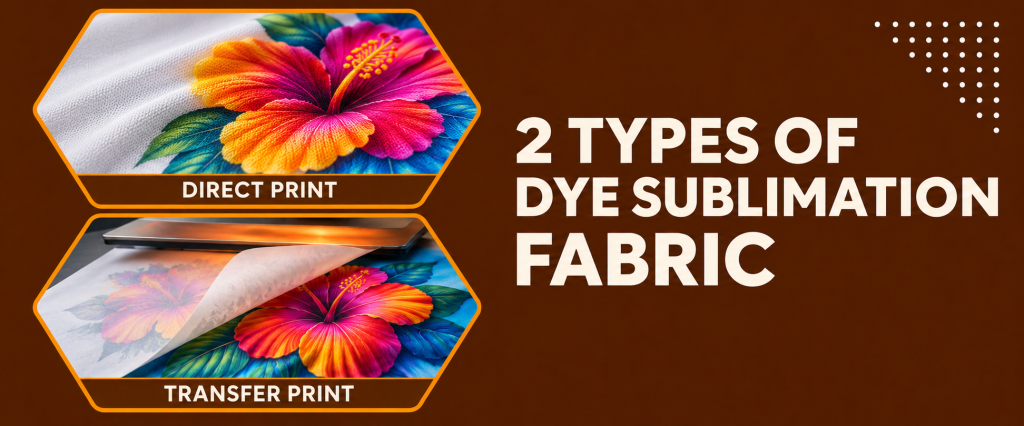
Dye sublimation fabric is used for colorful textile displays, light boxes, flags, and exhibition graphics. For a print business, one of the first choices is how the image will reach the fabric: direct printing or transfer from paper.
This guide compares two types of dye sublimation fabric by production route. These are compatibility groups rather than mutually exclusive textile constructions. Some grades accept both methods, while others are specified for only one. The two UNISIGN examples below are backlit fabrics selected to make that distinction clear.
1. Direct-Print Dye Sublimation Fabric
Direct-print dye sublimation fabric is selected for inkjet printing directly onto the textile, followed by the heat-fixation process required by the ink and equipment. This route is useful when the print shop already operates a compatible direct-to-fabric workflow. The coating, fabric structure, ink, and heat settings must work together to control image detail and color.

Here’s Why It’s Popular:
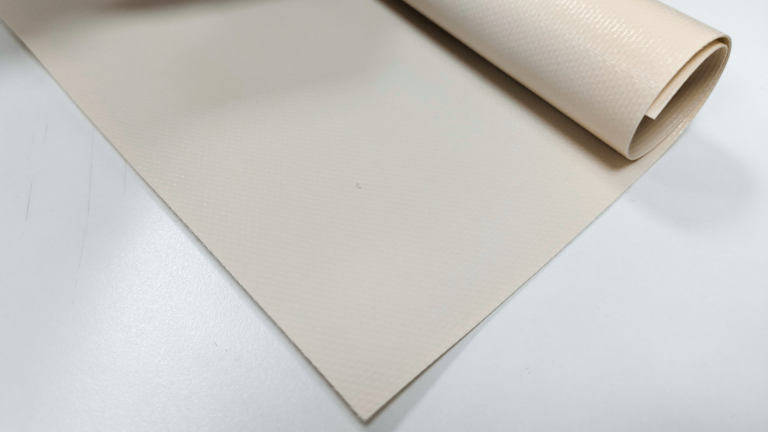
- Example: SDB280 Starlight, a woven matte backlit textile.
- Weight: 280 g/m², with a listed maximum width of 3.2 m.
- Roll length: 50 m in the model specification.
- Printing: Direct dye sublimation is listed alongside paper-transfer dye sublimation and latex.
- Applications: Light boxes and illuminated fabric graphics, subject to approval on the intended display.
- Advantages:
- Prints the image onto the fabric without first printing it onto transfer paper.
- Provides a route to integrate fabric printing and heat fixation in a compatible production line.
- Allows the print shop to evaluate image quality and penetration on the actual textile.
Before production, print small text, saturated colors, gradients, and neutral areas. Check ink spread, surface detail, color after fixation, and dimensional change. For backlit work, approve the sample both with and without illumination.
SDB280 is an example of a direct-print-compatible grade, not a direct-only fabric. Its suitability for another ink system does not remove the need for the correct profile and process settings.
Explore material specifications
Request a Free Sample2. Paper-Transfer Dye Sublimation Fabric
Paper-transfer dye sublimation starts with the image printed onto transfer paper. Heat then transfers the dye into a compatible polyester textile. The fabric is selected around its behavior during transfer, its finished surface, and the display it will become. This route separates paper printing from textile transfer and is common in fabric-graphics production.

Here’s Why It’s Popular:
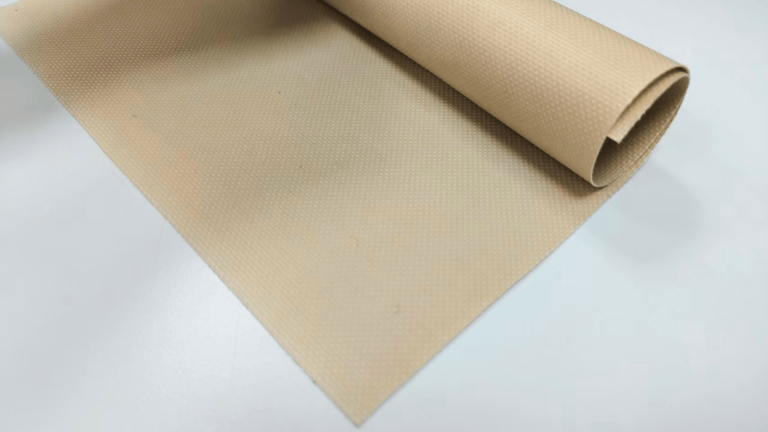
- Example: STB190 Aurora Backlit Plus B, a woven fabric with slight stretch.
- Weight: 190 g/m².
- Roll format: Up to 3.2 m wide; standard roll length 100 m.
- Printing: The model specification lists paper-transfer dye sublimation.
- Applications: Backlit graphics and compatible illuminated textile displays.
- Advantages:
- Keeps the initial inkjet printing stage on transfer paper.
- Offers a fabric option for print shops with an established transfer workflow.
- Enables approval of the printed textile after the complete heat-transfer process.
Test the chosen transfer paper, ink, temperature, dwell time, and pressure as a system. These settings should come from validated equipment and material guidance; there is no single universal setting for all fabrics.
Look for ghosting, uneven transfer, changes in size, and distortion before cutting or sewing. STB190 should not be assumed suitable for direct printing simply because other backlit fabrics support both routes.
Explore material specifications
Request a Free SampleWhy Choose UNISIGN?
- Model-specific choices: Compare fabrics using the listed print methods and display applications.
- Practical sampling: Evaluate handling, print quality, and finishing before full production.
- Supply planning: Discuss roll format and quantity around the equipment and job schedule.
UNISIGN supplies printable textile rolls for display production and distribution. Share the printing route and finished application so the discussion starts with compatible grades.
Request Factory Prices and Free Samples
Request factory prices and free samples with your printer and ink system, direct or transfer process, display type, required width, quantity, and delivery destination.