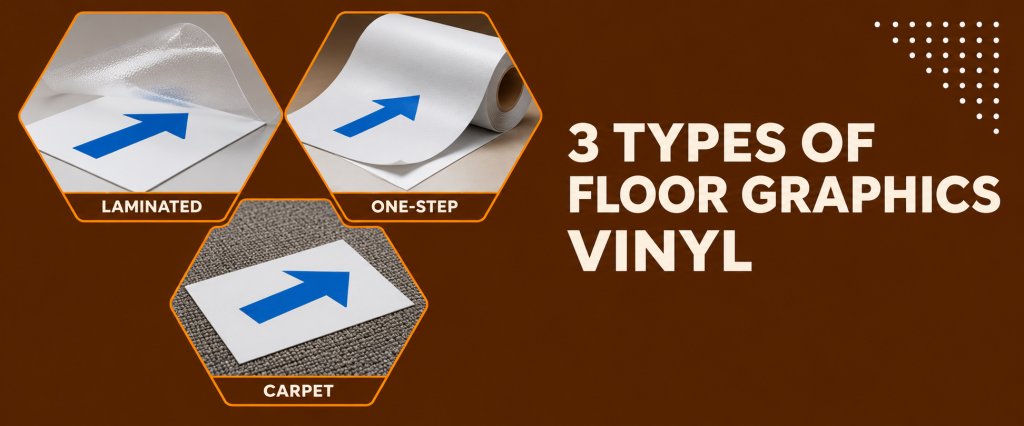
Floor graphics turn unused walking space into directional signs, retail promotions, and event branding. Unlike a poster on a wall, a floor graphic must cope with footwear, cleaning, edge wear, and the surface beneath it. The correct material is a complete application system, not simply any white printable vinyl.
This guide compares three types of floor graphics vinyl: print-and-laminate systems, one-step textured vinyl, and carpet-specific vinyl systems. These are industry categories for preparing an enquiry, not three confirmed UNISIGN stock models. The images are conceptual illustrations; confirm the supplied product, floor compatibility, and relevant test documentation before purchase.
1. Print-and-Laminate Floor Graphics Vinyl
A print-and-laminate system combines an approved printable base vinyl with a compatible protective floor overlaminate. The base carries the artwork and bonds to the flooring; the top layer supplies the specified wear surface. This construction is commonly considered for graphics on smooth, sealed indoor floors.
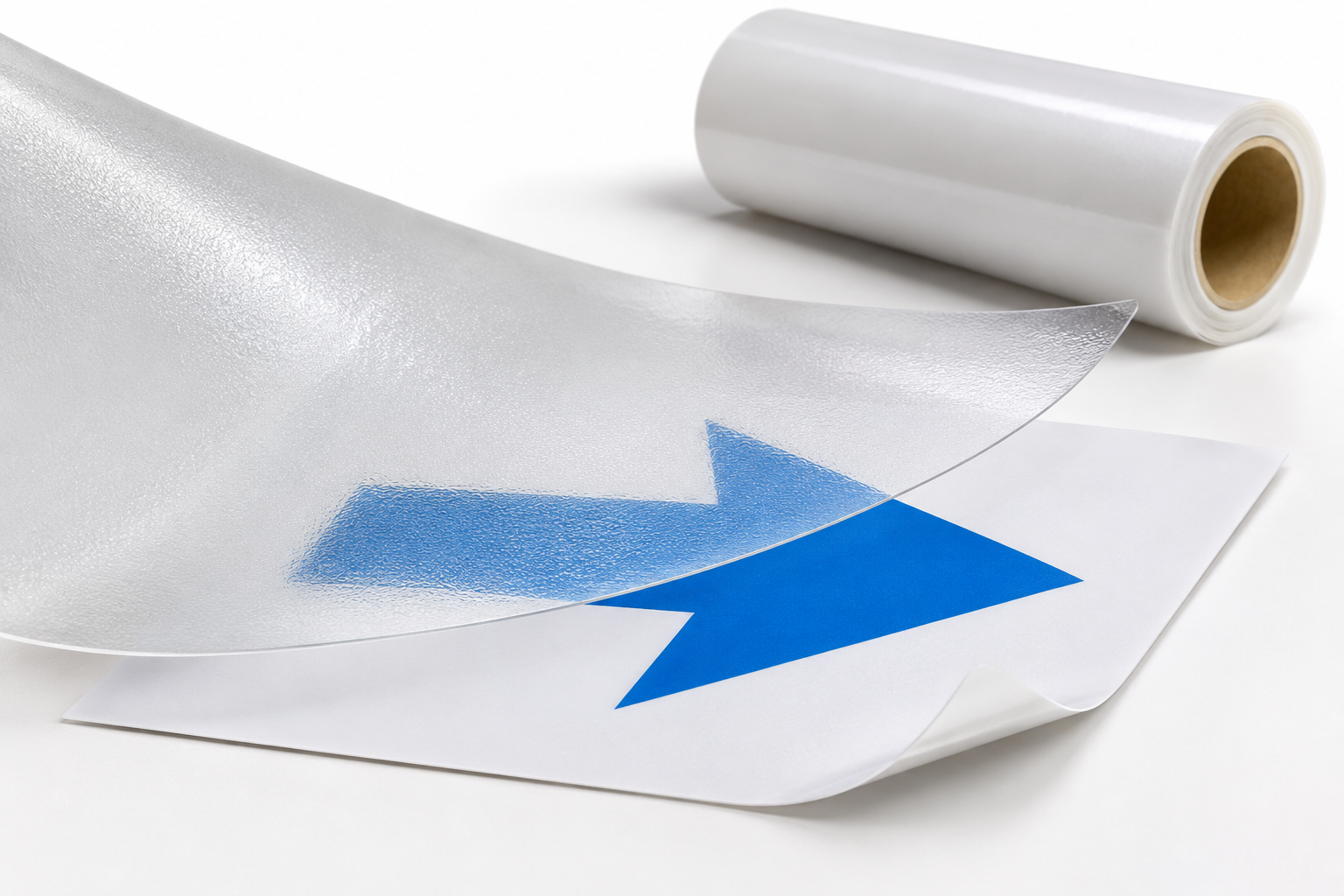
Here’s Why It’s Popular:
- Construction: Printed vinyl plus the manufacturer-approved floor laminate.
- Typical project: Indoor retail promotions or directional graphics on a compatible smooth floor.
- Production: Print and cure the base, laminate, then cut and install according to the system instructions.
- Specification check: Name both the base film and laminate on the order.
- Advantages:
- Separates the printable layer from the protective surface.
- Allows the wear layer to be selected for the required conditions.
- Fits a print business with a suitable laminating workflow.
The ORAFOL floor-media reference illustrates this approach, with a dedicated PVC base and recommended laminates. Those specifications belong to that manufacturer’s system and do not transfer to a UNISIGN combination. Ordinary matte or glossy lamination film is not automatically approved for floors.
Review UNISIGN removable-vinyl application guidance
Request a Free Sample2. One-Step Textured Floor Graphics Vinyl
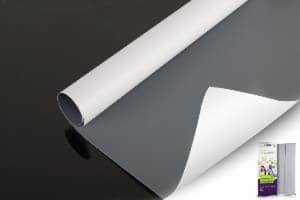
One-step floor vinyl combines a printable face and the intended walking surface in a single material. When the product is explicitly designed and approved for this process, the printed graphic can be prepared without adding a separate overlaminate. The texture and ink combination are part of its performance.

Here’s Why It’s Popular:
- Construction: A purpose-designed textured printable PVC film with adhesive and liner.
- Typical project: Suitable short-term indoor promotions within the exact product’s approved conditions.
- Production: Follow the specified ink, curing, cutting, and installation process.
- Specification check: Request the test report and service limits for the printed material.
- Advantages:
- Can remove a separate lamination stage from production.
- Provides a defined surface texture in the print medium.
- Useful when production time and finishing steps matter.
The Drytac floor-media overview distinguishes one-part PVC solutions from two-part systems. It is a technical category reference, not a UNISIGN supply listing. Ask UNISIGN whether a suitable one-step product is available for the intended printer and floor; do not substitute standard sign vinyl.
Ask about one-step floor-media availability
Request a Free Sample3. Carpet-Specific Floor Graphics Vinyl
Carpet presents a different bonding surface from smooth tile. A carpet-specific vinyl system uses a film and adhesive selected for an approved carpet construction, often a tight, low-pile commercial surface. It may still require a matching protective laminate, so this category overlaps with the first construction.

Here’s Why It’s Popular:
- Construction: Carpet-approved printable vinyl, adhesive, and any required matching laminate.
- Typical project: Exhibition or retail graphics on the specified low-pile carpet.
- Surface check: Identify pile, weave, treatments, condition, and planned cleaning.
- Removal check: Confirm the permitted application period and test for residue or fiber disturbance.
- Advantages:
- Addresses the different contact conditions of carpet.
- Provides a defined alternative to ordinary smooth-floor film.
- Helps plan temporary graphics for suitable event spaces.
For example, the General Formulations carpet-vinyl technical sheet identifies low-pile carpet and requires a matching laminate. This is an industry example, not a claim that UNISIGN supplies that product. A carpet specification should not be extended to deep pile, loose rugs, or another surface without approval.
Discuss a carpet-graphics material enquiry
Request a Free SampleWhy Choose UNISIGN?
- A useful enquiry starting point: UNISIGN supplies printable vinyl and lamination materials for graphics production.
- Application-focused selection: Provide the floor details so the team can assess availability and required supporting documents.
- Samples before bulk orders: Evaluate the proposed finished construction on the real floor.
UNISIGN’s general sign-vinyl and cold-lamination listings should not be treated as floor-system certification. Ask for an explicitly suitable combination and current documentation for the intended use.
Request Factory Prices and Free Samples
Send the flooring type, application area, printer and inks, traffic level, cleaning conditions, intended duration, quantity, and destination. Request confirmation of availability, a technical sheet, applicable test evidence, and samples of the proposed complete system.