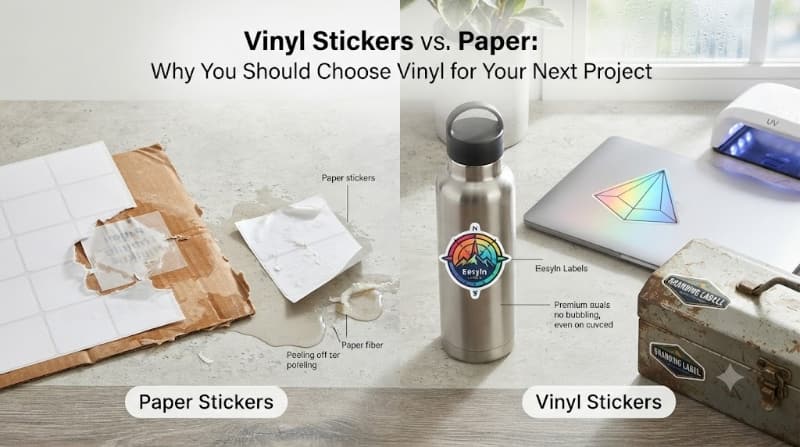
Choosing the right sticker material can make or break your design. While paper stickers are common for short-term indoor use, they quickly fall apart when exposed to moisture or friction. In contrast, vinyl sticker material has become the industry standard for durability, professional aesthetics, and long-lasting quality.
In this post, we’ll break down exactly why vinyl stickers outperform paper and why upgrading your material is the best move for your next project.
What Exactly is Vinyl Material?
Think of vinyl as the “heavy-duty” version of a sticker. Unlike paper, which is wood-pulp based and porous, vinyl is a synthetic plastic (PVC) engineered for resilience. If you’re sourcing printable self-adhesive films for commercial labeling or graphic applications, you can also explore a complete range of self-adhesive vinyl sticker materials from Eesyln Labels. It is built to withstand environments that would destroy a standard paper sticker in minutes.
Here is what makes vinyl the superior choice for your projects:
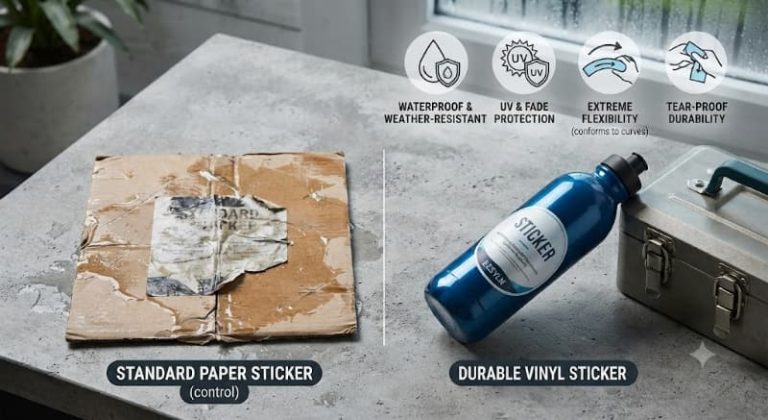
Waterproof & Weather-Resistant: It doesn’t absorb moisture. Whether it’s rain, condensation, or direct contact with water, the material stays intact.
UV & Fade Protection: High-quality vinyl combined with a UV-resistant laminate helps reduce fading caused by prolonged ultraviolet exposure .
Extreme Flexibility: It conforms smoothly to curved surfaces (like bottles or equipment) without bubbling.
Tear-Proof Durability: Because it is plastic-based, it won’t rip during application or daily handling.
Note for Pros: You may encounter “monomeric” vs. “polymeric” vinyl. Monomeric is great for short-term flat surfaces, while polymeric vinyl offers better stability and less shrinkage for long-term or curved applications.
Vinyl vs. Paper: The Comparison Table
Choosing between vinyl and paper isn’t just about price—it’s about performance.
| Feature | Paper Stickers | Vinyl Stickers |
| Water Resistance | Low (absorbs moisture) | High (fully waterproof) |
| Outdoor Durability | Poor (fades/tears easily) | Excellent (resists UV/rain) |
| Flexibility | Rigid/Prone to tearing | Elastic/Conforms to curves |
| Adhesive Life | Short-term | Long-lasting |
| Best For | Indoor, temporary use | Branding, outdoor, high-traffic |
Common Types of Vinyl Materials
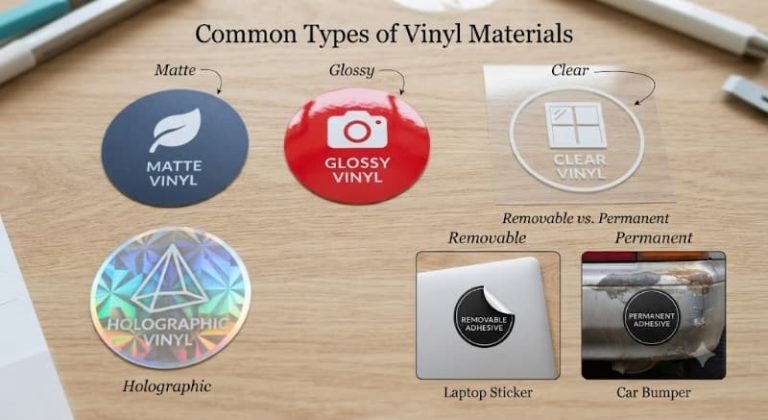
Not all vinyl is created equal. Depending on your goal, you can choose from various finishes:
Matte vs. Glossy: Matte provides a sophisticated, non-reflective look, while glossy offers a vibrant, “pop-off-the-page” shine.
Clear Vinyl: Perfect for “window” decals where you want the background to disappear, leaving only your design visible.
Holographic/Laser Vinyl: Adds a high-impact, eye-catching metallic rainbow effect—perfect for promotional stickers.
Removable vs. Permanent Adhesive: Need a sticker for a laptop that won’t leave a mess later? Choose removable. Need it to stay on a car bumper for years? Go permanent.
Where to Use Vinyl Stickers
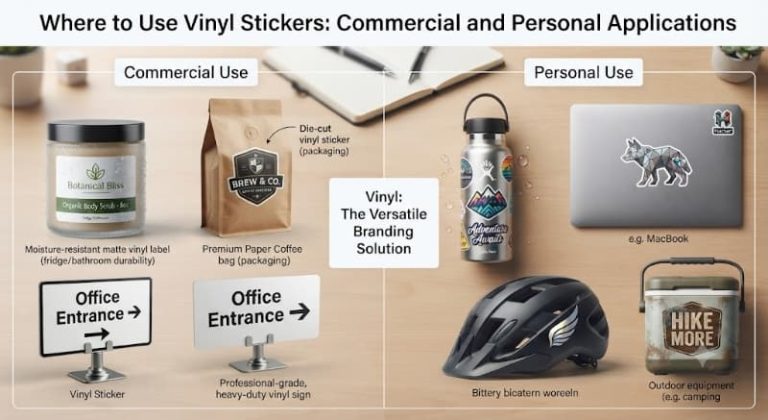
Vinyl is the go-to material for both commercial and personal branding:
Commercial Use: Product labels (especially for items stored in fridges or bathrooms), custom brand logos for packaging, and heavy-duty signage.
Personal Use: Water bottles (which undergo daily washing), laptop gear, helmets, and outdoor equipment.
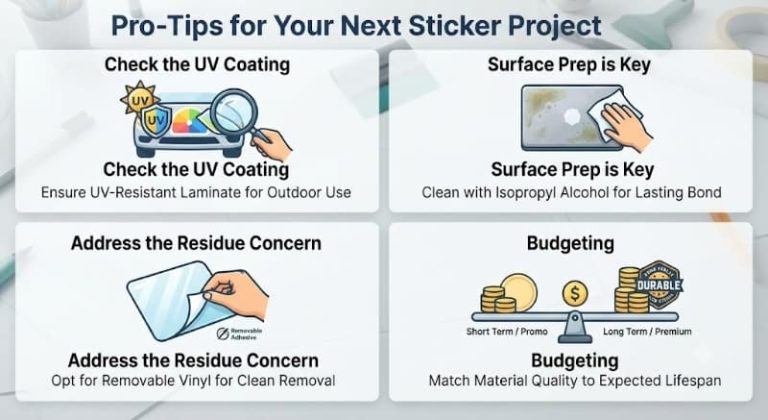
Pro-Tips for Your Next Project
Check the UV Coating: If your stickers are going outside, always ensure they are finished with a UV-resistant laminate. This prevents the ink from bleaching under the sun.
Surface Prep is Key: Even the best vinyl won’t stick if the surface is greasy. Clean your surface with isopropyl alcohol before application for a lasting bond.
Address the “Residue” Concern: People often fear that high-quality stickers leave a sticky mess. If you are worried, opt for “removable vinyl” with a specialized adhesive that leaves no trace when peeled.
Budgeting: For simple one-time event promos, you don’t always need premium industrial-grade vinyl. Match the material quality to the expected lifespan of the sticker to save on costs.
Conclusion
Vinyl sticker material isn’t just a plastic sheet—it’s a commitment to quality. By choosing vinyl, you ensure that your design remains crisp, colorful, and intact, no matter where it ends up. Whether you are building a brand or personalizing your gear, it’s the upgrade that pays off.
Are you planning a custom project soon? What kind of design are you thinking of bringing to life? Let me know in the comments below!
![Top 10 Vinyl Tarp Manufacturers in the World [2026 Guide]](https://unisignflex.com/wp-content/uploads/2026/04/pvc-tarpaulin-product-line.jpg)