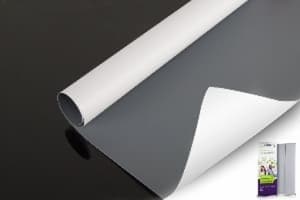
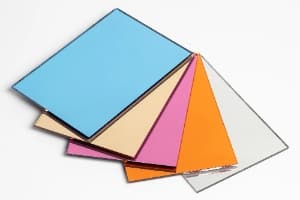
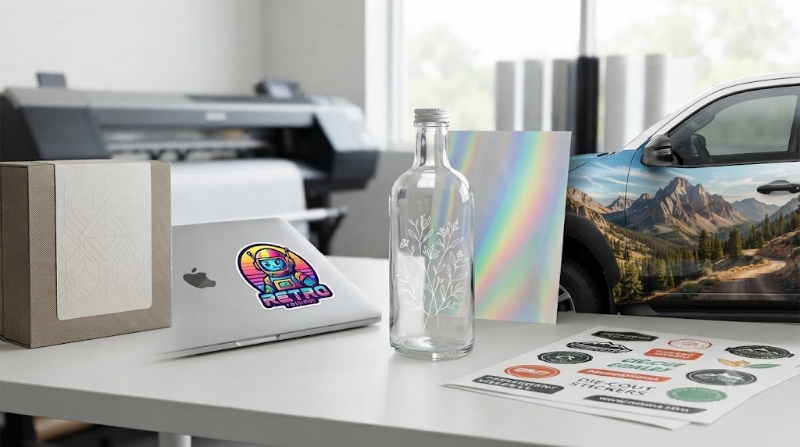
Vinyl sticker material is a self-adhesive PVC film designed for producing durable, high-quality stickers, decals, labels, and graphics. Unlike paper stickers, vinyl is waterproof, UV-resistant, tear-resistant, and built to withstand outdoor weather, making it a preferred choice for both indoor and outdoor applications. It is commonly used for vehicle graphics, window decals, wall graphics, product labels, promotional stickers, and commercial signage. Available in finishes such as matte, glossy, clear, and holographic, as well as removable and permanent adhesive options, vinyl sticker materials can be matched to different printing methods, surfaces, and durability requirements.
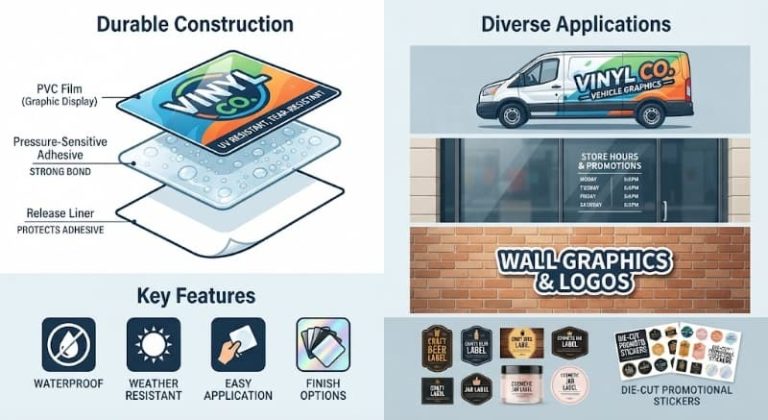
Made for durability: Vinyl sticker material consists of a PVC film, pressure-sensitive adhesive, and release liner, providing excellent strength and flexibility.
Built for indoor and outdoor use: It offers superior resistance to water, UV exposure, scratches, and weather compared with paper stickers.
Available in multiple options: Choose from matte, glossy, clear, holographic, removable, or permanent vinyl depending on your project needs.
Compatible with professional printing: Most vinyl materials work with eco-solvent, solvent, UV, and latex printing technologies.
Suitable for a wide range of applications: Common uses include vehicle graphics, window decals, wall graphics, promotional stickers, product labels, and retail signage.
What Exactly Is Vinyl Sticker Material?
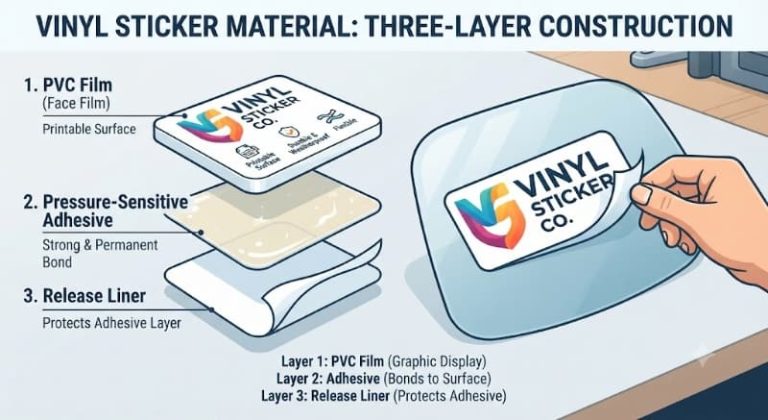
At first glance, a vinyl sticker may look like a single sheet, but it is actually a three-layer construction engineered for durability, print quality, and easy application. Each layer has a specific purpose, and together they create a sticker that performs reliably in both indoor and outdoor environments.
The Three Layers of Vinyl Sticker Material
1. PVC Film (Face Film)
This is the printable surface and the visible part of the sticker.
Displays your graphics, logos, or text
Available in matte, glossy, clear, white, and specialty finishes
Flexible enough to conform to flat or slightly curved surfaces
Resistant to water, UV exposure, and everyday wear
2. Pressure-Sensitive Adhesive
The adhesive bonds the vinyl securely to the application surface without requiring heat or water.
Provides strong, consistent adhesion
Available in permanent or removable options
Suitable for glass, metal, plastic, painted surfaces, and more
Helps prevent lifting and peeling during use
3. Release Liner
The release liner protects the adhesive until the sticker is ready to be applied.
Keeps the adhesive clean and protected
Makes handling and installation easier
Peels away smoothly without damaging the adhesive layer
Although each layer serves a different purpose, they work together to deliver sharp print quality, reliable adhesion, and long-lasting performance across a wide range of applications.
Why Vinyl Is Different from Paper Stickers
If you need stickers that can withstand moisture, sunlight, frequent handling, or outdoor conditions, vinyl is a much more durable choice than paper. While paper stickers are ideal for short-term indoor use, vinyl sticker materials are engineered to deliver better weather resistance, stronger durability, and a longer service life across a wide range of commercial applications.
Vinyl vs. Paper Stickers Comparison
| Feature | Vinyl Stickers | Paper Stickers |
|---|---|---|
| Waterproof | ✅ Fully waterproof and moisture-resistant | ❌ Easily damaged by water and humidity |
| Tear Resistance | ✅ Highly tear-resistant and durable | ❌ Tears easily under pressure |
| UV Resistance | ✅ Resists fading from sunlight | ❌ Colors may fade after UV exposure |
| Outdoor Life | ✅ Typically lasts 3–7 years* | ❌ Best for short-term indoor use |
| Flexibility | ✅ Conforms well to flat and curved surfaces | ⚠️ Limited flexibility, may wrinkle or crack |
| Print Quality | ✅ Excellent color vibrancy and durability | ✅ Sharp print quality, but less durable over time |
*Outdoor lifespan depends on the vinyl type, printing method, lamination, and environmental conditions.
Which One Should You Choose?
Choose vinyl sticker material if you need long-lasting graphics for vehicles, windows, walls, outdoor signage, retail displays, or products exposed to moisture and sunlight. Its durability and weather resistance make it the preferred choice for professional and commercial applications.
Choose paper stickers if your project is intended for short-term indoor use, such as packaging labels, price tags, or temporary promotional stickers where outdoor durability is not required.
Common Types of Vinyl Sticker Materials
Vinyl sticker materials are available in a variety of finishes and adhesive options, each designed for different visual effects, environments, and applications. Choosing the right type depends on where the sticker will be used, how long it needs to last, and the appearance you want to achieve.
- Matte Vinyl — Best for Premium Branding
- Gloss Vinyl — Best for Vibrant Promotional Graphics
- Clear Vinyl — Best for Window & Glass Applications
- White Vinyl — The Most Versatile Choice
- Holographic Vinyl — Best for Eye-Catching Promotions
- Removable Vinyl — Best for Temporary Graphics
- Permanent Vinyl — Best for Long-Term Outdoor Use
Matte Vinyl
Matte vinyl features a smooth, non-reflective finish that creates a clean and sophisticated appearance. It minimizes glare under bright lighting, making graphics easier to read while giving products a premium look.
Best for:
Premium branding
Indoor graphics
Product packaging
Office signage
Luxury product labels
Why choose matte vinyl?
Elegant, low-glare finish
Fingerprints are less noticeable
Professional appearance for premium brands
Gloss Vinyl
Gloss vinyl has a shiny surface that enhances color saturation and makes graphics appear brighter and more vibrant. It is one of the most popular choices for promotional graphics and eye-catching displays.
Best for:
Promotional stickers
Product labels
Retail displays
Branding decals
Marketing campaigns
Why choose gloss vinyl?
Brilliant color reproduction
High visual impact
Smooth and easy-to-clean surface
Clear Vinyl
Clear vinyl is a transparent film that allows the background surface to remain visible while displaying printed graphics. It creates a clean, “printed directly on the surface” appearance.
Best for:
Window graphics
Glass decoration
Storefront displays
Bottle labels
Transparent branding
Why choose clear vinyl?
Nearly invisible background
Modern and minimalist appearance
Excellent for glass and acrylic surfaces
White Vinyl
White vinyl is the most widely used vinyl sticker material. Its opaque white surface provides an excellent printing base, allowing colors, logos, and images to appear bright, sharp, and highly visible.
Best for:
General-purpose stickers
Product labels
Safety labels
Promotional graphics
Indoor and outdoor signage
Why choose white vinyl?
Excellent color vibrancy
High opacity
Suitable for most printing applications
Versatile for almost any project
Holographic Vinyl
Holographic vinyl features a reflective rainbow effect that changes with light and viewing angle. It is designed to create a premium, attention-grabbing appearance for branding and promotional campaigns.
Best for:
Promotional stickers
Limited edition packaging
Brand campaigns
Decorative graphics
Event marketing
Why choose holographic vinyl?
Eye-catching rainbow finish
Premium visual appeal
Enhances product presentation
Removable Vinyl
Removable vinyl uses a low-tack adhesive that holds securely during use while allowing the sticker to be removed cleanly without leaving significant adhesive residue on most surfaces.
Best for:
Short-term advertising
Seasonal promotions
Temporary window graphics
Exhibition displays
Event signage
Why choose removable vinyl?
Easy removal
Minimal adhesive residue
Ideal for temporary applications
Permanent Vinyl
Permanent vinyl is designed with a strong adhesive that provides long-lasting bonding to a wide range of surfaces. It offers excellent weather resistance and is the preferred choice for demanding outdoor applications.
Best for:
Vehicle graphics
Outdoor signs
Equipment labels
Long-term branding
Industrial graphics
Why choose permanent vinyl?
Strong, durable adhesion
Excellent weather resistance
Long outdoor service life
Suitable for demanding environments
Key Properties of Vinyl Sticker Material
Vinyl sticker material is engineered to perform reliably in demanding environments. Its combination of durability, flexibility, and weather resistance makes it one of the most versatile materials for both indoor and outdoor graphics.
| Property | Performance |
|---|---|
| Indoor Use | ⭐⭐⭐⭐⭐ |
| Outdoor Use | ⭐⭐⭐⭐⭐ |
| Waterproof | ⭐⭐⭐⭐⭐ |
| UV Resistance | ⭐⭐⭐⭐⭐ |
| Durability | ⭐⭐⭐⭐⭐ |
| Print Compatibility | ⭐⭐⭐⭐⭐ |
💧 Waterproof
Resists water and moisture without peeling, swelling, or losing print quality.
☀️ UV Resistant
Withstands prolonged sun exposure and helps reduce fading over time.
🌦️ Weather Resistant
Performs reliably in rain, heat, cold, and changing outdoor conditions.
💪 Tear Resistant
Strong PVC film resists tearing, scratching, and everyday wear.
🔄 Flexible
Conforms easily to flat, curved, and slightly irregular surfaces.
🎨 Fade Resistant
Maintains vibrant colors and sharp graphics for long-term use.
🧪 Chemical Resistant
Resists common cleaners, oils, and light chemical exposure.
🔗 Strong Adhesion
Provides secure bonding to glass, metal, plastic, painted surfaces, and many other smooth substrates.
Which Printing Methods Work Best?
| Printing Method | Compatibility | Best For |
|---|---|---|
| Eco-Solvent | ✅ Excellent | Indoor & outdoor stickers, vehicle graphics |
| Latex | ✅ Excellent | Eco-friendly graphics, retail displays, wall graphics |
| UV Printing | ✅ Excellent | High-durability signage, labels, promotional graphics |
| Solvent | ✅ Excellent | Long-term outdoor advertising and industrial graphics |
Best Applications at a Glance
| Industry | Typical Applications |
|---|---|
| Retail | Storefront graphics, promotional displays |
| Automotive | Vehicle decals, fleet branding |
| Commercial Buildings | Window graphics, wall graphics |
| Events | Exhibition booths, event signage |
| Retail Spaces | Floor graphics, directional decals |
| Packaging | Product labels, bottle labels |
| Brand Marketing | Logo stickers, promotional giveaways |
How to Choose the Right Vinyl Sticker Material
The right vinyl depends on where you will use it, the surface type, the required appearance, and how long the graphic needs to last. Follow the steps below to narrow down your options.
Indoor or Outdoor?
Start by identifying the environment in which the sticker will be used.
Do You Need Transparency?
Consider whether the surface should remain visible behind your printed design.
What Finish Do You Want?
Select a finish that matches your branding and visual requirements.
Do You Need Easy Removal?
Choose the adhesive based on whether the graphic is temporary or long-term.
How Long Should It Last?
Match the material grade and adhesive strength to the expected service life.
Quick Selection Guide
| Your Requirement | Recommended Vinyl |
|---|---|
| Premium indoor branding | Matte Vinyl |
| Bright promotional graphics | Gloss Vinyl |
| Window or glass applications | Clear Vinyl |
| Strong opacity and vibrant printing | White Vinyl |
| Temporary advertising | Removable Vinyl |
| Vehicle graphics and outdoor signs | Permanent Vinyl |
| Eye-catching promotional campaigns | Holographic Vinyl |
Still Not Sure Which Vinyl to Choose?
Consider your printing method, application surface, installation conditions, expected lifespan, and removal requirements. Testing a sample before bulk production can help you confirm print quality and adhesive performance.
Need Help Selecting the Right Vinyl?
Tell us about your printer, application, roll size, and durability requirements. Our team can recommend a suitable vinyl sticker material for your project.
Get a Material RecommendationVinyl Sticker Material vs Other Sticker Materials
| Material | Best For | Waterproof | Outdoor Use | Flexibility |
|---|---|---|---|---|
| Vinyl | Signs, decals, vehicle graphics | ✅ | ✅ | ⭐⭐⭐⭐⭐ |
| Paper | Packaging, price tags | ❌ | ❌ | ⭐⭐☆☆☆ |
| PET | Industrial & durable labels | ✅ | ✅ | ⭐⭐⭐☆☆ |
| Polyester | Asset labels, nameplates | ✅ | ✅ | ⭐⭐☆☆☆ |
| BOPP | Product labels & packaging | ✅ | ⚠️ Limited | ⭐⭐⭐⭐☆ |
Vinyl vs. Paper Stickers
Paper stickers are a cost-effective choice for short-term indoor applications, while vinyl stickers offer much better durability for demanding environments.
Choose Vinyl if you need:
- Waterproof performance
- Outdoor durability
- Long-lasting graphics
- Better tear resistance
Choose Paper if you need:
- Low-cost packaging labels
- Price tags
- Temporary indoor stickers
Vinyl vs. PET Stickers
PET (Polyester) is known for its excellent dimensional stability and resistance to heat and chemicals, making it suitable for industrial labels. Vinyl is more flexible and better suited for graphics and signage.
Choose Vinyl if you need:
- Vehicle graphics
- Window decals
- Wall graphics
- Flexible applications
Choose PET if you need:
- Industrial labels
- High-temperature environments
- Durable equipment labels
Vinyl vs. Polyester Stickers
Polyester stickers provide outstanding durability and are commonly used for asset labels, warning labels, and nameplates. Vinyl offers greater flexibility and is easier to apply to curved surfaces.
Choose Vinyl if you need:
- Large-format graphics
- Curved surface applications
- Promotional decals
Choose Polyester if you need:
- Asset tracking labels
- Equipment identification
- Long-lasting industrial labels
Vinyl vs. BOPP Stickers
BOPP (Biaxially Oriented Polypropylene) is widely used for product labels because it is lightweight, waterproof, and economical. Vinyl is generally preferred for larger graphics and outdoor applications that require greater flexibility and weather resistance.
Choose Vinyl if you need:
- Outdoor graphics
- Vehicle decals
- Window signage
- Wall graphics
Choose BOPP if you need:
- Bottle labels
- Food packaging
- Cosmetic labels
- Consumer product packaging
💡 Which Material Is Right for You?
| If You Need… | Recommended Material |
|---|---|
| Outdoor advertising | Vinyl |
| Vehicle graphics | Vinyl |
| Window decals | Vinyl |
| Product packaging | BOPP |
| Industrial labels | PET / Polyester |
| Temporary indoor labels | Paper |
Frequently Asked Questions
Find clear answers to common questions about vinyl sticker durability, printing, removal, thickness, and material selection.
Is vinyl sticker material waterproof?
Yes. Most vinyl sticker materials are fully waterproof and moisture-resistant. Unlike paper stickers, vinyl does not absorb water, making it suitable for outdoor signs, vehicle graphics, window decals, and other applications exposed to rain or humidity.
How long do vinyl stickers last outdoors?
High-quality vinyl stickers typically last 3 to 7 years outdoors, depending on the vinyl grade, printing method, lamination, and environmental conditions. Premium cast vinyl may provide an even longer service life in demanding applications.
Can vinyl stickers be removed?
Yes. Removable vinyl can usually be peeled off cleanly with little or no adhesive residue. Permanent vinyl is designed for long-term adhesion and may require gentle heat or an adhesive remover for easier removal.
Will vinyl stickers damage paint?
Vinyl stickers normally will not damage clean, well-cured paint when they are applied and removed correctly. However, old, damaged, or poorly bonded paint may lift during removal, especially when strong permanent adhesive is used.
What thickness is best for vinyl sticker material?
The ideal thickness depends on the application. Standard vinyl sticker materials are commonly 80–100 microns, providing a practical balance of flexibility, durability, and print quality for most indoor and outdoor graphics.
Can vinyl stickers be printed with inkjet printers?
Professional vinyl sticker materials are commonly compatible with eco-solvent, solvent, UV, and latex printers. Some specialty printable vinyl products also work with desktop inkjet printers, but you should always confirm the material and ink compatibility before printing.
Are vinyl stickers recyclable?
Most traditional PVC vinyl stickers are not widely accepted by standard household recycling programs because they contain several bonded layers. For more sustainable projects, consider PVC-free or recyclable film alternatives where available.
Which adhesive should I choose: removable or permanent?
Choose removable adhesive for seasonal promotions, temporary displays, exhibitions, and short-term window graphics. Choose permanent adhesive for vehicle graphics, outdoor signage, equipment labels, and long-term branding.
Which vinyl finish should I choose: matte, gloss, or clear?
Choose matte vinyl for a premium, low-glare appearance, gloss vinyl for vibrant colors and stronger visual impact, and clear vinyl when you want the glass or background surface to remain visible.
![Top 10 Vinyl Tarp Manufacturers in the World [2026 Guide]](https://unisignflex.com/wp-content/uploads/2026/04/pvc-tarpaulin-product-line.jpg)