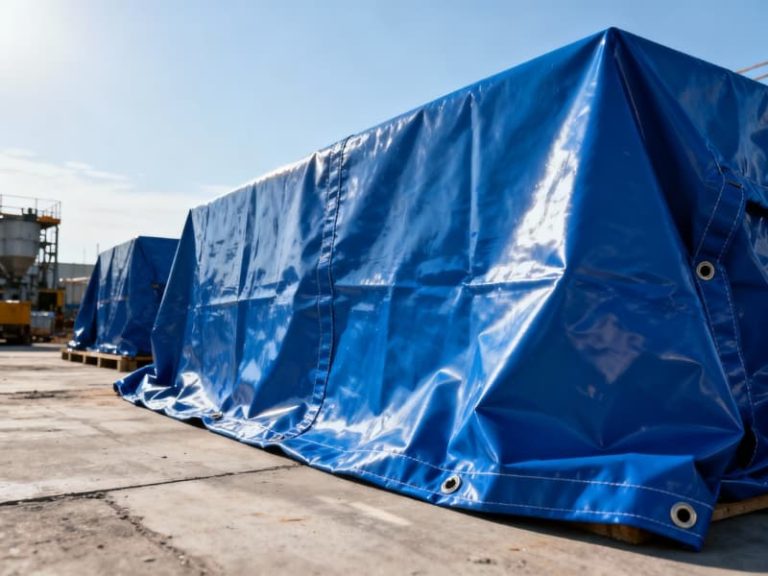
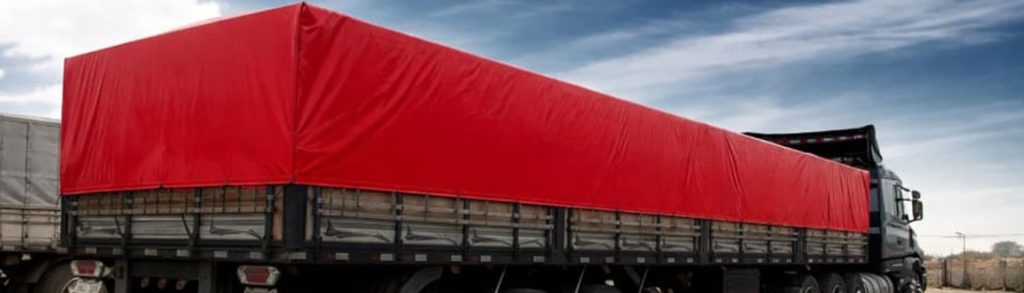


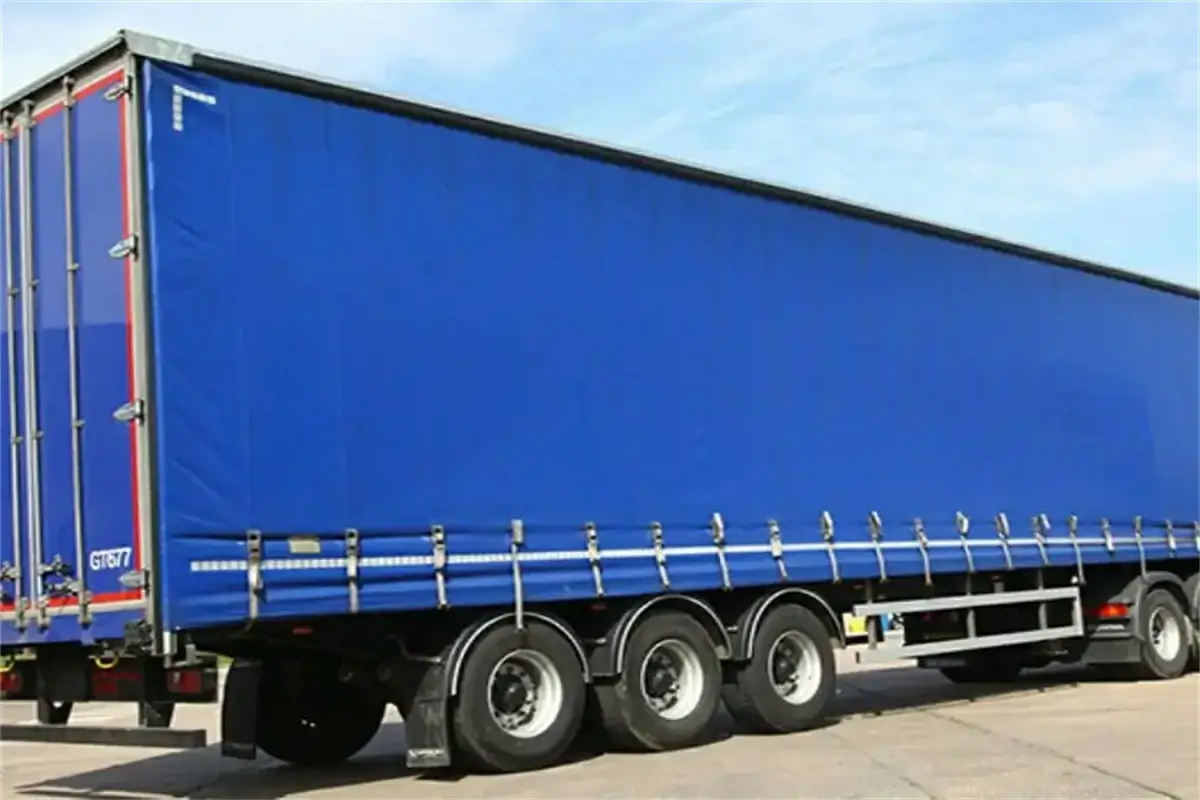
For most heavy-duty trucking across the U.S., you’ll find that 610 GSM (the metric equivalent to 18 oz) is your best choice because it hits the perfect balance between high-speed tear resistance and the manual flexibility needed for daily handling.


Table of Contents
In North American long-haul trucking, a tarp is not just a simple cover—it is a critical component for protecting cargo, ensuring compliance, and maintaining a carrier’s reputation. From sub-zero winter storms in Minnesota to intense UV exposure in the Texas Permian Basin, truck drivers in the United States operate under some of the most demanding environmental conditions in the world. In these scenarios, the physical performance of a tarp—especially its weight specification—plays a direct role in cargo safety and durability.
However, a common challenge in today’s global supply chain is the mismatch in measurement standards. While U.S. buyers typically use ounces per square yard (oz) to evaluate tarp weight, international manufacturers—particularly in China—rely on grams per square meter (GSM). This difference often creates confusion during sourcing, leading to incorrect product selection and potential performance issues in real-world applications.
This guide explains why 18 oz (approximately 610 GSM) PVC-coated vinyl tarpaulin has become the industry “gold standard” for truck tarps in the United States. It also provides practical insights on how to select the right tarp weight based on cargo type, environmental conditions, and performance requirements.
1. The Measurement Gap: Understanding Ounces (oz) vs GSM
For professionals in the U.S. trucking industry, the “weight” of a tarp is often synonymous with durability. However, in technical terms, this weight actually refers to the mass per unit area of the material rather than its total weight.
1.1 Unit Conversion and Industry Tolerance
In the U.S. tarp industry, an 18 oz tarp is defined as a vinyl-coated fabric weighing 18 ounces per square yard (oz/yd²). In contrast, international manufacturers use the metric system, measuring material weight in grams per square meter (GSM).
The conversion between these two units is not an exact whole-number relationship. The standard formula is:
Conversion Formula:
1 oz/yd² ≈ 33.9057 GSM
Based on this conversion, a true 18 oz tarp corresponds to approximately:
Calculation:
18 × 33.9057 ≈ 610.3 GSM
Common Sourcing Mistakes
A frequent issue in global sourcing is that some suppliers may offer 600 GSM or even 550 GSM materials labeled as “18 oz” tarpaulin. While the difference may appear minimal, it can have a significant impact on real-world performance.
In long-haul trucking conditions—especially at highway speeds—this 10–50 GSM difference can result in noticeably lower tensile strength and tear resistance. This becomes particularly critical under wind whip conditions, where continuous flapping and high wind pressure can quickly degrade lower-grade materials.
Truck Tarp Weight Converter
Quickly convert between US Ounces (oz) and International GSM.
Standard Tip: Most heavy-duty flatbed tarps in the USA use 18 oz, which is approximately 610 GSM.
1.2 Specification Comparison and Application Grading
The following table illustrates the primary tarp weight specifications in the U.S. market, their international metric equivalents (GSM), and their typical applications in real-world operations.
| U.S. Spec (oz/yd²) | Metric Spec (GSM) | Industry Designation | Typical Application Scenarios |
|---|---|---|---|
| 10 oz | ~339 GSM | Ultra-Light / Billboard Grade | Indoor coverage, short-term dust protection, repurposed billboard liners |
| 13 oz | ~440 GSM | Lightweight / Shelter Lite | Lightweight sections of Parachute/Side-kit tarps, temporary covers |
| 14 oz | ~475 GSM | Industrial Light | Parachute tarps, ultra-lightweight steel tarps, short-haul routes |
| 16 oz | ~542 GSM | Medium Heavy-Duty | Regional lumber transport, custom lightweighting solutions |
| 18 oz | ~610 GSM | The Gold Standard (Heavy Duty) | Long-haul lumber tarps, steel tarps, machinery covers |
| 22 oz | ~746 GSM | Super Heavy-Duty | Asphalt transport, extreme cold weather coverage, grain trailer seals |
| 40 oz | ~1356 GSM | Extreme Heavy-Duty | Long-term exposure in extreme weather, industrial-grade containment |
2. The Technical Composition of 18 oz Vinyl — Why It is the Gold Standard
The reason 18 oz (610 GSM) vinyl tarps dominate the U.S. market is that they achieve a near-perfect “equilibrium point” between physical defensive strength and manual maneuverability.
2.1 The Core Skeleton: Scrim and Denier
A tarp is not simply a layer of plastic; it is a composite structure. Its strength depends primarily on the internal Polyester Scrim. The thickness of these fibers is measured in “Denier (D)”, which represents the weight in grams of 9,000 meters of the fiber.
- •
Fiber Strength: Premium 18 oz tarps must utilize high-tenacity polyester yarns of at least 1000D. - •
Weave Density: Common weaves include 18×18 or 20×20 (the number of threads per square inch). Higher density significantly enhances puncture resistance against sharp cargo edges. - •
Warp & Weft Reinforcement: Certain 18 oz tarps engineered for the U.S. market use an asymmetric 1000D x 1300D weave to increase tensile strength in specific directions, effectively resisting wind loads at highway speeds.
2.2 Coating Technology: The Decisive Advantage of Knife Coating
The protective performance of 18 oz tarps stems from the Polyvinyl Chloride (PVC) coating on the surface. In procurement, it is critical to distinguish between “Knife Coated” and “Laminated” materials.
Knife Coating Process
Liquid PVC is evenly scraped onto the scrim, allowing it to penetrate deep into the fiber gaps for a molecular-level bond. This material will not peel during long-term vibration or folding, often boasting a service life exceeding 10 years.

Diagram: Molecular bonding via Knife Coating
Lamination Process
PVC films are simply pressed onto the scrim using heat and pressure. This material is highly prone to delamination in extreme cold. Once the surface peels, the internal scrim absorbs moisture and rots rapidly.
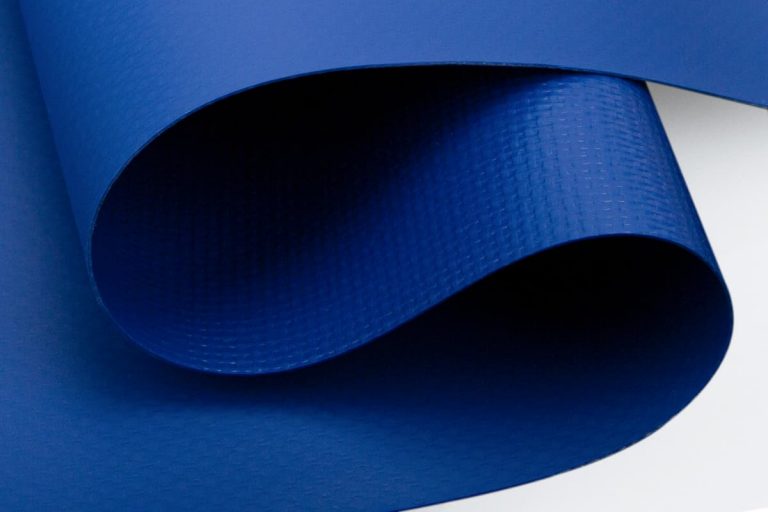
Illustration: Risk of delamination in cold environments
For American Over-the-Road (OTR) hauling, knife coating is the core technological pillar that secures the 18 oz specification’s status as the “Gold Standard.”
3. Specification Selection Based on Load Types
The diversity of U.S. trucking requires tarps to not only provide an 18 oz strength foundation but also undergo specialized optimization in dimensions and structural design.
3.1 Lumber Tarps: Balancing Coverage and Sealing
Lumber is a typical low-density, high-volume cargo, often stacked to heights of 8 feet (approx. 2.44m), approaching the legal height limit of 13.6 feet.
- Structural Features: Lumber tarps usually feature “Tail Flaps” designed to seal the cargo from all sides, preventing wood from warping or discoloring due to rain.
- Standard Specs: A standard lumber tarp measures 24′ x 27′ with an 8-foot side drop.
- Weight Pain Point: A dry 18 oz lumber tarp weighs between 100–121 lbs. In rain or snow, accumulated moisture and ice can instantly double this weight, posing a significant physical challenge to the driver.

Typical 8ft Drop Lumber Tarp
3.2 Steel Tarps: Aerodynamics and Abrasion Resistance
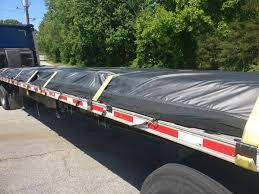
Critical Edge Protection
Steel loads are heavy but low-profile, typically stacked only about 4 feet high.
- Specification Choice: A 16′ x 27′ tarp with a 4-foot drop is the industry standard. These are lighter (approx. 60–85 lbs) and offer less wind resistance at highway speeds.
- Durability Needs: Steel plates and beams have razor-sharp edges. While 18 oz material is highly tear-resistant, Edge Protectors are mandatory; otherwise, even the toughest vinyl will be sliced.
3.3 Parachute/Hybrid Tarps: Ergonomic Compromise
As the American truck driver demographic ages, 120-lb lumber tarps have become a burden. To reduce weight, the market developed hybrid materials.
- Material Combination: The top section uses 18 oz vinyl for waterproofing and wear, while the sides (drops) use lightweight “Parachute” nylon (Airbag Fabric).
- Performance Trade-offs: These tarps can reduce weight by 25%–30%, but the nylon sides are easily punctured by sharp cargo and are prone to “parachuting” in high winds, making them harder to secure.

Vinyl vs. Nylon Side
4. The Science of Material Degradation in Extreme U.S. Climates
Tarp durability is not a constant value; it is a function of environmental stress. The frigid winters of Minnesota and the blistering summers of Texas represent two distinct physical failure modes.
4.1 Extreme Cold: Cold Crack and Flexibility Failure
In cross-border transport through Minnesota, North Dakota, and Canada, winter temperatures regularly drop below -30°C.
- • Cold Crack Rating: Premium 18 oz tarps must pass the ASTM D1790 cold crack test, with standards typically set at -40°C (or -40°F).
- • Failure Mechanism: As temperatures drop, plasticizer molecules in the PVC coating slow down, causing the material to transition from a flexible state to a brittle “glassy state.” At -40°C, if a driver attempts to force-fold a frozen tarp, the coating will crack like glass. These micro-fractures expand rapidly under high-speed vibrations, leading to total tarp failure.
- • Maintenance Advice: In extreme cold regions, experienced drivers recommend pre-warm tarps inside the truck cab to restore flexibility before performing tarping operations.
4.2 Intense UV Environments: Photochemical Oxidation and “Chalking”
The high UV Index in states like Texas and Florida acts as a chemical killer for PVC materials.
- • Degradation Symptoms: Prolonged exposure to intense light causes fading and “Chalking.” Chalking occurs when PVC polymer chains break, causing fillers to precipitate out. The tarp loses its sheen and becomes rough, like sandpaper.
- • Accelerated Heat: Physics research indicates that for every 10°C increase in ambient temperature, the oxidation rate of PVC increases 3.8 times. One year of solar damage in Dubai is equivalent to five years in Shanghai.
Expected Lifespan of Different PVC Formulations in Extreme Environments:
| Formulation Grade | Key Additives | Life (Temperate) | Extreme UV/Tropical Performance |
|---|---|---|---|
| Economy | Lacks UV stabilizers, cheap plasticizers | 0.8–1.5 years | Cracking within months |
| Standard UV-Resistant | HALS stabilizers + DOA plasticizers | 3–5 years | Chalking begins after 1.5–2 years |
| Premium Enhanced | Nano-TiO2 + PVDF coating | 8–12 years | Maintains 5+ years performance even in Texas heat |
5. Compliance and Safety — FMCSA Cargo Securement Regulations
In the United States, tarping is not just about protecting cargo; it is a legal mandate. The U.S. Department of Transportation (DOT) and the Federal Motor Carrier Safety Administration (FMCSA) enforce strict regulations regarding load securement.
5.1 Key Regulatory Provisions
- •
§ 393.100: Stipulates that vehicles must be equipped with adequate structures and securement devices to prevent cargo from leaking, spilling, blowing, or falling from the vehicle. - •
§ 393.102 Performance Criteria: Requires securement systems to withstand specific acceleration forces, including 0.8g of forward deceleration. For a 40,000 lb load, all tie-downs and tarp securement devices must collectively resist 32,000 lbs of inertial force. - •
The 50% Rule: The sum of the Working Load Limits (WLL) of all securement devices (including the tension on tarp D-rings) must be at least 50% of the total weight of the cargo.
5.2 Tarp Securement Hardware Details
To meet these rigorous legal requirements, a standard 18 oz tarp must feature the following heavy-duty details:
D-Rings
Lumber and steel tarps typically feature 2 to 3 rows of D-rings stitched along the length, spaced every 2 feet. These rings must be made of stainless or galvanized steel and cross-stitched with 2-inch wide reinforced webbing to prevent them from tearing off under high-speed wind loads.
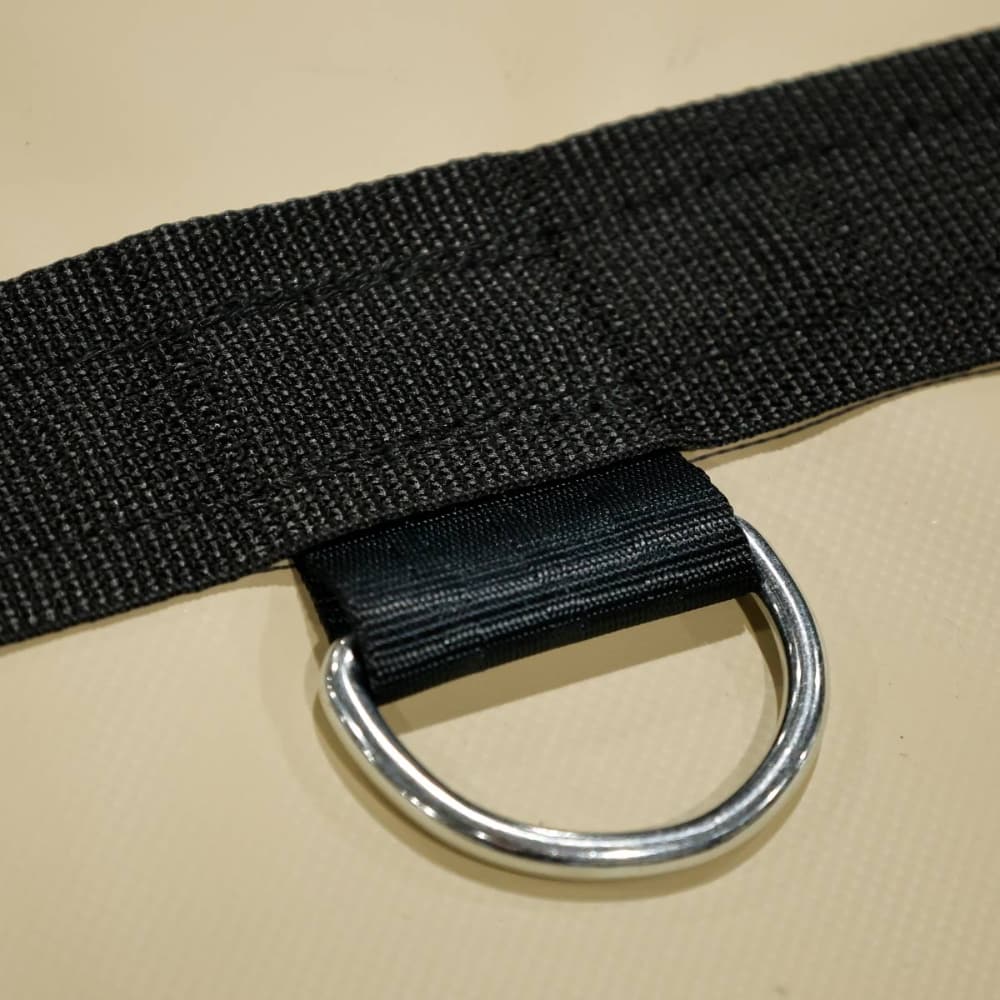
Reinforced D-ring with heavy-duty webbing
Grommets
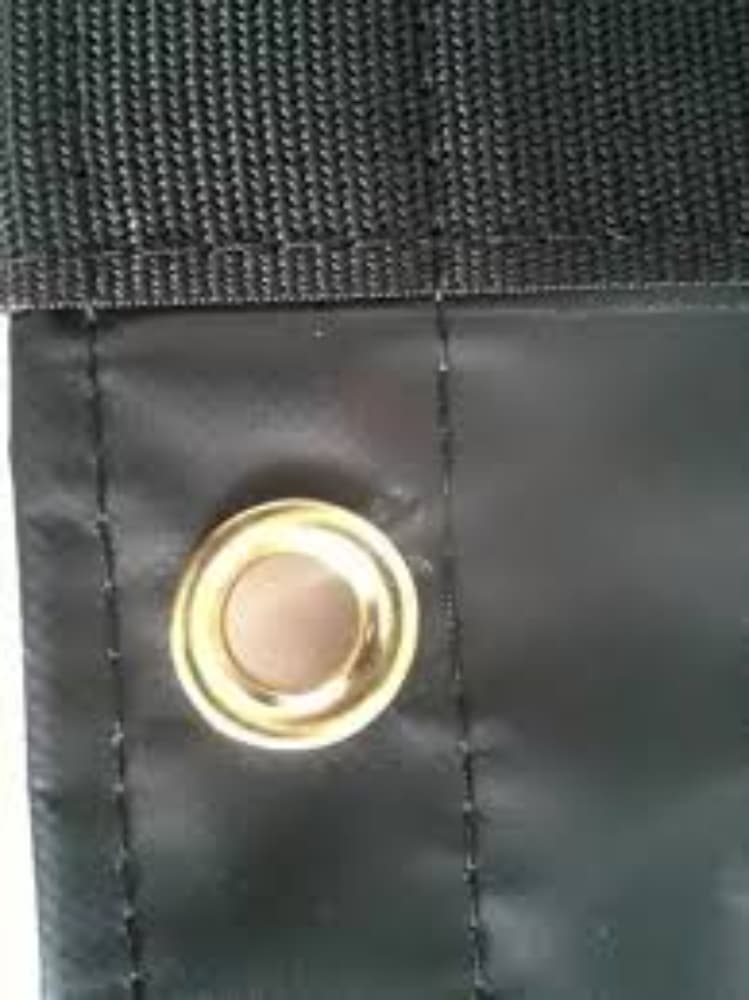
Brass grommets are usually placed every 24 inches along the hem. While grommets are used for lightweight tensioning, the primary load-bearing responsibility rests on the D-rings.
Corrosion-resistant brass grommets
Heat-Welded Seams
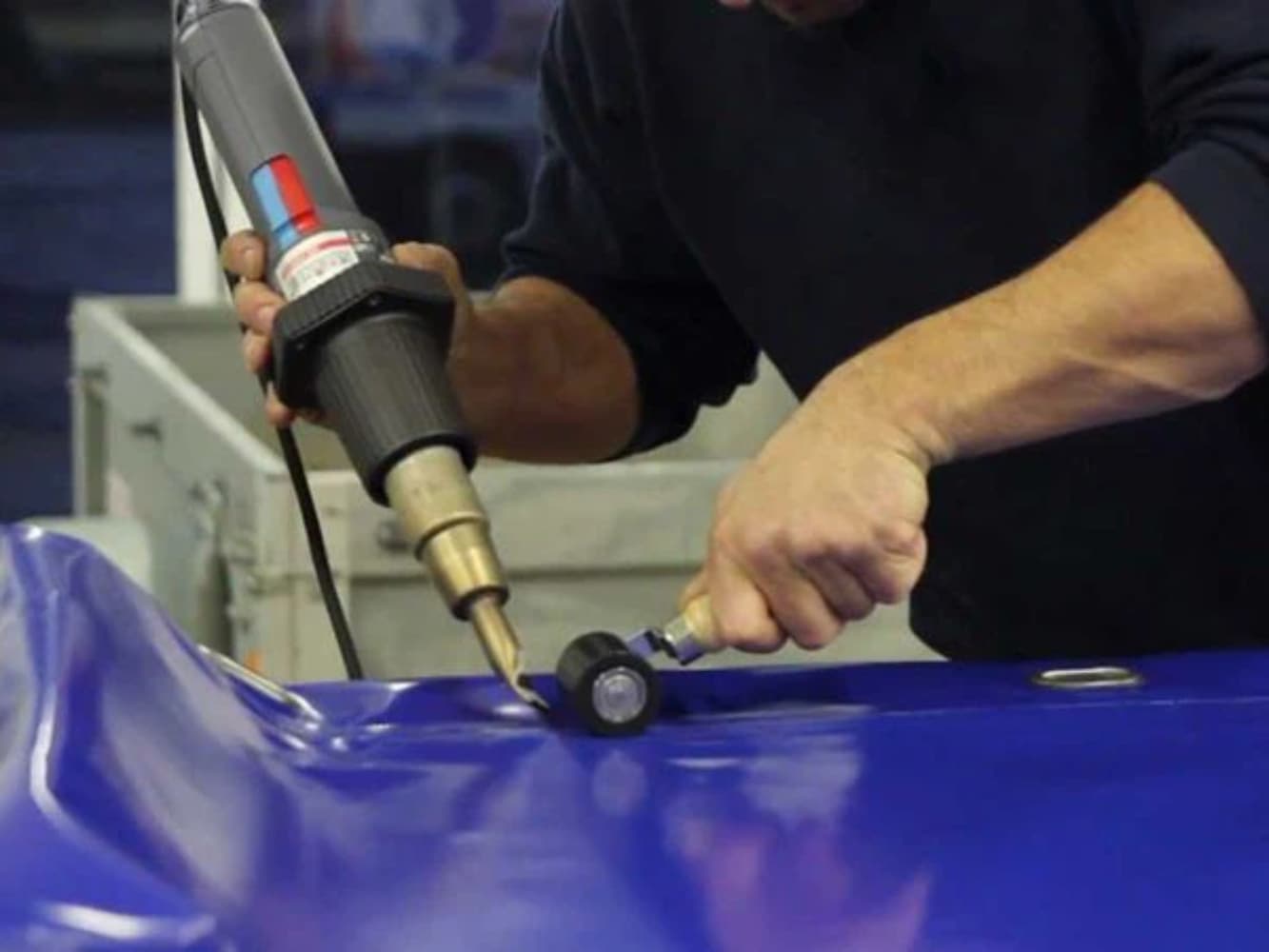
High-quality tarps should not rely solely on sewing machines for assembly. Heat welding achieves molecular-level fusion, ensuring seams are 100% waterproof and will not rip apart under tension.
Close-up of a high-frequency heat-welded seam
6. Global Procurement Traps — Securing “True 18 oz” from Factories
For fleet managers and purchasing agents, importing tarps is a cost-effective strategy but carries significant technical risks.
6.1 Identifying the “Recycled Material” Scam
To lower prices, some manufacturers use recycled PVC resin in their 610 GSM coatings.
6.2 Quality Control Checklist
| Metric | Core Standard | Verification Tool | Risk Consequence |
|---|---|---|---|
| Scrim Denier | ≥ 1000D | Microscope | Tearing at highway speeds |
| Adhesion | ≥ 90 N/5cm | Peel Tester | PVC peeling off like skin |
| Cold Crack | ≤ -40°C | Impact Freezer | Shattering during winter folding |
| Fire Rating | NFPA 701 / B1 | Burn Chamber | State-mandated legal violations |
7. Ergonomics and Driver Occupational Health
Tarp weight is not just a durability metric; it is directly linked to Workmen’s Comp claims.
7.1 The Price of 100 Pounds
Flatbedding is the most dangerous branch of trucking, largely due to tarp handling. A soaked lumber tarp exceeding 150 lbs leads to severe rotator cuff tears and lower back injuries. While NIOSH recommends lifting limits of 35–51 lbs, 18 oz tarps exceed this by 2–3 times.
7.2 The Future of Technical Solutions
Fleets are pivoting toward mechanized systems like Conestoga systems (rolling tarp frames) and motorized Flip Tarps for dump trailers, eliminating the need for climbing and heavy lifting.
8. Tarp Maintenance and Lifecycle Management
8.1 The “Killers”: Moisture and Salt
Folding a wet tarp traps moisture, leading to mildew within the polyester scrim. Furthermore, the “Rust Belt” effect—exposure to de-icing salts (calcium/magnesium chloride)—accelerates PVC oxidation. Thorough rinsing after winter runs is essential.
8.2 Out-of-Service Signals
- Increased Brittleness: Material feels paper-hard with white stress marks at folds.
- Water Seepage: PVC coating thinning, allowing moisture to permeate the fabric.
- Webbing Abrasion: Fraying on reinforced edges. Per § 393.104, securement components with structural damage are strictly prohibited.
Conclusion: Bridging Engineering Precision and Logistical Reality
The U.S. trucking industry’s commitment to 18 oz (610 GSM) vinyl is a choice driven by North American climate diversity, legal rigor, and physical load intensity. By adopting Knife Coating, insisting on Virgin PVC, and adhering to FMCSA securement guidelines, fleets can mitigate cargo claims and keep the “Shiny Side Up.” In global procurement, technical transparency is the strongest bridge between North American standards and international manufacturing capability.
Olga
Unisign Expert
20 Years of industry expertise in high-performance tarp solutions.
“My passion is helping clients find the perfect fit for their specific application amidst a world of options.”