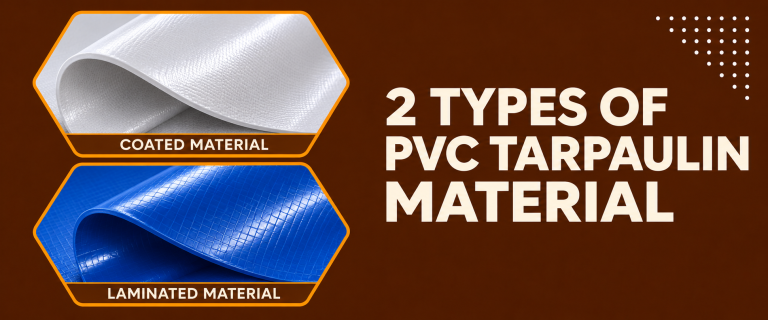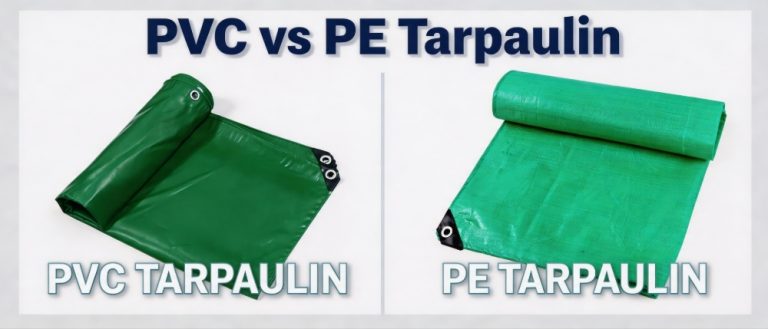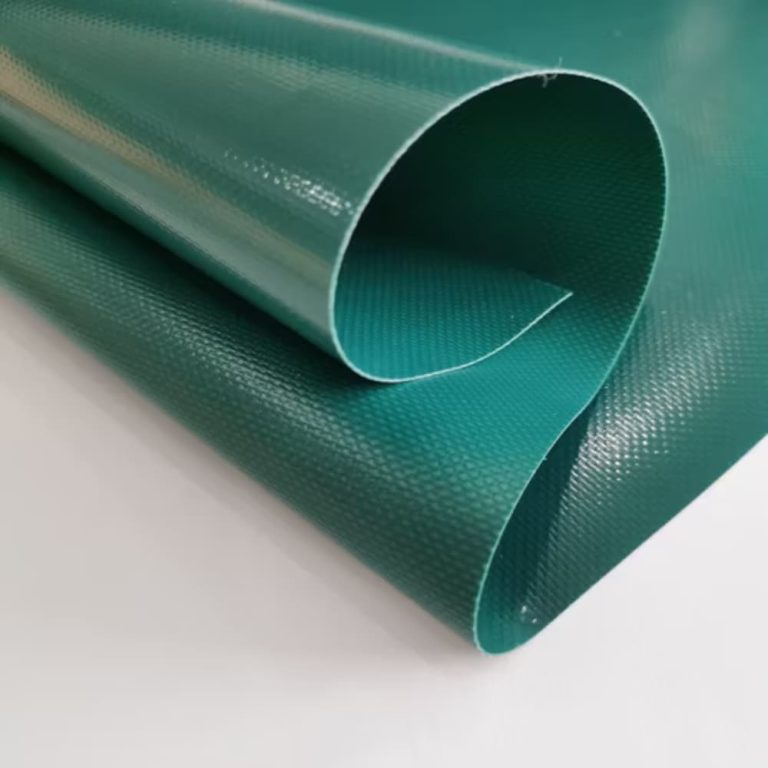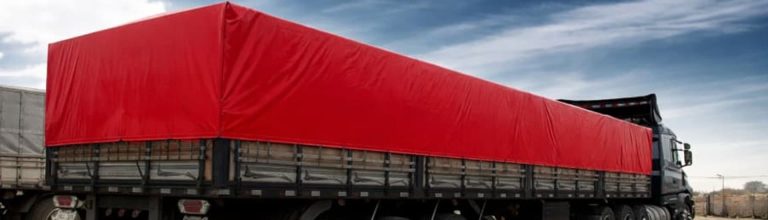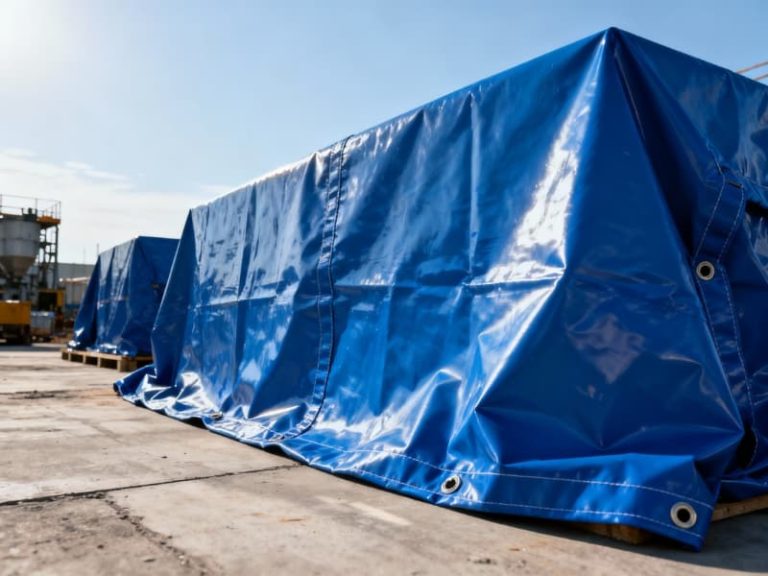
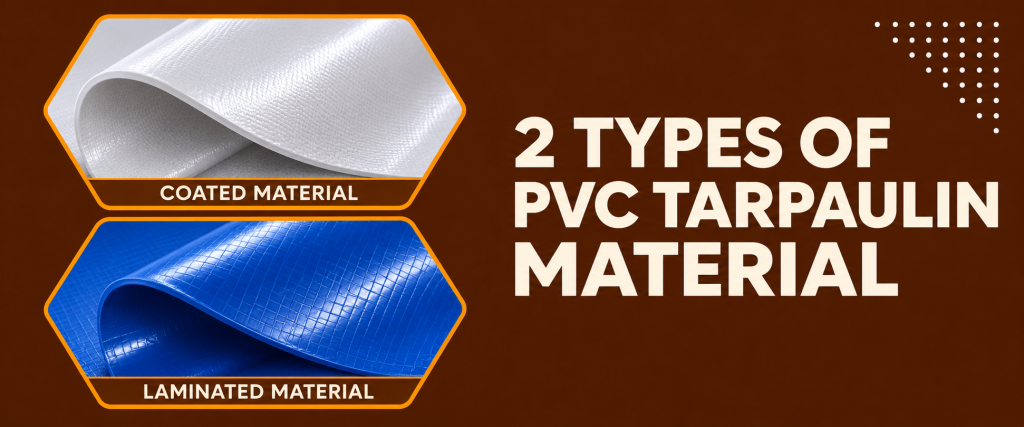
PVC tarpaulin material is a composite: a reinforcing textile provides a base, while PVC layers and surface treatments contribute to the finished sheet. Materials that look similar can differ in reinforcement, layer construction, finish, and tested performance.
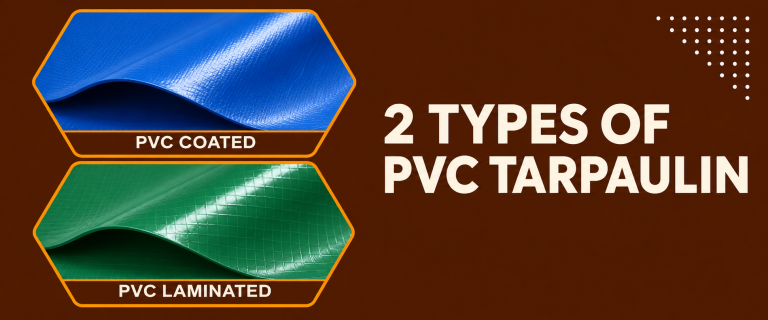
This guide compares two types of PVC tarpaulin material: coated and laminated. To make the comparison useful, both examples below are listed at 750 g/m². Their other specifications differ, showing why equal weight does not mean an interchangeable material.
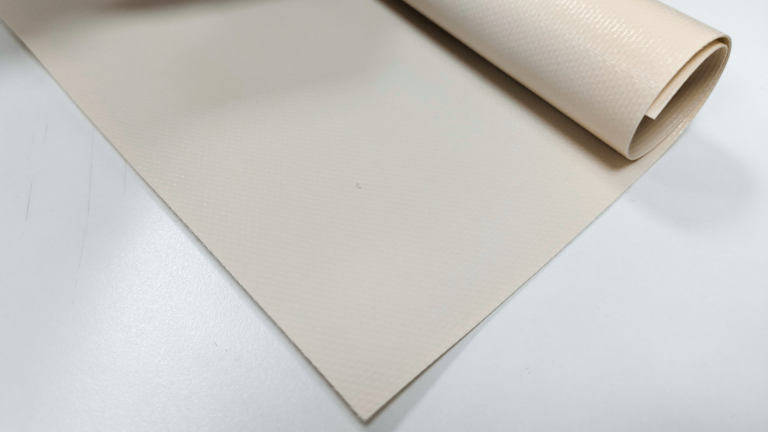
1. PVC Coated Tarpaulin Material
PVC coated tarpaulin material uses a polyester reinforcement with an applied PVC coating. The base fabric, PVC formulation, coating build, and surface treatment together define the grade. A coating process can also be combined with additional functional construction, such as the blockout feature listed for UCT1122/750B.

Here’s Why It’s Popular:
- Example: UCT1122/750B coated blockout material.
- Weight: 750 g/m².
- Base fabric: 1000D × 1000D yarn; 20 × 20 per square inch.
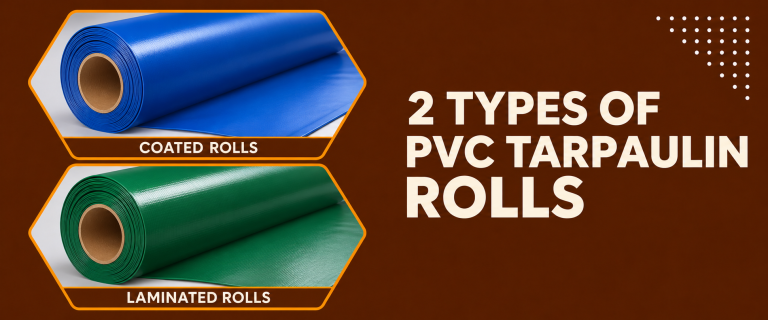
- Supply format: Listed maximum width 5.1 m; 50 m or 100 m standard rolls.
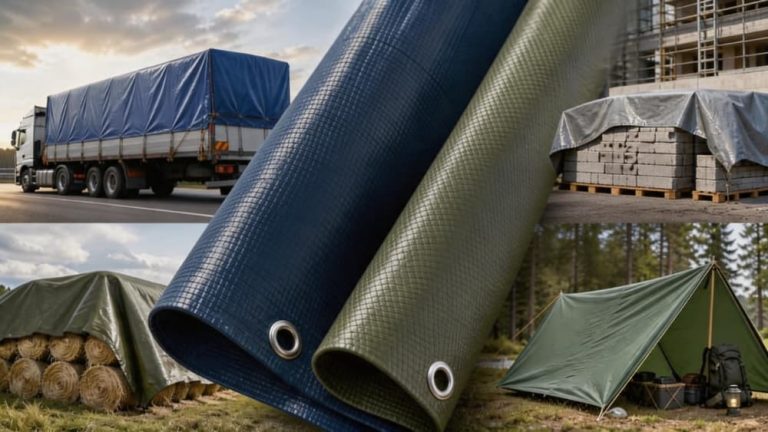
- Listed application: Tent material, subject to the complete tent design and project requirements.
- Advantages:
- A coated construction to assess for the required flexible-sheet performance.
- A model with a listed blockout function when light transmission matters.
- A defined reinforcement specification for comparing candidate materials.
Check the current data sheet for the actual coating, surface finish, and optional treatments. Knife coating belongs within the coated material family and should be identified when it forms part of the specification.
For a tent application, evaluate the material and fabricated seams within the intended design. Sheet weight, a product photograph, or a blockout description cannot establish the performance of the complete structure.
Approve opacity on a representative sample under the expected lighting, and request relevant strength, adhesion, and exposure data for the exact grade.
Explore material specifications
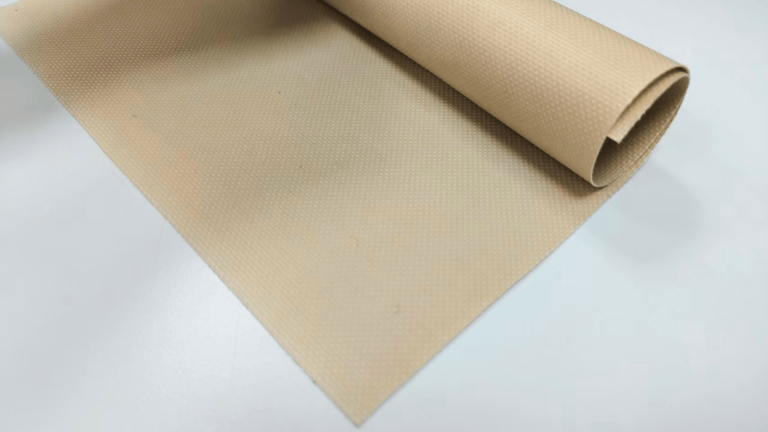
Request a Free Sample2. PVC Laminated Tarpaulin Material
PVC laminated tarpaulin material combines polyester reinforcement with PVC layers through lamination. ULT1212/750 is an example with the same nominal weight as the coated grade above, but a different base-fabric density. This makes it useful for showing why material selection needs more information than grams per square meter.

Here’s Why It’s Popular:
- Example: ULT1212/750 laminated material.
- Weight: 750 g/m².
- Base fabric: 1000D × 1000D yarn; 12 × 12 per square inch.
- Supply format: Listed maximum width 5.1 m; 50 m or 100 m standard rolls.
- Listed applications: Air ducts and covering applications in agricultural or construction settings, with suitability to be confirmed for the project.
- Advantages:
- A laminated construction for evaluating the intended fabricated product.
- A clear example of reinforcement differences at the same nominal weight.
- A flexible sheet supplied for cutting and joining into approved applications.
The 12 × 12 and 20 × 20 base-fabric specifications describe different constructions; they are not complete tensile or tear-strength results. Request comparable test values and methods before ranking the two grades.
Test layer adhesion, repeated folding, and the intended joint. Where air containment is required, assess the completed seams and construction as well as the unjoined sheet.
If the project includes printing, confirm the exact surface, ink system, and preparation requirements. A material described as PVC tarpaulin is not automatically approved for every printing process.
Explore material specifications
Request a Free SampleWhy Choose UNISIGN?
- Construction choices: Compare coated and laminated grades around the project’s technical requirements.
- Specific model references: Discuss reinforcement and supply format alongside the finished weight.
- Sampling and specification: Review material and fabrication trials before approving the production order.
UNISIGN supplies PVC tarpaulin material for fabricators and distributors. Provide the application and acceptance requirements to help identify suitable grades and prepare a useful quotation.
Request Factory Prices and Free Samples
Request factory prices and free samples with the finished application, construction preference, required weight and width, color, performance requirements, quantity, and delivery destination.