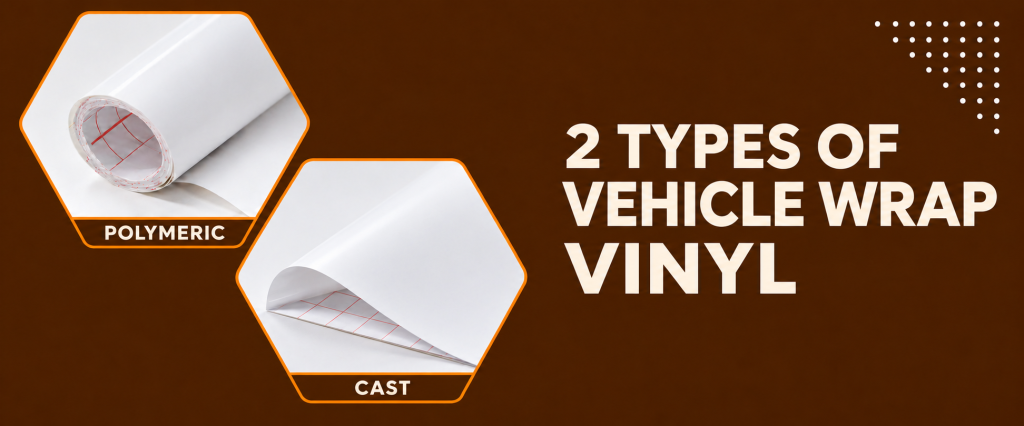
Vehicle wrap vinyl gives fleet operators and print businesses a way to place full-color branding on cars, vans, buses, and other vehicles. The most useful material choice starts with the panel shape, the campaign period, and the finished print-and-laminate construction.
Two common options to compare are polymeric vehicle wrap vinyl and cast vehicle wrap vinyl. These are familiar purchasing categories, not a complete chemistry classification. Here is how UNISIGN UV1501 and UV1801G provide two different starting points for a printed vehicle-graphics enquiry.
1. Polymeric Vehicle Wrap Vinyl
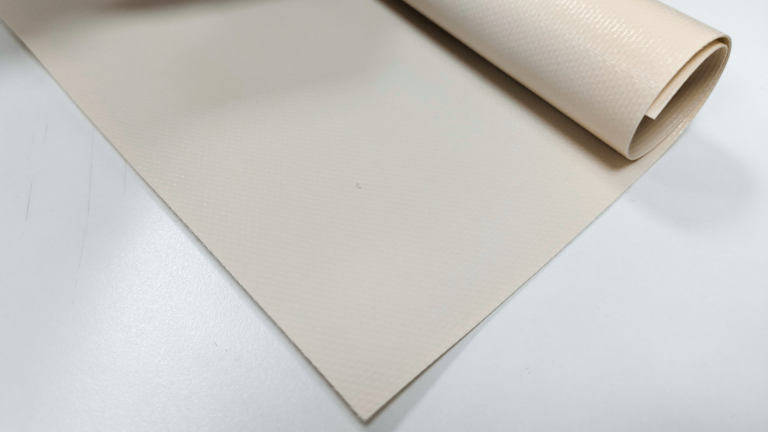
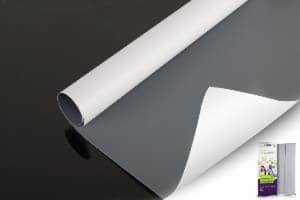
Polymeric printable vinyl is often considered for vehicle graphics where the approved surface geometry and project requirements suit the material. UNISIGN UV1501 is identified as polymeric and is listed for car-wrap advertising and car decoration. Ask about the actual panels rather than treating every vehicle shape as equivalent.

Here’s Why It’s Popular:
- Model: UV1501 polymeric self-adhesive vinyl.
- Published construction: 0.08 mm face film with 140 gsm release paper.
- Roll options: 0.914, 1.07, 1.27, 1.37, and 1.52 m widths; standard length is 50 m.
- Printing: Solvent, eco-solvent, UV, and latex inks are listed.
- Installation feature: The product description identifies a bubble-free configuration.
- Advantages:
- Several roll widths help plan panels and material use.
- Provides a polymeric option for comparing a vehicle-graphics specification.
- Supports the listed wide-format printing processes after an equipment trial.
For a flatter vehicle side or a partial graphic, ask whether this model is approved for the intended shape and service period. Deep recesses, compound curves, and heavily stretched areas require explicit confirmation. Air-release performance does not establish conformability or removability.
The page lists a 3–5 year outdoor durability figure. Confirm its exposure assumptions, print and laminate requirements, and warranty terms; it is not an unconditional lifespan for every installed wrap.
Explore material specifications
Request a Free Sample2. Cast Vehicle Wrap Vinyl
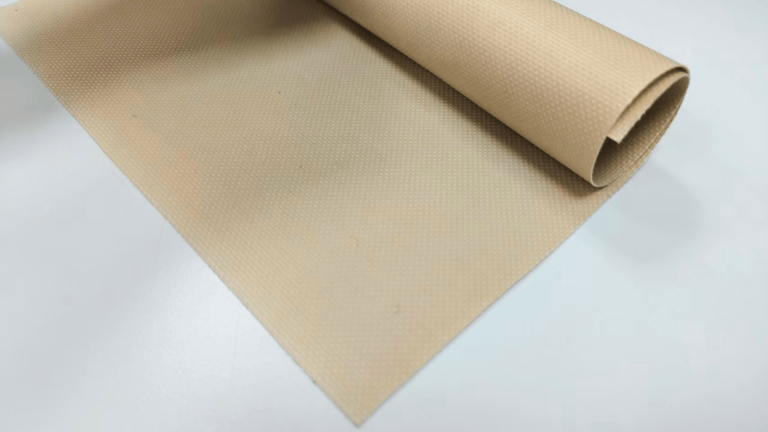
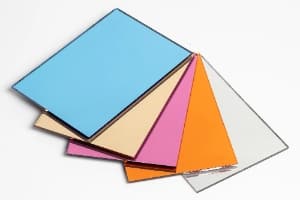
Cast printable vinyl is a common option to investigate for more demanding vehicle contours. UNISIGN UV1801G is listed as a cast film for car-wrap advertising and decoration, with a thinner published face film and a different liner construction from UV1501.
Here’s Why It’s Popular:
- Model: UV1801G cast vinyl.
- Published construction: 0.05 mm face film and 160 gsm double-side-PE-coated release paper.
- Roll options: 1.52 m width with 30 m and 50 m standard lengths listed.
- Printing: Solvent, eco-solvent, UV, and latex inks are listed.
- Installation feature: The product description lists bubble-free performance.
- Advantages:
- A cast-film option for a more demanding wrap brief.
- A thin printable face for evaluating handling and finished appearance.
- Two listed roll lengths for production planning.
Cast construction is a useful selection factor, but the exact film still needs approval for the recess, curve, and installation method. Confirm the compatible laminate, stretching limits, post-heating instructions, and removal conditions with the supplier.
UNISIGN lists a 5–7 year outdoor durability figure for this model. Ask how climate, horizontal panels, printing, washing, and maintenance affect the stated performance. The shared official photo illustrates the product family; the model specification identifies the construction.
Explore material specifications
Request a Free SampleWhy Choose UNISIGN?
- Two named material options: Compare polymeric UV1501 and cast UV1801G using published model data.
- Print-production choices: Discuss the listed ink systems, widths, and roll lengths.
- Sample evaluation: Check the complete construction before standardizing a fleet project.
Share the vehicle model, panel photographs, artwork coverage, and installation requirements with UNISIGN. That information makes a quotation more useful than selecting solely by the words polymeric or cast.
Request Factory Prices and Free Samples
Request factory prices and samples with your printer and ink, laminate requirements, vehicle shape, expected service period, removal plan, roll width, quantity, and destination. Ask for the current technical sheet and application instructions.