Standards & buying guide
B1 is a German fire-behaviour class. NFPA 701 is a textile and film flame-propagation test standard. M1 is a French reaction-to-fire class. A result under one does not automatically meet another.
Buying display fabric for an exhibition, shop or event? Start with the project’s written requirement. Then match the report to the fabric, printing and installation you will use.
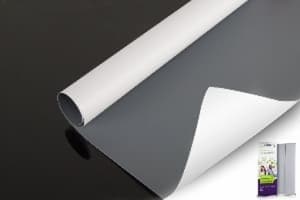
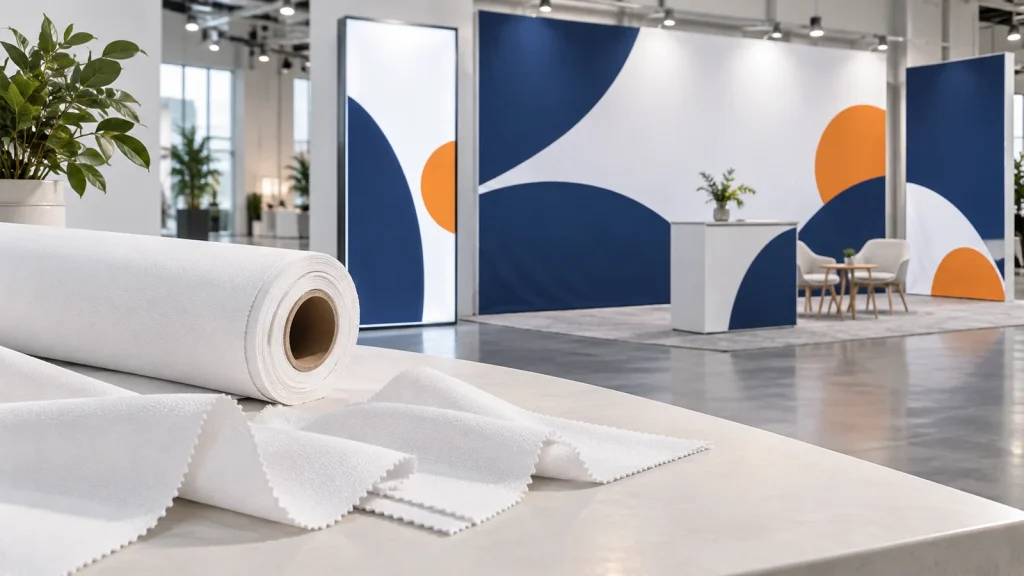
Header image: AI-generated application illustration, not test evidence. The product cards use UNISIGN model photos.
B1, NFPA 701 and M1 compared
Use the full standard name when requesting documents. The country associated with a standard is useful context; it does not tell you every requirement for every project in that country.
| Label | What it refers to | What to request |
|---|---|---|
| DIN 4102-1 B1 | A classification for building-material fire behaviour under the German DIN system. | The B1 classification and the material and conditions covered. |
| NFPA 701 | US-origin test methods for flame propagation in textiles and films. | The edition, applicable test method and stated result. |
| French M1 | A category in the French M system, with classification provisions in NF P92-507. | The M1 classification report and its applicable test references. |
Standard references: DIN 4102-1, NFPA 701, 2023 edition and NF P92-507.
What B1 means
B1 is described as schwerentflammbar, commonly translated as flame-retardant or not easily flammable. B1 materials are still combustible. The label does not mean fireproof or give a fire-resistance time in minutes.
Material combinations and processing can affect fire behaviour. Check the scope for the actual fabric and arrangement. DKE explains the B1 category.
What NFPA 701 means
NFPA 701 is a test standard, not a grade such as B1. It has two test methods. Fabric weight matters, but the choice is not based only on GSM: material type and intended use also matter.
Ask the laboratory which method applies. A fabric result should not be treated as approval for a bonded wall or ceiling finish, which may need different testing.
What M1 means
M1 is a French reaction-to-fire class. NF P92-507 describes classification; the relevant test methods depend on the material. M1 is not simply another name for B1 or an NFPA 701 result.
Request the classification document for the proposed fabric. IFTH explains how the M system assesses material behaviour.
What about EN 13501-1? Euroclasses such as B-s1,d0 use a separate system, including smoke and burning-droplet classifications. Some requirements allow defined alternatives, but this does not make all standards interchangeable. Request the full classification accepted for the project. See the EN 13501-1 record and European classification tables.
Match the model, print and report
A report is most useful when you can connect its material description to your order. A similar name, the same weight or a photograph of a fabric roll is not enough to make that connection.
Record the model, weight, coating or backing, print process and finishing. Ask whether the evidence covers the supplied printed version or an unprinted sample. Printing does not automatically cancel a result, and a blank-fabric result does not automatically cover every printed finish. Obtain confirmation of the actual scope.
- Define the useVenue, application and required standard.
- Specify the fabricExact model, print and finishing.
- Match the evidenceReport identity, result and scope.
- Review the installationSubmit the proposed setup and documents.
Keep any agreed substitution in writing. If production changes the backing, fabric weight or finishing process, return to the document check before using the replacement.
Start with the display application
Tell the supplier how the fabric will be used. A fabric sample and a short installation description make the inquiry much more precise.
| Application | Include in your inquiry | Check before ordering |
|---|---|---|
| Hanging banner or backdrop | Finished size, print method, hems and hanging arrangement. | Evidence covers the intended fabric and use. |
| SEG lightbox | Frame, printed face, edging and any additional layers. | The documented material matches the supplied construction. |
| Overhead fabric | Ceiling area, suspension and venue requirements. | Any additional installation or droplet requirements. |
| Bonded wall finish | Substrate, adhesive, coverage and permanent or temporary use. | Which tests are required for that complete finish. |
Ask the venue or responsible authority to review the proposed use when acceptance is unclear. A fabric report alone does not approve a finished installation.
Three fabric models to discuss
These models offer different starting points for display work. For a wider material comparison, visit flame-retardant display fabric models.

DSP09
Stretch display fabric
- Weight: 230 gsm
- Width: up to 3.2 m
- Print: direct or transfer sublimation
- Use: pop-up displays and backdrops
Include the frame and tensioning method in your sample request.
View DSP09 specifications →
SDB250
Triple-white backlit fabric
- Weight: 250 gsm
- Width: up to 3.2 m
- Print: sublimation or latex
- Use: lightbox graphics
Share the printing route and lightbox construction when requesting documents.
View SDB250 specifications →
DSP-BLK-W
White-back blockout fabric
- Weight: 310 gsm
- Width: up to 3.2 m
- Print: direct or transfer sublimation
- Use: opaque backdrops and frames
Ask for evidence covering the exact backing and ordered finish.
View DSP-BLK-W specifications →Shared report note: The current individual product pages list B1 and NFPA 701 options; M1 is not listed on these pages. These listings are not matched test reports. Request the complete current report for the exact model and finish, and confirm M1 availability separately if required.
An eight-point report checklist
Use this purchasing checklist with the supplier and whoever reviews materials for the project. It is a practical document check, not a substitute for the laboratory’s interpretation.
- Identify the product. Match the manufacturer and model to the quotation and order. Ask about different names or codes instead of assuming that they describe the same material.
- Match the material specification. Compare weight, construction, coating and backing. Record any difference between the tested sample and the proposed supply.
- Read the standard and result. Check the full reference, edition, method where applicable, and stated classification or outcome. A standard name without a result leaves an unanswered question.
- Identify the document. Keep the complete report, its number, issue date and issuing laboratory. Include referenced attachments or extensions needed to understand its scope.
- Confirm print coverage. State the printer, ink route and finishing process. Ask for confirmation that the evidence covers the supplied printed material, rather than relying on a generic fabric description.
- Check the installation conditions. Compare free-hanging, tensioned or bonded use, together with layers, supports and fixings where relevant. Give the reviewer a clear sketch or description.
- Read care and validity conditions. Follow any documented limits for washing, outdoor exposure, retreatment or document validity. Do not assume a universal wash count, expiry period or lifetime.
- Close the gaps before ordering. Record the venue’s required documents and unresolved questions. Keep the accepted specification with the order so production, printing and installation use the same reference.
Frequently asked questions
Is B1 equivalent to M1 or NFPA 701?
No automatic equivalence should be assumed. They use different systems and scopes. Ask which evidence the project accepts, and obtain the matching document for the proposed fabric.
Does fire-retardant mean fireproof?
No. A result describes performance under stated test conditions. Keep the classification wording precise; it is not a promise that the material cannot burn.
Does printing change the report I need?
It can change what you need to verify. Ask whether the report or its documented scope covers your printed finish. Neither automatic coverage nor automatic cancellation should be assumed.
Can I select the NFPA 701 method from fabric weight?
Not from weight alone. The standard also considers material and application. Give the laboratory the full specification and intended use so it can identify the applicable method.
Do all UNISIGN display fabrics have M1 reports?
Do not assume this. M1 is not listed on the three individual model pages shown here. Ask about availability and request a matching report for the exact proposed model.
Standards and further reading
Public references checked in September 2026. Confirm the edition required for your project.
- DIN Media: DIN 4102-1:1998-05 — official standard record.
- ANSI: NFPA 701, 2023 edition — scope supplied by NFPA.
- AFNOR: NF P92-507, February 2004 — French classification provisions.
- IFTH: understanding M classification — textile testing context.
Plan your fabric order
Request a sample and matching report
Send your application, destination or venue, required standard, fabric model, print process and quantity. Include the deadline and required report language. This gives the UNISIGN team the details needed to check available options and supporting documents.
![Top 10 Vinyl Tarp Manufacturers in the World [2026 Guide]](https://unisignflex.com/wp-content/uploads/2026/04/pvc-tarpaulin-product-line.jpg)