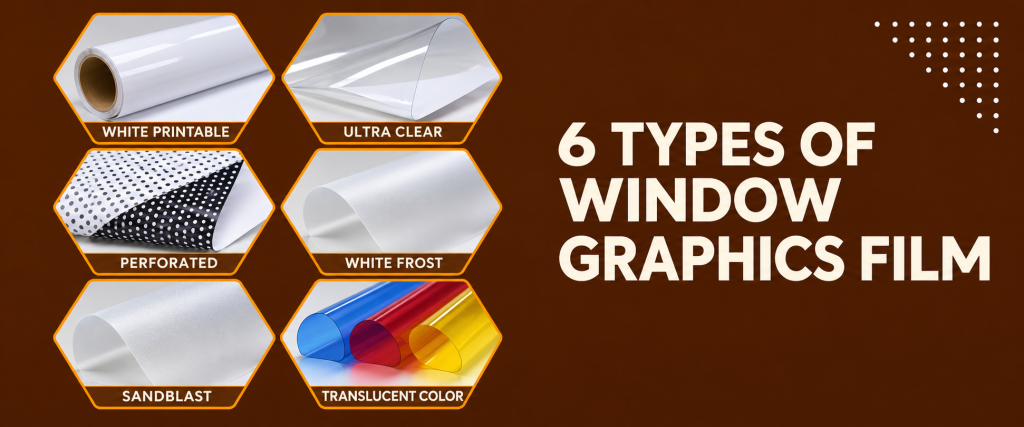
Window graphics film can turn plain glass into an advertising surface, a branded partition, or a decorative feature. However, a bold printed promotion needs a different visual effect from a subtle office-glass design. Start with what people should see through the window and what they should see on it.
Below are six useful types of window graphics film, grouped by appearance and production method. They include printed films and films intended for cut graphics. White frost and sandblast are related decorative finishes, presented separately because UNISIGN supplies them as distinct options.
1. White Printable Window Graphics Film
White printable film gives artwork a white background instead of letting the scene behind the glass influence every color. It is a practical starting point for promotional panels, product graphics, and lettering where the design should stand out.

Here’s Why It’s Popular:
- Example: UNISIGN SAV12/140 white self-adhesive vinyl.
- Published construction: 0.10 mm film and 140 gsm release paper.
- Design role: Printed panels with a white base, rather than an unobstructed view through the covered area.
- Advantages:
- A consistent white base for full-color artwork.
- Easy to combine with contour-cut promotional designs.
- Useful for clearly defined areas of glass coverage.
White film is not automatically a blockout film. If the back of the artwork must be hidden, ask for the required opacity and adhesive color. Confirm the mounting side and print orientation before producing the graphic.
Explore material specifications
Request a Free Sample2. Ultra-Clear Printable Window Film
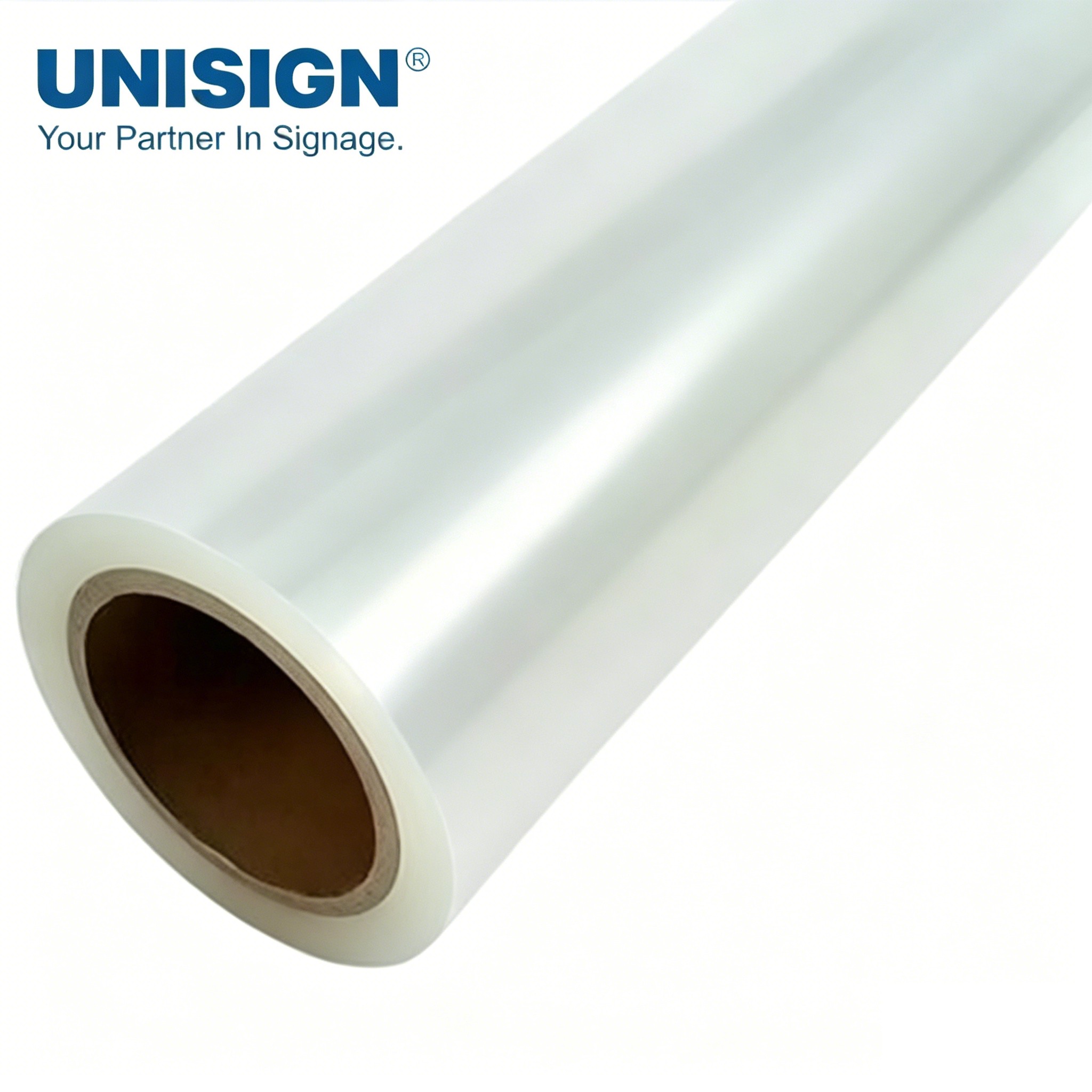
Ultra-clear printable film is designed for graphics that retain transparent areas around the artwork. It suits display concepts in which the shop interior or the view behind the glass should remain part of the presentation.
Here’s Why It’s Popular:
- Example: SAV08T/70, listed as a monomeric ultra-clear film.
- Published construction: 80 micron face film and 75 micron matte PET liner.
- Adhesive: The model page specifies a removable acrylic adhesive.
- Advantages:
- Transparent unprinted areas support an open display.
- Useful for detailed brand graphics and selective color.
- A removable option to evaluate for changing campaigns.
The matte description refers to the release liner, not a frosted face film. Decide whether the design needs white ink behind selected colors, and test the finished print from both sides of the glass. Removal depends on the substrate and service conditions.
Explore material specifications
Request a Free Sample3. Perforated One Way Vision Film
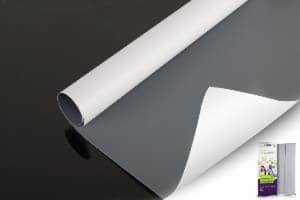
Perforated film places graphics on a punched face while allowing a view through the openings. Its white printable side and dark reverse support a different window effect from either solid white or optically clear film.

Here’s Why It’s Popular:
- Example: UNISIGN PV1618.
- Published construction: 0.18 mm film with 160 gsm release paper.
- Viewing check: Compare the printed image and the outward view under the actual site lighting.
- Advantages:
- Combines an advertising face with perforated viewing areas.
- Useful for larger storefront graphics.
- Offers a distinct alternative to continuous transparent film.
The one-way effect relies on the relative light levels on each side. It is not a night-time privacy guarantee. Request the current confirmed perforation ratio, since the PV1618 page gives different figures in its description and specification table.
Explore material specifications
Request a Free Sample4. White Frost Window Graphics Film
White frost film creates a soft, diffused appearance on glass. It can form a background for branded partitions or decorative window areas where a clear view through the treated section is not the main objective.

Here’s Why It’s Popular:
- Model: UWF03, identified as White Frost.
- Published construction: 0.12 mm film with 120/140 gsm release-paper options.
- Widths: 1.22, 1.37, and 1.52 m are listed.
- Advantages:
- A soft white finish for decorative glass layouts.
- Suitable for comparing full panels, bands, and brand motifs.
- Multiple widths support different glazing layouts.
Check a sample against the real glass and lighting. Frosting can obscure detail without guaranteeing that silhouettes disappear. Confirm the cutting or printing process and the adhesive option for the order.
Explore material specifications
Request a Free Sample5. Sandblast-Effect Window Film
Sandblast-effect film offers an etched-glass style surface as an applied material. UNISIGN UWF01 provides a separate finish to compare with white frost when the project calls for decorative bands, lettering, or a more textured visual effect.

Here’s Why It’s Popular:
- Model: UWF01, listed as an economic sandblast grade.
- Published construction: 0.12 mm film with 120/140 gsm release-paper options.
- Widths: 1.22, 1.37, and 1.52 m are listed.
- Advantages:
- An applied etched-glass appearance.
- Useful for decorative shapes and branded partitions.
- A distinct sample option alongside the white frost finish.
The term describes the film’s appearance; it does not mean the glass itself has been sandblasted. Review the grain, light diffusion, and edge appearance on a physical sample before choosing between the two finishes.
Explore material specifications
Request a Free Sample6. Translucent Color Cutting Film
Translucent color film is a useful choice for precolored window letters, logos, and decorative shapes. The color is already in the material, so a cut-graphics workflow can create simple designs without printing a full-color image.

Here’s Why It’s Popular:
- Model: UC9000 translucent color cutting vinyl.
- Published construction: 0.10 mm film and 140 gsm release paper.
- Listed widths: 0.61 and 1.22 m.
- Advantages:
- Precolored material for letters and graphic shapes.
- Light transmission adds another dimension to color selection.
- Suitable for plotter-cut signage and glass decoration enquiries.
Translucent does not mean optically clear. Check the actual color under daylight and interior lighting, and confirm print compatibility separately if the job also needs printed detail.
Explore material specifications
Request a Free SampleWhy Choose UNISIGN?
- Several visual effects: Compare printable, perforated, frosted, and colored options.
- Model-based enquiries: Published dimensions help narrow the roll specification.
- Practical samples: Evaluate color, visibility, and application on the intended glass.
Share the artwork concept and viewing conditions so UNISIGN can recommend relevant samples rather than selecting by product name alone.
Request Factory Prices and Free Samples
Send your window dimensions, glass type, mounting side, printer or cutting process, intended duration, and quantity. Request the current specifications, factory quotation, and samples for your window graphics project.