Printable blockout fabric is used when an image needs to remain visually separate from light or objects behind the display. It is relevant to exhibition walls, photographic backdrops, pop-up systems, and suspended graphics. The reverse-side construction matters as much as the printed face.
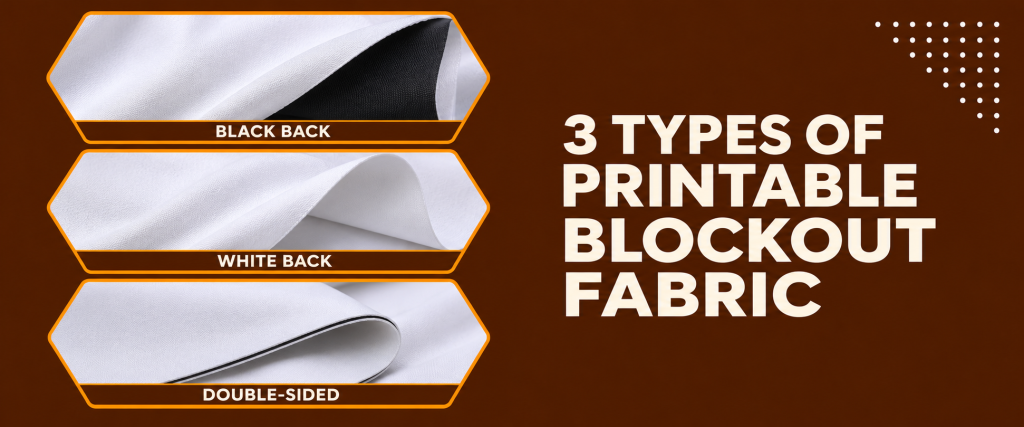
Here are three types of printable blockout fabric to compare: black-back, white-back, and double-sided printable grades. These options solve different viewing requirements, so first decide what the audience should see from the front, back, and edges.
1. Black-Back Printable Blockout Fabric
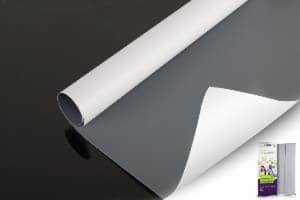
Black-back printable blockout fabric combines a white image face with a dark reverse. It is a useful option when a display needs to reduce interference from objects, framework, or light behind it. DSP-BLK-01 Nox is a warp-knitted grade with slight stretch for backdrops and compatible fitted displays.

Here’s Why It’s Popular:
- Model: DSP-BLK-01 Nox.
- Weight: 260 g/m².
- Construction: White/black warp-knitted blockout fabric with slight stretch.
- Printing: Direct or paper-transfer dye sublimation.
- Roll length: Standard length 100 m.
- Advantages:
- A white printing surface paired with a dark reverse.
- Helps conceal a busy background behind the graphic.
- A textile option for exhibition walls, backdrops, and fitted displays.
The model page lists 5 m maximum width, while the category table lists 3.2 m. Confirm available width before laying out a large seamless graphic.
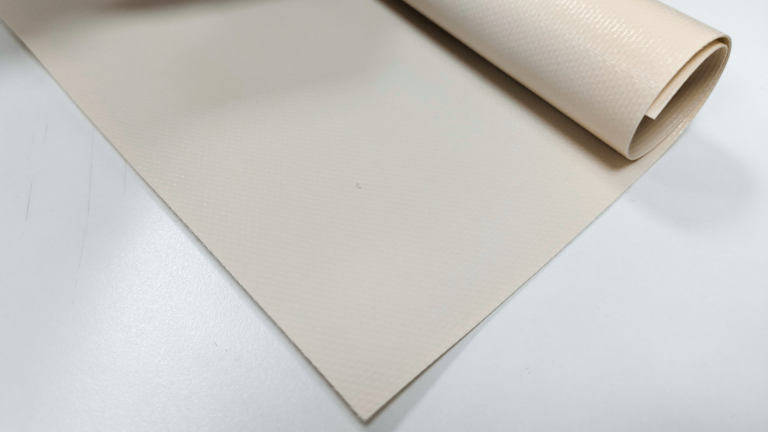
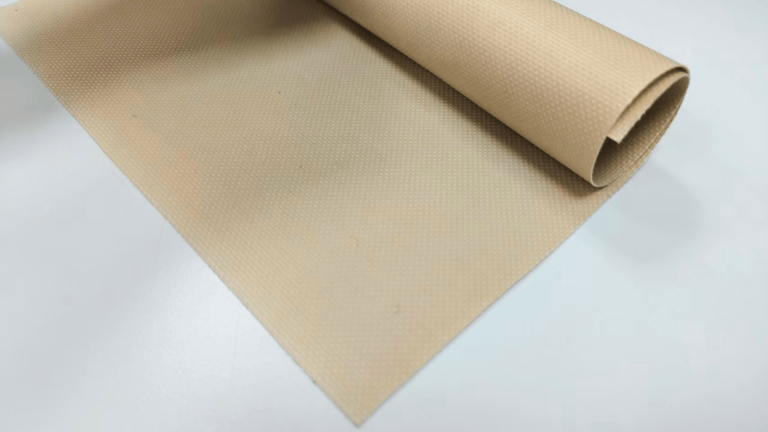
Use the printed sample to check opacity and how the reverse looks from accessible viewing angles. The official product photo illustrates the supplied grade; its visible printed face does not demonstrate an opacity test.
Explore material specifications
Request a Free Sample2. White-Back Printable Blockout Fabric
White-back blockout fabric is selected when the display needs an opaque textile construction and a light-colored reverse. DSP-BLK-W Hermes is a white-back grade for backdrops, pop-ups, frames, and display systems. It gives buyers an alternative to a visible black reverse when the installation calls for a white appearance behind the panel.

Here’s Why It’s Popular:
- Model: DSP-BLK-W Hermes White Back Blockout.
- Weight: 310 g/m².
- Construction: Warp-knitted blockout fabric with slight stretch.
- Roll format: Maximum width 3.2 m; standard length 100 m.
- Printing: Direct or paper-transfer dye sublimation.
- Advantages:
- A white reverse for installations where the back remains visible.
- An opaque textile option for fitted walls and pop-up graphics.
- A separate construction to compare against black-back grades.
A white reverse does not automatically mean that both sides are approved printing surfaces. If the job requires two independent printed images, select a grade explicitly specified for double-sided printing.
Assess light blocking, reverse appearance, seam visibility, and the finished panel weight on the actual display. Confirm suitability for the frame and edge-finishing method.
Explore material specifications
Request a Free Sample3. Double-Sided Printable Blockout Fabric
Double-sided printable blockout fabric provides separate printable faces with a dark internal layer. DSP-BLK-D Ares is intended for this type of two-sided graphic. It can be considered for hanging signs and exhibition displays approached from both directions, where each side needs its own artwork.

Here’s Why It’s Popular:
- Model: DSP-BLK-D Ares.
- Weight: 250 g/m² on the individual product page.
- Construction: Two printable faces with a black internal layer.
- Roll format: Maximum width 3.2 m; standard length 100 m.
- Printing: Direct or paper-transfer dye sublimation.
- Advantages:
- Supports a distinct message on each side of a display.
- The internal blocking layer reduces interference between the two images.
- A flexible textile option for suspended and two-way signs.
The category table lists 260 g/m², so confirm the current supplied specification. Test both print faces using the actual production sequence.
Check registration, any effect of the second heat cycle on the first image, the visibility of opposing artwork, and how the completed sign hangs. Approve the entire two-sided sample before volume production.
Explore material specifications
Request a Free SampleWhy Choose UNISIGN?
- Several blockout constructions: Compare dark-back, white-back, and double-sided printable options.
- Product-level selection: Discuss model weight, printing method, width, and intended display system.
- Sampling before commitment: Evaluate the printed and finished material under the project’s actual viewing conditions.
UNISIGN supplies printable blockout textile rolls for display manufacturers, print shops, and distributors. Send the intended viewing arrangement and finishing requirements to help select a suitable grade.
Request Factory Prices and Free Samples
Request factory prices and free samples with the required front and reverse appearance, printing workflow, finished size, roll width, quantity, and delivery destination.